



Gocrypto: Crypto Trading review
 Analysis by Appsdrops
I approached Gocrypto: Crypto Trading as a practice space for learning how crypto trades feel, rather than as a place to manage real money. That distinction matters: a simulator can help you rehearse decisions and notice your habits, but it cannot make a risky market predictable. My main advice is to treat every simulated result as a lesson in process, not evidence that the same choice would work with real funds.
Getting past the first-session friction
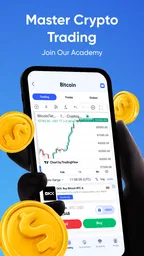
Crypto apps can feel demanding from the outset because there is a lot to take in: unfamiliar terms, fast-moving prices, and the urge to act before you understand what is happening. Gocrypto, a free business app from Gocrypto: Crypto Trading & Investment Simulator, is intended to make trading practice more approachable through simulations and challenges. It is aimed at people who want to explore the mechanics without beginning with a real-money trade.
The app has a 4.5 average from around 258,000 ratings, and it has been installed over 10 million times. Those figures suggest a broad audience, but they do not tell you whether its approach suits your learning style. I would still give myself a few minutes to explore the screens and read any on-screen instructions before trying to move quickly. In a simulator, the first useful task is learning what each action means, not chasing a result.
If you open it and feel unsure where to begin, slow the session down. Look for the explanation attached to the activity you are viewing, identify what decision it is asking you to make, and then consider why you would make that choice. This small pause makes a challenge more useful: instead of tapping through for a score, you build a habit of connecting an action with a reason.
One practical point is to separate interface confusion from trading confusion. If you cannot tell what a button does, do not guess just to keep moving. If you understand the action but are uncertain about the market decision, that is exactly the kind of uncertainty practice can help you examine. Keeping those two questions separate prevents a confusing screen from turning into a misleading lesson.
Setup checks that make practice more useful
Before starting a session, decide what you want to learn. You might focus on understanding the order of a trading decision, noticing how quickly an emotional impulse appears, or simply becoming comfortable with crypto terminology. A narrow goal is more useful than trying to learn everything at once. It also gives you a way to judge the session even if the outcome is not what you hoped for.
Gocrypto is listed for users aged 17 and older, so it is not an app I would suggest for younger children. It is available at no charge, which makes it easier to try as a learning tool, but free access should not be confused with a promise that every aspect of trading is easy or risk-free. The simulator format is the point: use it to learn and reflect, not as a shortcut to investing decisions.
It runs on Android 8.0 or later, and the current version is 1.3.16. If the app does not install or open as expected, first check that your device meets that requirement and that the app has finished installing. Then close and reopen it, and check for an available update through the app store. These are sensible first checks, not guarantees; a device-specific issue may need a different fix.
I would also begin with a short session rather than trying to complete everything in one sitting. That makes it easier to remember what you saw and to notice where you hesitated. If the app presents several challenges, choose one and revisit the lesson behind it before moving on. Repeating a decision with a clear question in mind can teach more than racing through several activities.
Recovering a session without losing the lesson
When a session feels confusing, the best recovery is usually a deliberate reset of your attention, not more rapid tapping. Return to the task you understand, reread its instructions, and identify the exact point where your reasoning stopped making sense. Was the difficulty understanding the action, interpreting a price movement, or deciding what you would do next? Naming the problem gives you something specific to work on.
A useful habit is to keep a brief note outside the app after a practice session: what you expected, what happened in the simulation, and what you would change next time. This does not require special tools. It helps prevent a common mistake in trading practice: remembering only whether the outcome felt good or bad, rather than examining the decision that led there. The note is especially useful if you return to the app after a break.
Another non-obvious trade-off is that simulations can make action feel consequence-free. That is helpful for learning the basic rhythm of a trade, but it can also encourage overconfidence if you interpret a successful run as proof of skill. I would deliberately review a decision that worked and ask whether the reasoning was sound or whether the outcome simply went my way. That question is more valuable than treating every win as a repeatable formula.
If something appears not to respond, avoid assuming the cause is a trading challenge or your own choice. Close and reopen the app, confirm that the connection is working, and try again after the screen has settled. If the same problem continues, check for an update and use the app store’s support route. These general steps are safer than repeatedly submitting the same action when you are unsure whether it registered.
When the problem may be outside the app
Not every frustrating session points to a technical fault. A slow or interrupted connection can affect how an app behaves, while an older device or limited available storage can make apps less responsive. If Gocrypto feels sluggish, compare its behavior with other apps and check that your device is not busy with downloads or updates. That can help you decide whether to troubleshoot the app itself or first address a broader device issue.
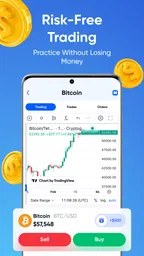
It is also worth distinguishing a simulator’s simplified learning environment from the real crypto market. A practice result cannot account for every real-world factor, and it should not be used to justify putting money at risk. If your goal is to buy, sell, or hold actual assets, a dedicated trading service may be more appropriate—but that is a different activity with different consequences. I would not move from a good simulated outcome straight into a real trade without separate research and a clear understanding of the risks.
For beginners, a further limitation is that learning by doing may not answer every background question. If you need a careful explanation of a term or a deeper account of how a market works, pair the app with reliable educational material rather than treating challenges as a complete course. Conversely, someone who already understands trading and wants advanced charting or direct portfolio management may find a practice-first app less useful than a specialist platform.
How it compares with other ways to learn
Compared with reading guides alone, a simulation gives you a chance to make a decision and notice your reaction. Compared with a live trading app, it offers a more appropriate place to rehearse without making every choice a financial commitment. Each format has a different strength: written lessons explain concepts in depth, simulators make choices feel more concrete, and real-money services are for people who have consciously decided to trade and understand the stakes.
I find the simulator approach most useful for someone who is curious but hesitant, or for a newer learner who wants to practice slowing down before acting. It can also suit an experienced reader who wants a low-pressure way to revisit basic decisions. It is less suitable if you expect personalized financial advice, real investment management, or a guarantee that simulated success will translate into profit. Those expectations ask more of the app than a practice environment can provide.
The developer’s name is Gocrypto: Crypto Trading & Investment Simulator, and the app was released on June 17, 2024. Its current version is 1.3.16. I mention those details because they are useful when checking that you have the right app and a recent release, not because version numbers tell you whether the learning experience will fit you. The best test is whether its activities help you think more clearly about a decision.
My practical verdict
Gocrypto: Crypto Trading is worth trying if you want a free, low-pressure introduction to simulated crypto trading and are willing to treat each challenge as practice rather than a prediction. I would use it in short sessions, set one learning goal at a time, and write down the reasoning behind a decision that surprised me. That routine turns a quick activity into a more deliberate learning exercise.
Its strongest use case is helping a curious beginner become less intimidated by the act of making a trading decision. Its main limitation is also important: a simulation cannot reproduce the full emotional and financial weight of risking real money, and a successful result does not establish that a strategy is reliable. For that reason, I would recommend it as a companion to careful learning, not as a substitute for it.
If you want to understand the basics through hands-on practice, it is a sensible place to start. If you need advanced tools, direct investment services, or certainty about what to buy, choose a resource designed for that purpose and do your own research. Used with those boundaries in mind, Gocrypto can make crypto concepts feel less abstract while keeping the most important lesson in view: understand the decision before you act.
What we like
- Offers a simple interface for checking crypto prices and market movements.
- Supports buying and selling several cryptocurrencies in one app.
- Includes portfolio tracking to monitor crypto holdings.
- Provides market charts for reviewing price trends.
- Useful for beginners exploring cryptocurrency trading.
What could be better
- Crypto prices can change sharply and lead to financial losses.
- Trading features may vary depending on your country.
- Some transactions may include fees that affect returns.
- The app requires an internet connection for market updates.
- Account verification may be needed before trading.





