


Amazon Flex review
 Analysis by Appsdrops
I see Amazon Flex as a practical work tool rather than a general-purpose delivery app. Its appeal is straightforward: it gives drivers a way to take on delivery work tied to Amazon, while its usefulness depends heavily on whether that work fits their schedule, location, and tolerance for a job that happens on the road. I would consider it if I wanted flexible delivery shifts and was comfortable planning around each assignment; I would not treat it as a guaranteed source of steady income.
What the app is designed to help you do
Amazon Flex is a free business app from Amazon Mobile LLC, intended for people delivering with Amazon. That narrow purpose is a strength: the app is not trying to be a shopping companion, a general courier marketplace, or a tool for managing a fleet. Its job is to support a driver’s work with Amazon, so the value comes from how well it fits into the practical rhythm of accepting work, getting ready, and completing deliveries.
In ordinary use, I would think of it as one part of a delivery routine, not the whole job. The app can be central to coordinating Amazon work, but it cannot make an inconvenient route convenient or remove the time spent traveling, handling parcels, and finding drop-off locations. Anyone considering it should weigh the full commitment around a delivery assignment, rather than judging the opportunity only by the time spent actively driving.
The app’s business category is appropriate, though the experience is distinctly individual rather than office-oriented. There is no reason to approach it like accounting software or a team productivity suite. It is aimed at a person doing delivery work, and its usefulness is best judged by whether it makes that work manageable in the situations the driver actually encounters.
Where it can make a workday easier
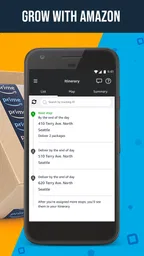
The clearest benefit is having a dedicated place to organize Amazon delivery work instead of trying to assemble the process from unrelated tools. When work is tied to a specific platform, keeping the work routine within that platform can reduce the mental overhead of switching between separate services. That matters most on a busy day, when remembering what comes next is just as important as getting from one stop to another.
A useful way to approach a shift is to build a little structure around the app. Before committing to a delivery period, I would check how it fits with the rest of the day, leave room for the journey to the starting point, and avoid booking work immediately before an appointment. Afterward, I would take a moment to note the actual time spent, including preparation and travel. That simple habit helps distinguish a shift that works well in practice from one that merely looked convenient on a calendar.
One less obvious trade-off is that flexibility is not the same as complete control. An app can make it easier to work around personal commitments, but the available work and its timing still shape what flexibility means. I would use it as an option within a broader schedule rather than assume I can choose any hours I want whenever I want them. That distinction is important for anyone comparing delivery work with a conventional shift.
Another practical point is to think about the working conditions before starting, not just after accepting a delivery commitment. Keep the phone charged, make sure the vehicle is ready for the day, and decide where the app fits into your navigation and communication routine. These are basic preparations, but they help avoid turning a small interruption into a stressful one while handling a route.
The limitations I would take seriously
The biggest limitation is inherent to delivery work: a digital workflow cannot eliminate the unpredictability of roads, parking, building access, or the time it takes to reach a destination. A route that looks straightforward can still involve awkward stops or a slow stretch of traffic. I would not blame the app for every delay, but I also would not expect an app-based process to make the physical job effortless.
There is also a real difference between flexible work and dependable work. If a person needs fixed hours, predictable weekly income, or a schedule that can be planned far ahead, an app-based delivery arrangement may feel uncertain. Amazon Flex is most appealing when someone has room to adapt and can judge each opportunity against their own needs. It is less suitable when every hour and every expected payment must be stable.
It is worth thinking about the hidden time around a shift. Getting ready, traveling to where work begins, and wrapping up afterward all affect whether a delivery period feels worthwhile. I would keep personal notes on total time and practical expenses rather than relying on a quick impression at the end of the day. That is not a special feature of the app; it is a sensible way to evaluate any driving-based work.
Compared with broad gig-work platforms, the main distinction is the focus on Amazon delivery rather than a mix of unrelated errands or service categories. A multi-service platform may suit someone who wants to alternate between different kinds of tasks, while this app makes more sense for someone specifically interested in delivering with Amazon. A conventional part-time job may be the better alternative for a person who values a consistent roster and a clearer boundary between work time and personal time.
A realistic way it might fit into a week
Imagine someone with a free morning between other commitments who wants to use that time for delivery work. They could use the app as the work-specific tool, then plan the rest of the morning around getting ready, reaching the relevant starting point, and leaving enough margin to avoid rushing home for the next obligation. If the day runs smoothly, that can make an otherwise empty period productive. If traffic or the route takes longer than expected, a tight schedule can quickly become a problem.
That example is why I would leave a buffer rather than schedule a delivery commitment edge to edge with another responsibility. I would also avoid treating a promising day as proof that every future shift will work equally well. Personal circumstances, local driving conditions, and the shape of available work all affect the experience. The app may help organize the delivery side, but the driver still has to decide whether a particular day makes sense.
For a new driver, I would start cautiously and assess the practical routine before making delivery work a major part of a budget. Pay attention to the full time commitment, how tiring the driving feels, and whether the work leaves enough room for other responsibilities. This is a more useful test than simply asking whether the app is easy to open or understand.
Who I think will get the most from it
I would recommend considering Amazon Flex if you already want to do delivery work for Amazon and value an app-centered way to engage with that work. It may be a good fit for someone with a suitable vehicle, a flexible personal schedule, and a realistic understanding that driving jobs involve more than the route itself. It can also make sense for someone testing whether delivery work suits them before deciding how much time to devote to it.
I would be more cautious if you depend on a fixed weekly routine, dislike driving in changing conditions, or need a predictable amount of work. The same caution applies if your schedule has little room for delays or if you are looking for an app that offers a wide range of gig categories. In those situations, a conventional job or a platform with a broader mix of work may better match what you need.
The app is rated for Everyone, which describes its content rating rather than implying that delivery work is suitable for every person or every circumstance. The decision to use it should still depend on the driver’s ability to handle the work safely and responsibly. I would treat the age label as a store classification, not as a recommendation about employment suitability.
What the store figures tell me—and what they do not
Amazon Flex has a 4.5 average from around 116,000 ratings, with about 7,200 written reviews, and it has passed 5 million installs. Those figures suggest that many people have encountered the app, but they cannot tell me whether a particular driver will find local work convenient or whether the schedule will suit their life. Ratings are useful as context, not a substitute for thinking through the job itself.
The app was released on June 4, 2024, and its current version is 3.145.2.46.0. For someone already delivering, keeping the app current is a sensible part of maintaining a work setup. Still, a version number does not tell me whether every route or shift will be trouble-free, so I would judge the experience through day-to-day practicality rather than software details alone.
My verdict for prospective drivers
My overall view is positive but conditional. Amazon Flex has a clear purpose, and a focused app is preferable to juggling unrelated tools when the work itself is specifically Amazon delivery. Its strongest case is for people who want to fit delivery work around an adaptable schedule and are prepared to plan the driving, preparation, and recovery time that come with it.
I would not recommend it as a shortcut to effortless earnings or as a replacement for dependable hours. The physical realities of delivery work remain, and flexibility can come with uncertainty. If you are interested, approach it as a practical work option: check whether the routine suits your circumstances, leave breathing room around commitments, and evaluate the whole shift rather than the time spent on the road alone.
For the right person, this is a focused tool that can make Amazon delivery work easier to organize. For someone who needs broad gig choices, fixed hours, or firm predictability, another kind of work arrangement is likely the better fit. That distinction is what makes my recommendation honest: the app may be useful, but only when the work it supports is genuinely right for you.
What we like
- Drivers can choose available delivery blocks that fit their schedule.
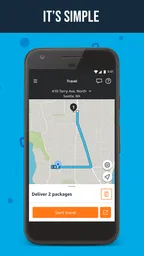
- The app provides turn-by-turn navigation to delivery locations.
- Pickup and delivery instructions are shown within the app.
- Earnings and completed deliveries are tracked in one place.
- The app can notify drivers when new delivery blocks become available.
What could be better
- Work availability can vary by location and time.
- Drivers use their own vehicle and cover related expenses.
- Some delivery blocks require lifting or carrying heavy packages.
- The app may require location access during active deliveries.
- Drivers may need to return undeliverable packages to the pickup site.





