

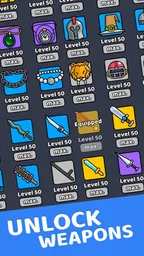
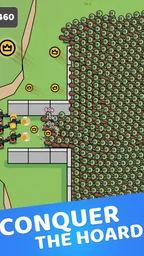
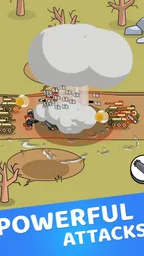
We Are Warriors! review
 Analysis by Appsdrops
I like strategy games that make a short session feel like a real choice rather than a string of taps. We Are Warriors! is built around that appeal: you send forces into battles, work through different ages, and try to make better decisions than the opponent. Its premise is easy to grasp, but the interesting part is deciding when to commit, when to conserve, and how much to adapt when a plan stops working.
What your decisions actually revolve around
This is a free strategy game from Lessmore GmbH, with an age rating of Everyone 10+. It has a broad audience, but I would describe its appeal more narrowly: it suits people who enjoy compact battlefield decisions and visible progression, not players looking for a sprawling map, a long campaign narrative, or the intricate management of a grand strategy game.
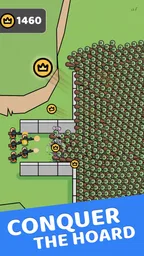
The central loop asks you to command an army and push through battles while advancing across historical ages. That shift in setting gives progression a clear sense of direction. Instead of treating each encounter as a disconnected match, you have a reason to keep moving forward and see what comes next. The trade-off is that anyone who wants to plan an entire civilization’s economy or negotiate a complicated web of alliances should look elsewhere; the focus here is on the fight.
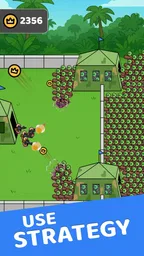
In practice, I found it useful to think in short planning horizons. Before a push, decide what you are trying to achieve: make progress now, or hold back so you can respond to what the opposing force does. The game’s appeal is not that every decision has a dozen layers, but that a small choice about commitment can shape the result. That makes it approachable while still giving a strategy-minded player something to consider.
The title’s broad army-and-ages premise can sound like an invitation to send units forward as quickly as possible. I would resist that instinct. When you spend your attention only on immediate progress, you can miss the more useful question: is this the right moment to attack, or would waiting leave you better placed to answer the next threat? That simple pause is a practical way to get more out of the game without needing to turn every encounter into a study session.
Planning a push instead of simply attacking
The most helpful habit is to separate a battle into a goal and a response. A goal might be to make a decisive advance; the response is what you will do if the opponent’s pressure makes that advance costly or ineffective. Thinking about both sides of the exchange keeps you from treating every attack as an automatic good move.
This is especially useful in a game that invites repeated attempts at forward progress. If a push fails, I would not immediately repeat it in exactly the same way. Look at the outcome and ask whether the problem was timing, too much commitment, or a mismatch between your plan and the opposing army. Even without overcomplicating things, that review gives a next attempt a purpose rather than making it a replay of the last one.
That kind of adjustment is the most meaningful strategic skill I can recommend here: plan around the opponent’s response, not just your own next move. It is a modest shift, but it makes the battles feel less like a race to press forward and more like a series of choices with consequences.
Risk, reward, and the cost of overcommitting
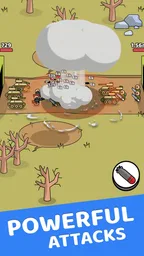
Every strategy game has a tension between acting now and keeping options open. We Are Warriors! makes that tension central to its battlefield focus. A force committed to an attack may help you make progress, but an overly eager plan can leave you with fewer ways to react. The best move is therefore not always the most aggressive one; it depends on how much you stand to gain and what you might be unable to answer afterward.
One practical approach is to decide before a session what “good progress” means to you. If you have only a few minutes, a focused attempt at one battle can be more satisfying than playing on autopilot and hoping to clear several. If you have longer, you can take time to examine where an approach breaks down. In both cases, setting a modest goal helps keep the game from turning into an endless string of unexamined retries.
There is a real trade-off in its pick-up-and-play appeal. A straightforward battle loop is easy to return to, but a player who wants every session to deliver a fresh tactical puzzle may eventually want more variety than a focused progression game provides. The right expectation is important: this is about engaging with repeated battles and advancement, not about a vast set of modes or a deeply simulated battlefield.
It is also worth separating the cost of starting from the cost of continuing. The game is free to download, while optional in-app purchases range from $0.98 to $99.99 per item. That spread makes it sensible to treat purchases as a personal budget decision, not as an assumed part of the strategy. I would begin without spending, learn whether the battle loop holds my interest, and only then decide whether any purchase is worthwhile to me.
Adapting when a plan stalls
A failed attack is useful only if it changes what you do next. When progress stalls, try changing one part of your approach at a time rather than making several guesses at once. That way, you can tell whether a different timing or a more cautious commitment helped. This is a small but valuable discipline in any strategy game built around repeated encounters.
It also makes the game easier to play in ordinary life. Imagine opening it during a short break: you can enter with one clear intention, play a focused attempt, and leave with a concrete question for next time. Did you push too early? Did you keep enough flexibility to answer pressure? Treating the session this way gives even a brief visit a satisfying beginning and end.
For players who dislike repetition, the key question is whether adjusting a plan feels rewarding. If you enjoy spotting why an attempt went wrong and testing a more deliberate response, the loop can hold your attention. If you would rather have a constantly changing set of objectives, elaborate unit customization, or a long story that carries you between fights, this may feel too narrowly focused.
I would also avoid confusing persistence with strategy. Repeating a battle can be part of learning, but repeating it without noticing what happened is just time spent. A more useful approach is to identify one decision you want to improve, make that the focus of your next attempt, and judge the result on that basis. It turns retries into experiments without requiring a spreadsheet or a complicated routine.
How it compares with other strategy games
Compared with large-scale strategy games, We Are Warriors! asks for a much smaller commitment. You are not choosing a grand political direction or overseeing a sprawling settlement; you are focused on army command, battles, and moving through ages. That makes it a better fit for quick, focused play than for someone who wants to spend an evening managing a complex world.
Compared with a pure action game, it asks for more patience. The point is not simply to react quickly, but to think about whether a push is worth the risk and what to change after a setback. That balance is why I see it as a good middle ground for casual strategy fans: accessible in its broad premise, but more satisfying when you pay attention to timing and adaptation.
The game has a 4.5 average from around 295,000 ratings, and more than 10 million installs. Those figures suggest that its compact strategy approach has reached a large audience, though popularity alone does not tell you whether the pacing matches your taste. I would use them as context, not as a substitute for asking whether you enjoy repeat battles and incremental progress.
Progression, expectations, and staying power
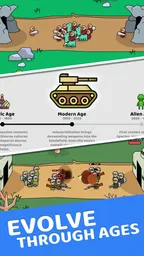
Moving through ages gives the game a natural long-term hook: each step forward makes the larger journey feel tangible. The current version is 1.67.0, and the game first arrived on September 29, 2023. I would approach it as a continuing strategy game whose appeal comes from working through its progression, rather than expecting a single short campaign with a fixed ending.
Its overall audience is reflected in the store’s 13,000 reviews as well as its large rating pool, but the age guidance still matters when choosing a game for a younger player. The content rating is Everyone 10+, so it is not labelled for every age without qualification. For adults, that rating is a simple reminder that this is a game aimed at a broad audience while still being intended for players aged ten and up.
Staying power depends on what you want from strategy. If you like measuring progress through successive battles and refining a practical approach, the age-based journey gives you a reason to return. If your favourite part of the genre is a highly varied campaign, extensive unit-level planning, or the freedom to invent a completely different plan every session, you may prefer a more expansive alternative.
Who I would recommend it to
I would recommend it to someone who wants a strategy game that is easy to understand at a glance but still rewards a little thought before each push. It works especially well for short sessions when you can focus on one encounter, decide what you are testing, and stop without needing to remember a complicated set of objectives.
I would skip it if you have little patience for repeated battles, dislike games with optional purchases, or want deep real-time tactical control. The in-app purchase range runs from $0.98 to $99.99 per item, so anyone who finds spending prompts distracting should go in with a firm no-purchase boundary. The game is free to start, but the presence of optional purchases may still be a reason to choose a different strategy title.
For compatibility, the listed minimum operating system is 8.0. That is a practical detail to check before installing, particularly if you use an older device. The game is designed for both Android and iOS audiences, so the relevant decision is whether your device meets that minimum and whether you prefer a focused battlefield game over a larger strategic experience.
My verdict on the battlefield
We Are Warriors! is at its best when I treat it as a sequence of decisions rather than a button-pressing exercise. Its army command and progression through ages give the battles a clear purpose, while the need to think about timing, commitment, and response adds enough strategy to make a short session worthwhile. Lessmore GmbH has made a game that is easy to approach, but it is not equally suited to every strategy fan.
My recommendation is simple: try it if you want a free, focused strategy game and enjoy learning from a battle that does not go your way. Keep your expectations grounded, and set a spending limit before optional purchases become relevant. If what you want is a deep campaign with broad management systems or constant tactical novelty, choose a different kind of strategy game. If you are happy to refine your approach as you advance, this one is worth a look.
What we like
- Short battles make it easy to play in brief sessions.
- The simple controls are quick to learn.
- Different ages add variety to each battle.
- Strategic unit timing can turn around a close fight.
- The cartoon art gives the game a distinctive look.
What could be better
- Energy limits can interrupt play until it recharges.
- Progress may require repeated battles for resources.
- Some upgrades take a long time to unlock.
- The strategic options are limited compared with deeper strategy games.
- Ads and in-app purchases may affect the experience.







