
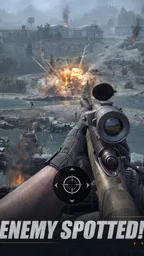
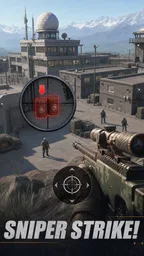
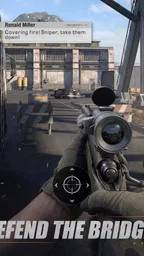
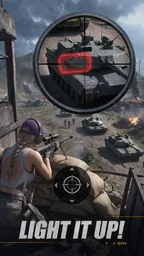
Warline: Sniper Strike review
 Analysis by Appsdrops
I’m drawn to strategy games that make each decision feel consequential, and Warline: Sniper Strike sets out to combine tactical shooting with real-time strategy. That blend is an appealing promise, but it also raises a practical question: does the game give you enough meaningful goals and a satisfying sense of progress to keep returning? My impression is that it is best approached as a focused, action-minded strategy game rather than as a deep, slow-burn battlefield simulator.
What the game asks of you early on
Warline is a free strategy game from Powerfantasy HK Limited, rated for Teen audiences. Its central appeal is the meeting point between direct shooting and broader tactical thinking. That combination should suit players who want more involvement than simply issuing commands, but who also enjoy weighing decisions instead of relying on reflexes alone.
The early hours of a game like this are most useful when they teach you to think beyond the immediate shot. I recommend paying attention to how an encounter asks you to balance precision with the larger objective. A shot can feel satisfying in isolation, yet the more important question is whether it helps you make progress toward winning the engagement. That shift in attention is a good way to tell whether the game’s strategy side is working for you.
Rather than treating every moment as a test of aim, give yourself a small goal for each session: understand the objective, notice what is putting pressure on you, and decide whether a careful or aggressive approach seems more useful. This makes the hybrid design easier to read. It also helps prevent a common frustration with tactical games: feeling busy without understanding why a particular choice mattered.
The title’s format may be especially appealing if you usually alternate between strategy games and shooters. A conventional strategy game can leave you observing events from a distance; a conventional shooter can put nearly all the emphasis on immediate execution. Warline aims for a middle ground. That makes it worth trying if you want tactical decisions to sit alongside direct action, while players seeking either a pure shooter or a detailed command simulator may find the blend less compelling.
Look for useful progress, not just activity
In a game built around tactics and shooting, progress feels meaningful when it changes how confidently you can approach a new situation. I’d judge advancement by whether you understand the decisions in front of you more clearly, not just by how many encounters you have completed. If you notice yourself planning before acting, spotting a risk earlier, or adjusting after a setback, those are useful signs that the game’s goals are teaching you something.
That is also a practical way to keep sessions from becoming repetitive. Before starting another round, decide what you want to learn or improve. Perhaps you want to be more deliberate about timing, or to avoid focusing on one immediate target while losing sight of the wider objective. Keeping the goal small makes each attempt easier to assess, even when the game’s broader progression is not the only thing motivating you.
There is a trade-off here. Players who need a clearly visible reward after every short session may be less patient with a game whose satisfaction comes partly from improving their judgement. Conversely, if you enjoy recognising your own better decisions, the strategy component gives you a reason to reflect rather than simply queue up again without a plan.
Where the challenge can feel demanding
The combined format asks you to split your attention. You are not only thinking about a shot; you also need to keep the tactical situation in view. That can make the learning curve feel steeper than in a straightforward action game, particularly if you prefer to react quickly and sort out the objective later. My advice is to slow down enough to understand what the encounter is asking of you before trying to play at full speed.
When a situation goes poorly, try to identify the kind of mistake rather than blaming your aim by default. Did you rush? Did you overlook the objective? Did the wider tactical problem demand more attention than the immediate action? Separating those possibilities turns a frustrating attempt into useful feedback. It is a simple habit, but it suits a game that brings strategy and shooting together.
This approach will not make every difficult stretch enjoyable. If you want a relaxed game that works well while your attention is divided, Warline may not be the right choice. Tactical play is more satisfying when you can concentrate, and splitting your focus with messages, television, or other tasks can make decisions feel arbitrary. I would save it for a moment when you can give the encounter a little attention rather than treating it as background entertainment.
Session rhythm and the temptation to keep playing
Warline is easiest to fit into everyday life when you give a session a clear stopping point. For example, if you have a spare stretch of time after work, you might play until you have understood a new challenge or made a deliberate improvement, then stop and return later. That is more satisfying than continuing simply because you feel you ought to make progress before putting the game down.
The game is free to download, with optional in-app purchases priced from $0.99 to $199.99 per item. That wide range makes it sensible to decide your own spending limit before making a purchase, especially if repeated play makes you feel eager to advance faster. I would treat purchases as optional rather than assume that spending is necessary to enjoy the tactical challenge. If you are comfortable playing at your own pace and wary of high-priced items, keeping a firm budget is the straightforward approach.
One useful personal rule is to ask whether a purchase solves a genuine problem or merely promises to reduce waiting or frustration. If you are still learning how to approach the game, a purchase may not fix a tactical misunderstanding. Give yourself time to understand the decisions first. That keeps the free starting point meaningful and helps you judge any optional spending with a clearer head.
Warline has an average rating of 4.9 from around 250,000 ratings, and it has passed 5 million installs. Those figures suggest that many players have found something to enjoy in it, but they cannot tell you whether its particular mix of strategy and shooting fits your habits. I would use them as a reason to take a look, not as a promise that the game will suit every player.
Who will get the most from its progression
I’d recommend Warline to someone who likes having both an immediate action to perform and a tactical problem to consider. It is also a reasonable pick if you enjoy learning through attempts: trying a decision, noticing what went wrong, and returning with a more deliberate plan. The current version is 1.3.01, and the game requires Android 6.0 or later, so it is worth checking device compatibility before you plan to make it a regular part of your routine.
It is less suited to players who want a quiet, low-pressure strategy experience, or those who prefer a pure shooter in which aiming and quick reactions are the main event. It may also disappoint anyone who expects progression to be instantly rewarding in every session. The more useful question is whether you enjoy the process of working out how a tactical encounter should be handled, rather than whether you can collect visible signs of advancement as quickly as possible.
Parents should also note that the game carries a Teen age rating. That makes it important to consider whether its content is appropriate for the intended player, rather than relying on the fact that it is free or readily available. The rating is a useful starting point for that decision, especially when the game is being considered for a younger family member.
My progression verdict
What I like most about Warline’s concept is the possibility of making progress through better decisions, not just through repetition. The strongest way to approach it is to connect each attempt to a question: what is the objective, what deserves attention first, and what would I change next time? That creates a personal sense of advancement even when a session does not go exactly as planned.
The main limitation is that the same hybrid design can divide attention and make the learning process feel demanding. Players looking for instant, uncomplicated action may be happier with a conventional shooter, while those who want extensive, slow-paced strategic planning may prefer a more specialised strategy game. Warline occupies the space between those preferences, and that is both its clearest attraction and the reason it will not work for everyone.
For me, it is worth trying if tactical choices make a game more engaging and you are happy to learn by observing your own decisions. Start without assuming that purchases are required, set a sensible limit if you are tempted to spend, and give the encounters enough attention to understand what they are testing. If that process sounds enjoyable, Warline: Sniper Strike offers a distinctive strategy-and-shooting proposition; if you want a more relaxed pace or a purer genre experience, another game is likely to be a better fit.
What we like
- Sniper controls are easy to learn for newcomers.
- Short missions suit quick gaming sessions.
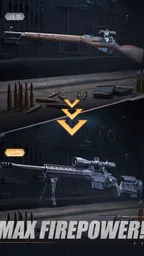
- Weapon upgrades add a clear sense of progression.
- Distinct mission settings help keep encounters varied.
- Offline play is useful when internet access is limited.
What could be better
- Repeated mission objectives can make later stages feel familiar.
- Precision aiming may feel awkward on smaller screens.
- Some upgrades require extended play to unlock.
- Ads or in-app purchases may interrupt the experience.
- Difficulty spikes can make certain missions frustrating.







