




Viking Rise review
 Analysis by Appsdrops
I find Viking Rise most appealing when I treat it as a strategy game to return to in short, considered sessions rather than a quick match with a clean ending. Its Viking setting gives the decisions a strong identity, but the main question for a new player is practical: do you enjoy building momentum over time, and are you comfortable with a free game that offers optional purchases? If so, there is plenty here to explore. If you want a self-contained strategy campaign with no spending prompts, it may be a poor fit.
What free access actually means
The game is free to download and play, so trying it does not require an upfront purchase. That is useful if you are curious about its blend of Viking-themed strategy and longer-term progression but do not yet know whether you will stick with it. I would approach the first sessions as a chance to learn the rhythm, not as a reason to spend immediately.
Optional in-app purchases range from $0.09 to $299.99 per item. That broad spread matters: free access is real, but the shop can include purchases at very different price points. I would set a personal spending limit before browsing it, especially if you are prone to paying to speed up a game when you feel behind. You can decide whether the play itself is enjoyable before considering any purchase.
There is no need to treat the biggest available purchase as the normal way to play. In my view, a high-priced option only makes sense to someone who has already spent enough time with the game to understand exactly what they want from it and what that purchase changes for them. For a newcomer, the sensible value is the chance to test the experience without paying first.
Value comes from the kind of strategy you enjoy
Viking Rise is a strategy game from IGG.COM, and its value is less about a single burst of action than about whether you enjoy making choices that build toward something. The Norse theme gives the game a recognizable frame, but the appeal for me is the planning mindset: deciding what deserves attention now, what can wait, and how much time I want to give the game on a particular day.
That makes it a different proposition from a compact puzzle or a strategy game built around short, independent rounds. Those alternatives are easier to pick up for a few minutes and put away without thinking about what comes next. Viking Rise is better suited to players who like continuity and gradual investment. If your favorite part of strategy games is seeing a plan take shape across multiple visits, that ongoing structure can provide more lasting value than a brief match.
The game has an average rating of 4.6 from around 969,000 ratings, alongside roughly 17,000 written reviews. It has also reached over 10 million installs. Those figures suggest broad interest, but I would not use popularity alone as a reason to play: the important question is whether you like the pace and the trade-off between free progression and optional spending.
How I would fit it into an ordinary day
A realistic use case is checking in during a break, making one or two deliberate decisions, then returning later when you have more time. I would avoid opening it automatically every time I have a spare minute; that can turn a strategy game into a routine obligation. Instead, I would decide what I want to accomplish before opening it, and stop when that goal is done.
One useful habit is to keep a small mental note of your current priority. If you begin a session without one, it is easy to drift between menus or feel pulled toward whatever the game makes most visible. Choosing a focus first helps me judge whether a session was worthwhile, and it makes it easier to ignore a purchase prompt if it does not serve that goal.
Another practical tip is to try the game over several ordinary days before spending. A single enthusiastic session can make any progression loop feel exciting; a few days reveal whether you actually enjoy returning to it. If the appeal fades once the novelty wears off, keeping your money is the better value. If you still look forward to planning your next move, you will have a clearer basis for deciding whether an optional purchase is worth it to you.
The trade-offs behind the Viking theme
The strongest trade-off is between ongoing engagement and convenience. A game built around continued progress can give a player reasons to return, but it can also make the experience feel like a series of tasks rather than a complete evening of play. I would not recommend it to someone who wants every session to offer a strong beginning, middle, and ending. For that, a turn-based strategy game with discrete missions may be a better match.
The shop is another consideration, even if you intend to play for free. A free-to-start game with purchases from a few cents up to nearly $300 can create very different expectations for different players. Some may be comfortable ignoring purchases altogether; others may find the options distracting or feel pressure to pay for convenience. I would be cautious if spending to keep pace tends to spoil your enjoyment.
There is also a difference between liking the Viking presentation and liking the actual strategy loop. A theme can make a game inviting, but it cannot substitute for enjoying its decisions. I would give the game a fair trial based on whether I like planning and returning, not on whether I simply like Norse imagery.
The game is rated Teen, so I would check that age guidance before handing it to a younger player. That rating is worth considering alongside the purchase options: if a child will play, I would talk about spending expectations in advance and make sure the device’s purchase controls suit your household.
Who is likely to get good value
I would recommend giving it a try if you enjoy strategy games that reward patience, like the idea of a Viking setting, and are happy to decide for yourself whether optional purchases are worthwhile. It may also suit someone who wants a game they can revisit in short windows, provided they do not expect each visit to feel like a self-contained match.
It is less suitable for players who want a one-time purchase with no in-app shop, prefer brief rounds with immediate closure, or dislike games that invite regular check-ins. If you are mainly after tactical depth in a tightly bounded format, a paid strategy game with a fixed campaign could be a better use of your time and money. If you are looking for a relaxed game with no pressure to maintain progress, a smaller offline title may feel more comfortable.
For people deciding whether their phone can run it, the listed minimum is Android 5.1, and the current version is 1.5.160. I would still check the app store entry on the device before installing, since compatibility can depend on the particular device and its software. The game was released on April 13, 2023, so it is not a brand-new launch, but that alone does not tell you whether its current pace or community is right for you.
My verdict on spending time or money
My recommendation is to try Viking Rise free first and judge it by how it feels after the initial curiosity has passed. The free entry point makes that an easy decision; the optional purchase range makes an impulsive shop visit a less easy one. I would only pay if I had identified a specific benefit I wanted and was comfortable with the amount, rather than spending because I felt behind.
In short, the game offers the clearest value to someone who genuinely likes ongoing strategy and can enjoy it without treating every purchase as necessary. For that player, its Viking identity and longer-term style may be enough to make regular visits rewarding. For someone seeking a complete, no-cost, no-shop strategy experience—or a campaign that can be finished in discrete sessions—I would skip it and choose a more contained alternative.
What we like
- The alliance system makes teamwork valuable during battles.
- Different troop types encourage strategic army composition.
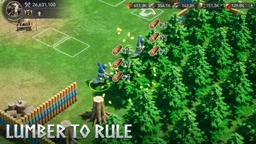
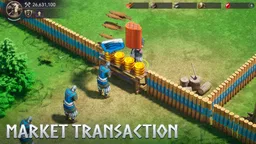
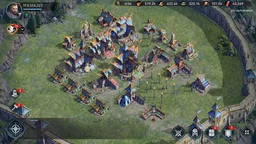
- The Norse setting gives the game a distinctive visual identity.
- Exploration provides useful rewards beyond the main battles.
- Building upgrades offer clear long-term goals.
What could be better
- Progress can slow considerably without regular play.
- Many upgrades require timers or scarce resources.
- Competitive events may favor players who spend money.
- Alliance activity can strongly affect your progress.
- The interface can feel crowded with multiple menus and alerts.







