Total Battle: War Strategy review
 Analysis by Appsdrops
I can see why Total Battle: War Strategy attracts players at first: it frames strategy as a continuing struggle over kingdoms, armies, and heroes rather than a puzzle that ends after a few matches. My impression is that its strongest appeal is the sense of building toward something bigger. That same ongoing structure, though, is what determines whether it becomes a satisfying routine or starts to feel like another obligation on your phone.
As a strategy game from Scorewarrior, it is aimed at people who enjoy planning, gradual progress, and battles with a broader setting. It is free to start, rated Everyone 10+, and has an average rating of 4.1 from around 359,000 ratings, with more than 50 million installs. Those figures suggest a substantial audience, but they do not tell you whether its pace suits you; the key question is whether you enjoy returning to a world that develops over time.
Why the opening can draw you in
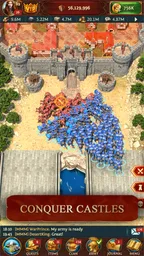
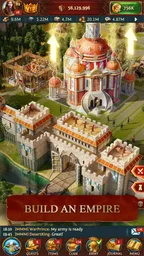
The early appeal comes from the combination of kingdom-building and military ambition. Instead of treating each encounter as an isolated contest, the game presents conflict as part of a larger effort to strengthen your position and lead heroes into battle. That gives ordinary decisions a useful sense of purpose: progress feels connected to the next challenge rather than being only a score to chase.
I would approach the opening as a chance to learn the game’s rhythm, not as a race to advance as quickly as possible. In a strategy game with ongoing progression, spending a little time understanding what your current goals actually require can prevent you from scattering effort across too many directions. A practical habit is to decide what you want your next session to accomplish before you leave the game. That makes returning feel more deliberate and helps keep the early excitement from turning into aimless tapping.
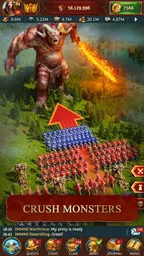
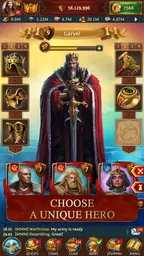
The hero-and-army framing also gives the experience a different texture from a straightforward tactical battle game. If you usually prefer planning a campaign over replaying short, self-contained rounds, that wider frame may be appealing. On the other hand, someone looking for a compact game that can be completed in a handful of focused matches may find the continuing kingdom struggle less immediately rewarding.
The best first-week use case is a player who enjoys checking in, making a few considered decisions, and watching a longer plan take shape. It is less ideal if you want every session to end with a neat conclusion. The game’s premise points toward ongoing investment, so it is worth noticing early whether that open-ended commitment energizes you or makes progress feel unfinished.
How to make the first sessions count
Rather than trying to do everything at once, I’d keep a simple mental priority: understand the current objective, make choices that support it, and stop when the session no longer feels purposeful. That sounds modest, but it is especially useful in a kingdom strategy game, where a long list of possible actions can create the illusion that constant activity is the same as good planning.
It also helps to judge progress by whether your decisions are becoming clearer, not just by how quickly your position expands. If you are learning which activities support your preferred style of play, the opening is doing its job. If you are merely repeating actions without understanding their contribution, pause and reassess instead of treating more time as the solution.
Whether the routine holds up over time
Long-term value in Total Battle: War Strategy depends less on novelty than on whether you enjoy managing a continuing strategic project. The game can suit players who like returning to familiar goals with a fresh decision to make. Its kingdom-and-battle premise offers a reason to keep developing, but that reason has to remain personally satisfying; ongoing progression is not automatically meaningful just because it continues.
A useful month-to-month test is to ask whether your sessions still involve choices you care about. If you are weighing what to prioritize and feel that your decisions shape your next step, the game is providing the kind of recurring value its format promises. If sessions have become a checklist you complete without interest, the same persistence can feel like maintenance rather than play.
For an everyday scenario, imagine opening the game during a break between other tasks. A good session is one where you know what you intend to do, make progress toward it, and can put the phone away without feeling you must keep checking back. If you find yourself reopening it mainly because you are worried about falling behind, that is a different kind of habit—and a good reason to reconsider how much space it deserves in your day.
This is where it differs from the usual alternatives in strategy. A turn-based tactics game often offers a defined match, a clear finish, and a fresh start next time. A quick competitive strategy title may put the emphasis on immediate rounds. Total Battle instead asks you to value continuity: its appeal is the developing kingdom and the broader campaign feeling, not simply a sequence of tidy battles. Choose a self-contained alternative if you want a reliable stopping point after each play session.
Keeping the time commitment under control
I would set a personal stopping rule before the game becomes part of a daily routine. For example, decide that you will play when you have a specific goal, rather than opening it automatically whenever you have a spare moment. That small distinction helps reveal whether the game is still engaging you or whether the habit has become detached from enjoyment.
Another useful approach is to review your priorities whenever progress feels scattered. Pick one immediate objective and let unrelated distractions wait. This is not a claim that the game requires a particular schedule; it is a way to protect your attention in a format built around continued development. Strategy is more satisfying when you feel you are choosing your next move, rather than responding to an endless stream of things to do.
The game’s current version is 349.9.137-release, and it supports Android 6.0 and later. That broad baseline makes it accessible to many Android users, though device compatibility alone does not tell you whether you will enjoy the pacing. If you are deciding whether to keep it installed, the better test is whether its longer arc gives you a reason to return that feels worthwhile rather than compulsory.
Where the friction can build
The central limitation is also the central trade-off: a persistent strategy experience can ask for patience. If you prefer rapid results, clean endings, or sessions that never depend on earlier progress, an ongoing kingdom game may feel slow. I would not recommend it as a substitute for a short puzzle or a self-contained tactics game when what you really want is a quick mental reset.
There is also a spending consideration. The game is free to download, while in-app purchases range from $0.99 to $249.99 per item. That range is worth knowing before you begin, particularly if you are sensitive to purchase prompts or prefer games with a single upfront price. I would decide on a spending boundary in advance—or keep purchases off the table—and judge the game by whether its free experience is enjoyable on its own terms.
That does not mean spending is necessary to enjoy it; it means the purchase range deserves attention as part of the decision. Players who dislike monetized progression may prefer a paid strategy game with a fixed cost and a contained campaign. If you do try this one, keep your focus on the strategic choices you find enjoyable and avoid treating purchases as a shortcut to making the game feel more rewarding.
Fatigue can also come from repetition. A long-running game needs to give its familiar actions enough context to remain interesting. If your attention shifts from planning to simply preserving momentum, take a break and see whether you actually miss the experience. That is a more honest measure of lasting value than keeping the app installed because you have already invested time in it.
Who is likely to stay, and who should move on
I think it is a strong fit for players who like gradual development, a kingdom-scale backdrop, and strategy that connects one session to the next. It may also suit people who enjoy returning to an established project in short windows, provided they can do so without feeling pressured to check constantly. The game’s audience is large, but popularity does not make its persistent format universal.
I would steer away if you want a campaign with a definite ending, dislike in-app purchase ranges, or find it hard to stop playing once a game gives you ongoing goals. A compact tactical game is a better choice when you want every session to have a beginning and an end. A simpler casual strategy game may be better if you want fewer long-term commitments and more immediate outcomes.
The age rating is Everyone 10+, which gives families a basic point of reference, but I would still consider the game’s ongoing nature and its in-app purchases when deciding whether it is appropriate for a particular player. For adults, too, the practical question is whether the phone habit remains comfortable. A game can be suitable in content and still be a poor fit for someone who does not want a persistent routine.
My long-term verdict
After the first rush of discovering a strategy game’s world fades, Total Battle has to earn its place through the pleasure of returning to a continuing plan. I see its best lasting quality in that sense of connected progress: it is built for people who like a strategic project that remains in motion, not for players who need every visit to deliver a complete story.
Scorewarrior’s game has considerable reach, and its 4.1 average from around 359,000 ratings gives prospective players a useful broad signal, but I would treat personal fit as more important. Try it if kingdom-focused strategy and ongoing development are what you want. Give it a few sessions with a clear goal, then ask whether you are looking forward to the next decision or merely maintaining a streak of attention.
My recommendation is measured: it can earn lasting space for a patient strategy fan who enjoys returning to a larger campaign and can keep play on their own terms. It is not the right choice for someone seeking a quick, finished experience or an uncomplicated purchase model. If your interest survives the novelty and the routine still feels chosen, keep it; if the game has become a duty, moving on is a sensible strategic decision too.
What we like
- The tutorial makes core strategy mechanics approachable for newcomers.
- Multiple troop types encourage varied battle plans.
- Alliance play adds a social layer to long-term progression.
- The world map offers plenty of objectives to pursue.
- Regular events can provide fresh goals for active players.
What could be better
- Progress can slow considerably without spending money.
- Long construction timers make advancement feel less immediate.
- Frequent notifications may interrupt play.
- Large battles can be difficult to follow on a small screen.
- Alliance progress depends heavily on active members.







