Top Heroes: Kingdom Saga review
 Analysis by Appsdrops
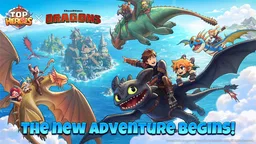
I like strategy games that make me pause before committing, rather than simply asking me to tap faster. Top Heroes: Kingdom Saga aims for that kind of appeal, pairing a broad fantasy-adventure frame with choices about how to build and direct a growing roster. It is a free game from RiverGame, and its crossover with How to Train Your Dragon gives the current adventure a Viking-and-dragon flavor. My main impression is that it works best for players who enjoy gradual planning and checking in on a strategy game over time, rather than those looking for a tightly scripted, one-sitting campaign.
Where the decisions start
At its heart, this is a strategy game about making a series of choices that matter more in combination than in isolation. Who you develop, how you organize your available strength, and when you take on a challenge all contribute to the larger plan. That gives the game a different rhythm from a reflex-heavy action title: the satisfying part is often thinking through what to do next, then seeing whether your preparation holds up.
I would approach its decisions with a simple rule: avoid spreading every resource and every upgrade across everything at once. In games built around a growing cast and long-term progression, focused investment is usually easier to assess than a collection of half-developed options. Before committing, consider which part of your current lineup is actually holding you back. If a difficult encounter exposes a weak point, strengthening that area is more useful than upgrading at random just because an option is available.
That is also where patience becomes part of the strategy. A quick power increase can feel rewarding, but it may not solve the problem you are facing if your overall approach is poorly matched to it. I recommend treating a failed or uncomfortable push as information: look at what went wrong, change one priority, and try again when your preparation is better. That mindset makes progress feel earned instead of turning every setback into a reason to spend.
Plan around the time you have
A useful everyday way to play is to decide what a session is for before opening the game. On a short break, I would check what needs attention and make one deliberate improvement rather than bouncing between every available activity. With a longer stretch, it is easier to compare options, think about the roster as a whole, and make a more considered push. This distinction matters because the game’s appeal is tied to ongoing development; it is less satisfying if you expect every visit to deliver a neat, self-contained adventure.
The Viking-and-dragon crossover provides a distinctive theme for this chapter of the game, but I would not choose it solely on the strength of that premise. The more important question is whether you enjoy the underlying loop of building, planning, and returning to see how your decisions pay off. If you mainly want a story-led adaptation where the characters and narrative are the whole point, a dedicated adventure game may suit you better.
Reward, pressure, and spending choices
The reward of a long-term strategy game is watching a plan come together. When a roster that once felt limited becomes more capable, earlier choices gain meaning. The tradeoff is that progress can feel uneven: a player who wants immediate, predictable gains may find a gradual development loop frustrating. I prefer to see that slower pace as a reason to set priorities, not as a demand to keep pushing every time the game is open.
There are in-app purchases, with listed items ranging from $0.99 to $499.99. That is a very wide range, so I would make a personal spending limit before playing and treat purchases as optional rather than as a default solution to a difficult moment. If you are comfortable enjoying steady progress without buying your way past friction, the free entry point makes it easy to try the game first. If you dislike games where optional purchases sit alongside progression, that aspect may weigh more heavily for you than the strategy itself.
My practical advice is to pause before buying anything and ask what problem the purchase would solve. Is it addressing a clear bottleneck you have already identified, or are you reacting to the impatience of a slow session? The first is a considered choice; the second is where it is easy to spend without improving your actual plan. You can also decide in advance that the game is entertainment for short check-ins, not a race to catch up with anyone else. That boundary helps keep the decision-making enjoyable.
Adapting when the first plan stalls
One of the more useful habits in a strategy game is changing your approach without throwing away everything you have already built. If a particular challenge feels out of reach, I would first reconsider where limited attention is going. Are you reinforcing the part of your setup that needs help, or simply adding strength in the areas that are already comfortable? Even without chasing a perfect configuration, a small, targeted adjustment can teach you more than repeatedly attempting the same approach.
This is where I would be cautious about assuming there is one universally best lineup or route. What feels effective at one stage may not be the right answer later, especially as your available options change. Rather than copying a recommendation without context, look for the reason behind it: what weakness is that setup addressing, and does your own roster have the same weakness? That kind of reasoning is more transferable and helps you make decisions independently.
Counterplay here is best understood as preparation and response, not as a promise that every obstacle has a clever trick. When progress slows, revisit the choice that led you there. Change one priority at a time where possible, so you can tell whether the adjustment helped. If you alter several things at once, a better result may be hard to explain, and a worse one offers little guidance. This measured approach suits players who enjoy learning from outcomes more than those who want a guaranteed solution for every encounter.
What the game asks over the long term
Top Heroes: Kingdom Saga is a better fit for people who like seeing small decisions accumulate. The game’s strategy focus invites a longer planning horizon: consider what you need now, but also whether today’s investment will leave you flexible later. That does not mean every choice must be optimized. It means avoiding the feeling that you have to act on every option immediately, and giving yourself room to learn which parts of your approach you actually enjoy.
Its scale is reflected in its audience: it has passed 10 million installs, with a 4.7 average from around 238,000 ratings and about 4,100 written reviews. Those figures suggest broad interest, but they do not guarantee that its pacing will suit you. I would pay more attention to your own tolerance for gradual progression and optional purchases than to popularity alone.
The game is rated Everyone 10+, launched on February 17, 2024, and its current version is 1.129.15. It requires Android 6.0 or later. Those details make it straightforward to check whether an Android device meets the stated minimum, while the age rating gives families a useful starting point when deciding whether the game is appropriate. As with any strategy game, a parent may still want to consider how the purchase options fit their household’s rules.
Compared with a compact puzzle strategy game, this is a more ongoing commitment: the appeal is less about solving one clean board and more about managing growth across repeated sessions. Compared with a fast competitive strategy title, I would approach it as a more gradual planning experience, not as something to pick up expecting instant mastery. If you want a short, self-contained game with a clear ending, a puzzle campaign is likely the better choice. If you enjoy returning to a world and refining your decisions, this has a stronger case.
Who I would recommend it to
I would recommend it to a friend who likes fantasy strategy, enjoys developing a roster over time, and is happy to make progress in manageable steps. It can work well as a game to open during a break, handle one clear priority, and leave until the next session. Players who enjoy thinking about why a plan works—and changing it when it does not—will get more out of it than players who simply want to collect upgrades without considering how they fit together.
I would steer away from it if you need a complete offline-feeling campaign, strongly dislike gradual progression, or prefer a game with no in-app purchase options. I would also look elsewhere if your favorite part of a franchise crossover is a deep, character-driven retelling; the Viking-and-dragon theme may draw you in, but the strategy loop is the real reason to stay. Being clear about that before installing is a better guide than expecting the crossover alone to define the experience.
My strategy verdict
For me, the strongest reason to try this game is the room it gives you to make and revise a plan. Its appeal is not that every decision is dramatic; it is that small choices can shape how satisfying your next stretch of progress feels. My best advice is to focus upgrades around a real need, treat setbacks as feedback, and set a spending boundary that matches your comfort level. That makes the game easier to enjoy on its own terms.
In the end, I see it as a solid choice for patient players who want a fantasy strategy game they can revisit, especially if the crossover setting appeals to them. It is not the right pick for everyone, and the gradual pace and broad purchase range deserve honest consideration. But if you enjoy planning ahead, adapting when a tactic stalls, and watching a roster develop over time, Top Heroes: Kingdom Saga is worth a try.
What we like
- Hero roles make team building easy to understand.
- A broad cast of heroes supports varied squad setups.
- Exploration offers rewards beyond standard battles.
- Alliance features add a social dimension to progression.
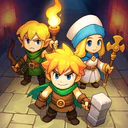
- The colorful art style gives the game a polished look.
What could be better
- Progress can slow when upgrade materials run low.
- Later stages may require repeated grinding.
- Timed events can pressure players to log in often.
- The many upgrade systems may feel overwhelming at first.
- Competitive progress can favor players who spend money.







