
Top Force review
 Analysis by Appsdrops
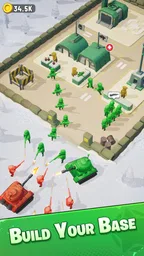
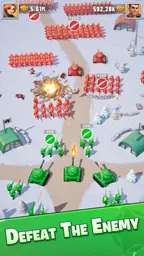
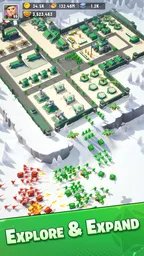
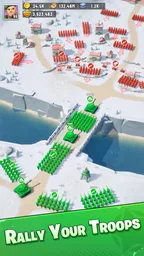
I approach Top Force as a strategy game for people who enjoy making a small base work harder over time. Its premise is easy to grasp: build up your position, prepare your soldiers, and take on opposing forces. What takes more thought is deciding how to spend attention and resources so progress feels steady rather than scattered. I found that practical side more important than the battle theme itself.
Getting oriented before progress stalls
Top Force is a free strategy game from Century Games Innovation Pte. Ltd. It has an average rating of 4.4 from around 52,000 ratings, and more than a million installs. That suggests a sizable audience, but those figures do not tell you whether its routine suits you. The useful question is whether you enjoy alternating between improving a base and preparing for conflict, rather than expecting every session to be a self-contained battle.
New players can get stuck by treating every available action as equally urgent. In a base-and-army game, upgrades, expansion, and troop preparation compete for resources and time. My practical advice is to pause before committing to a string of upgrades: check what your next objective requires, then prioritize the improvements that help you reach it. This keeps early decisions connected to a goal instead of leaving you with several half-finished plans.
That approach matters especially if you only play in short bursts. Before closing the game, I would make one clear decision about what to improve next and, if possible, start a useful task rather than opening several unrelated paths. On returning, you have an obvious next step. It is a simple habit, but it reduces the feeling of having to re-learn your own plan every time you open the game.
The game is rated Everyone, so its stated age classification is broad. Its current version is 3.5.3, and it requires Android 8.0 or later. The free entry point is appealing, but in-app purchases range from $0.99 to $99.99 per item. I recommend deciding before you play whether you want to keep spending at zero: optional purchases can make resource decisions feel more tempting, but the presence of a purchase does not mean you need to buy one to evaluate the game.
Small setup checks that prevent avoidable frustration
If installation or launch goes wrong, start with the basics rather than assuming the game itself is broken. Check that your device meets the Android requirement, that the app has finished installing, and that your connection is stable when you try to open it. If it fails to load, close it fully and reopen it; if the problem continues, restart the device and try again. These are ordinary first checks, not guarantees, but they can distinguish a temporary hiccup from a persistent issue.
Before spending time building a long-term plan, make sure the game is behaving consistently. If screens load slowly or an action appears not to register, wait briefly and check the same action again before tapping repeatedly. Repeated inputs can make it harder to tell what happened and may lead you to spend resources or change a plan unintentionally. I find a deliberate pause more useful than trying to force progress through a laggy moment.
It is also worth setting a spending boundary early. Because purchases have a wide range of listed prices, a player who prefers a no-spend experience should treat paid options as distractions rather than shortcuts to build around. If you share a device or account environment, make sure the person playing understands that purchases are available. That small bit of preparation is more useful than deciding under pressure after a progression bottleneck appears.
Recovering your rhythm when a plan stops working
When progress slows, I would not respond by upgrading everything. Instead, identify the immediate obstacle: is the next step asking for a stronger force, more room to develop, or a resource you have been spending elsewhere? Then focus on the one part of your setup that addresses that obstacle. This is a practical way to make the game’s base-building and soldier preparation feel like connected decisions, rather than separate chores competing for attention.
A useful recovery routine is to revisit the objective, inspect what you already have available, and choose one adjustment before trying again. If the same approach still fails, change a different part of the plan instead of repeating the same action without reflection. The point is not to assume a particular hidden tactic; it is to make each attempt informative. Even a small note to yourself—what you were trying to accomplish and what seemed to hold you back—can prevent aimless spending on the next visit.
For a realistic everyday use case, imagine checking in during a break and having only a few minutes. I would use that session to review the next target, start or complete one sensible base improvement, and leave the bigger decisions for when I can focus. A rushed session is a poor time to make several resource commitments. This is where the game can fit a casual routine, provided you are comfortable with progress being built through repeated check-ins rather than a single long play session.
That rhythm is also why I would avoid opening Top Force when I want a quick, polished match with a clear beginning and end. Its central appeal is the ongoing work of developing a base and preparing for opponents. If you prefer direct control over every moment of a battle, a more action-focused strategy game may be a better match. If you enjoy making incremental decisions between encounters, the persistent planning is more likely to feel satisfying than slow.
When a problem may be outside the game
Not every interruption points to a gameplay issue. A weak or changing connection can affect loading, while low device storage or background activity can make an app feel sluggish. If the game behaves differently from one attempt to another, compare conditions: try again on a steadier connection, close other demanding apps, and make sure the device is not struggling with storage. Changing one condition at a time makes it easier to tell whether the problem is temporary.
If an action appears to have gone missing, avoid immediately repeating a purchase or a resource-consuming step. First return to the relevant screen and check whether the result has appeared. If the display still seems wrong, close and reopen the game and review the situation again. For account, payment, or persistent technical problems, use the support route available through the app store or the game itself, rather than relying on guesses from other players. That is safer than making repeated changes when you are unsure what registered.
It helps to separate frustration with the game’s pace from a technical fault. Waiting for progress or having to adjust a plan can be part of a strategy game’s normal loop; a screen that will not load or an action that repeatedly fails is a different matter. I would give the former a fair trial before deciding the game is malfunctioning, but I would not keep spending or retrying an action that appears to be failing.
How it compares with other strategy games
Compared with strategy games centered mainly on short tactical battles, Top Force puts more emphasis on the connection between your base and your ability to field soldiers. That gives planning a longer horizon: a decision made during one session can shape what you are ready to do later. The trade-off is that players who want immediate tactical variety may find the preparation and expansion side less exciting than the action itself.
It also differs from games that focus mostly on quiet city construction. Here, the stated goal includes facing enemies, so development has a combat purpose rather than being only decorative or economic. I like that clear direction, but it means the game is best approached as a strategy routine, not as a relaxed builder with no pressure to prepare. If you dislike having to weigh development against readiness for conflict, a purely creative building game will probably feel more comfortable.
Top Force is a stronger fit for someone who likes to return to a developing plan and make practical choices in small sessions. It is less suited to a player who wants deep, uninterrupted control of each encounter, dislikes progression systems, or expects a free game to have no purchase prompts. Those distinctions are more useful than a blanket claim that it is good or bad: the appeal depends on whether base growth and army preparation are the parts of strategy you actually enjoy.
Who should give it a try
I would recommend trying it if you like games where the next decision is often about what to strengthen before taking on the next challenge. It can work for a commute break or a spare moment at home, as long as you are happy to make modest progress and return later. The strongest habit is to set one objective per session, protect resources for it, and stop before hurried decisions turn a short check-in into frustrating guesswork.
I would skip it if you mainly want a standalone battle, dislike waiting between improvements, or feel pressured by optional spending in free games. Someone who wants a more hands-on tactical experience should look for a strategy title built around direct combat; someone who wants open-ended construction may prefer a builder with less emphasis on enemies. Top Force sits between those tastes, with its appeal rooted in preparing a base and force for the next step.
My overall view is that Top Force is worth a try for patient strategy fans who enjoy incremental planning more than instant action. Its free price makes it easy to test, while the in-app purchase range is a good reason to set personal limits before settling into the routine. I would judge it by whether the cycle of improving your position and preparing soldiers keeps you curious—not by how quickly you can push through it. If that loop feels rewarding, the game has a clear place in a casual strategy rotation; if it feels like upkeep, there are better-fitting alternatives.
What we like
- Quick battles make it easy to play in short sessions.
- Squad upgrades provide a steady sense of progression.
- The military theme gives the game a clear visual identity.
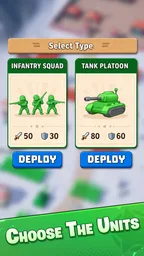
- Multiple units add variety to team building.
- Free-to-play access lets newcomers try the game at no cost.
What could be better
- Progress can slow down as upgrade costs increase.
- Optional purchases may give paying players an advantage.
- Repeated battles can make later sessions feel repetitive.
- A reliable internet connection is needed for online features.
- Small interface elements may be difficult to read on phones.







