



Stumble Guys review
 Analysis by Appsdrops
I find that Stumble Guys is easiest to understand as a quick, colourful knockout game built around movement, timing, and the pleasure of watching a crowded course descend into chaos. Its action comes less from fighting than from trying to stay upright and reach the finish while other players and obstacles get in the way. That makes it approachable at a glance, though not automatically comfortable for every player: fast motion, busy scenes, and precise timing can still be demanding.
Clear at a glance, less simple in motion
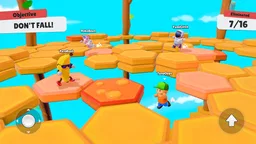
The basic goal is refreshingly easy to grasp. You guide a small character through obstacle courses, avoid being knocked off course, and try to survive each round. I like that the central task is visible on screen rather than buried in complicated rules. A new player can watch what is happening and understand the broad aim without studying a long explanation first.
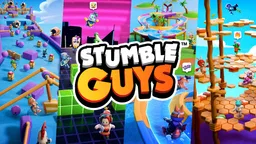
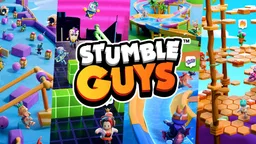
The visual style helps make the game feel playful rather than harsh. Characters and obstacles stand out amid the scramble, and the cartoon presentation suits the broad, Everyone age rating. That rating describes the intended content, not whether the pace will suit every age or ability; younger players may still need help navigating menus or managing purchases.
On the interface side, the most useful approach is to take a moment before a round begins to notice where the important controls and prompts appear. Once play starts, attention shifts quickly to the course. I would not treat the screen as a calm place to explore while moving: it is better to learn the basic layout between rounds, then keep your eyes on the character and the next obstacle.
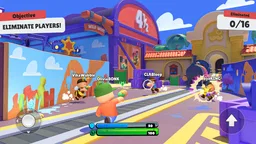
There is a genuine trade-off here. The uncluttered premise makes the game easy to explain, but a busy match can make it harder to pick out the safest route. Other characters may block your view or push you away from the line you intended to take. I find that looking a little ahead, rather than fixating on the character’s feet, makes it easier to react to what is coming.
Movement asks for timing, not just enthusiasm
Although the rules are simple, the physical interaction can be less forgiving. Steering through a crowded course calls for quick corrections, and a mistimed move can cost valuable ground. Players who find small touch controls tiring, who have limited dexterity, or who need more time to respond may find the action stressful rather than relaxing. I would try a short session first and see whether the pace feels manageable before settling in for longer play.
One practical adjustment is to avoid making constant, tiny corrections. In my experience, deliberate movements are easier to manage than frantic swipes when several players bunch together. It also helps to treat a stumble or a collision as part of the round rather than trying to recover with a burst of hurried inputs; overcorrecting can make it harder to regain a steady route.
The game’s sensory load deserves the same attention as its controls. Bright, animated scenes and frequent movement create energy, but they may be uncomfortable for someone sensitive to visual busyness or rapid changes on screen. If that sounds familiar, try playing in a well-lit, low-distraction setting and keep sessions short enough to stop when the motion becomes tiring. I would not assume that a cheerful art style means a low-stimulation experience.
Sound and screen attention also matter in everyday use. A round is easier to follow when you can focus on the display, so it is not an ideal choice while walking, crossing a street, or doing another task that needs your attention. If you prefer to play with sound turned down or off, the main challenge is whether the visual action alone gives you enough information to stay oriented; that is worth testing rather than assuming.
Good for brief breaks, with sensible limits
Stumble Guys suits the small gaps in a day better than a quiet, slow-paced game. I can imagine opening it while waiting for a friend or taking a short break, playing a few rounds, then putting the phone away. It is also an easy game to introduce to a group: the objective is intuitive, and the comic mishaps give people something to laugh about even when a run goes badly.
Its store summary highlights playing with friends, and that social angle is a natural reason to choose it. A shared session can make the chaos more entertaining, especially when everyone is learning the courses together. Still, I would not recommend it as a guaranteed way to keep a group connected if some players have unreliable access, need a slower pace, or are uncomfortable with fast visual action. A turn-based party game may be a more inclusive fit for that group.
Compared with more deliberate action games, this one asks for less planning and offers a lighter, more immediate kind of competition. Compared with a relaxed casual game, it is much more demanding of attention and timing. That middle ground is its appeal: it is not trying to be a deep tactical contest, but it is also not something I would play while half-watching another screen. If you want precise, measured combat or a story-led campaign, look elsewhere; if you want playful courses and unpredictable collisions, its format makes sense.
For players who use a phone in short, noisy, or interrupted stretches, the round-based feel can be convenient because there is a natural point to pause between attempts. Even so, I would avoid starting a round when I know I may need to put the phone down immediately. A match that is easy to begin is not necessarily easy to interrupt without losing the moment.
Device fit, spending, and the details worth checking
The game is free to download, with in-app purchases ranging from $0.99 to $149.99 per item. I would approach those purchases as optional extras rather than a prerequisite for deciding whether the core action suits me. If a child is playing, it is sensible to discuss spending before handing over the device and to use the phone’s purchase controls in a way that fits your household.
Scopely is the developer, and the game sits in the action category. It was released on September 24, 2020; the current version is 0.104, and Android requires version 6.0 or later. Those details are useful when checking an older device, but meeting the minimum operating-system requirement does not by itself tell you how comfortably the game will run on a particular phone. I would install it and test a short session on the device you plan to use.
Its average rating is 4.7 from around 6.9 million ratings, with roughly 75,000 written reviews and over 100 million installs. That broad audience is reassuring if you want a well-established multiplayer-style game, but popularity cannot tell you whether its pace, controls, or visual activity will work for you personally. A quick trial is more useful than treating a high score as a promise of accessibility.
For a more comfortable setup, I would first check whether the phone is easy to hold securely, whether the screen is large enough for you to follow the action, and whether you can play without rushing. A stand or a stable resting position may help someone who finds prolonged gripping uncomfortable, though it will not remove the need to make timely inputs. If the display feels too crowded, choosing a quieter setting and taking breaks can reduce surrounding strain, but neither changes the game’s underlying speed.
Who may want another kind of game
I would hesitate to recommend it to someone who needs slow, predictable movement, has difficulty tracking several moving characters, or prefers games that can be played without quick reactions. The same applies if sudden crowding and repeated knockbacks are frustrating rather than funny. A slower puzzle game, turn-based competition, or single-player experience with more control over pacing may be a better everyday choice.
That is not a flaw that can be solved simply by being more experienced. Familiarity may make the courses easier to read, but the core appeal still depends on rapid movement and a crowded contest. I would also be cautious about using it as a shared game when players have very different comfort levels: one person’s hilarious wipeout can be another person’s repeated loss of control.
There are useful ways to make a first session more welcoming. Let a new player watch a round before joining, explain the goal in one sentence, and give them time to learn the controls without pressure to win. When playing with friends, keeping the mood light and treating elimination as part of the joke can help; if someone is struggling with the speed, switching to a calmer game is kinder than insisting they keep up.
A lively choice, but not a universally easy one
My overall view is that Stumble Guys is a fun pick for people who enjoy quick, social action and do not mind a screen full of movement. Its simple objective lowers the barrier to understanding, and its chaotic courses make brief sessions entertaining. The best use case is a short, focused break or a casual session with friends who enjoy the same quick pace.
Its limits are just as important: rapid reactions, visual clutter, and touch-based movement may exclude or tire some players, and the free download still includes optional purchases. I would recommend trying it with a short session, checking that the device and controls feel comfortable, and stopping if the motion becomes overwhelming. For people who want a slower, more predictable, or lower-stimulation experience, another type of game will be the better fit. For everyone else, it is an energetic little contest whose fun depends on whether its chaos feels playful to you.
What we like
- Quick matches make the game easy to enjoy in short sessions.
- Simple controls are accessible to players of different skill levels.
- Frequent events can add fresh goals and limited-time rewards.
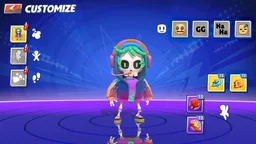
- Cosmetic customization lets players personalize their characters.
- Cross-platform play helps friends compete across supported devices.
What could be better
- Crowded rounds can make precise movement difficult.
- Random obstacles may make some eliminations feel unfair.
- Many cosmetic items require paid currency or extensive play.
- Online matches depend on a stable internet connection.
- Advertisements and purchase prompts may interrupt play.







