

Sniper 3D:Gun Shooting Games review
 Analysis by Appsdrops
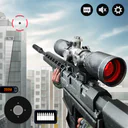
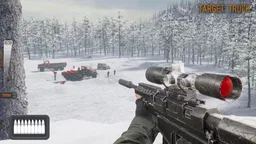
I like Sniper 3D: Gun Shooting Games best when I treat it as a quick, focused shooting game rather than a full evening’s commitment. Its appeal is easy to understand: line up a shot, judge the moment, and try to make each action count. It is an action game from Wildlife Studios, and its mix of solo play and online competition gives it more range than a simple target gallery. My main advice is to approach it with realistic expectations: it can be satisfying in short sessions, but the pace and feel may not suit anyone looking for a tactical shooter built around large maps and elaborate teamwork.
Quick sessions, careful shots
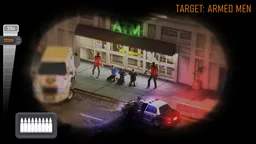
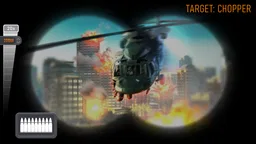
The central pleasure is the contrast between a brief pause to aim and the immediate consequence of pulling the trigger. That makes the game a natural fit for small gaps in the day: I can imagine opening it while waiting for a ride, playing a short stretch, and putting it away without needing to remember a long chain of events. The familiar sniper fantasy is the hook, but the moment-to-moment test is patience and precision, not simply firing as quickly as possible.
That distinction matters if you are choosing between this and a conventional run-and-gun mobile shooter. Those games often reward constant movement and rapid reactions; Sniper 3D puts more emphasis on controlling a shot. If you enjoy slowing down long enough to pick a target, it offers a different rhythm. If you want continuous movement, broad tactical choices, or a squad-focused experience, a larger-scale shooter is likely a better match.
The game’s store description presents it as playable both online and offline, with live player-versus-player sessions among its offerings. In practical terms, that makes it easier to consider for different situations: offline play can suit a moment when a connection is inconvenient, while online competition is the more social choice when friends are available. I would not assume those two modes feel interchangeable. Playing alone and competing against other people serve different moods, and the appeal of the latter depends on wanting a contest rather than just a quick aiming challenge.
When a short session works best
One useful way to fit the game into a routine is to decide what you want from a session before opening it. If I have only a few minutes, I would stick to a compact stretch of play rather than turning a casual break into an open-ended grind. That helps keep the satisfying part—the concentration involved in a clean shot—at the center. It also makes it easier to notice whether I am enjoying the aiming itself or merely continuing out of habit.
A realistic example is a short commute with a reliable connection: I might choose a quick offline session if I do not want the uncertainty of an online match, then save live PvP for a time when I can pay attention to the competition. That split is a practical advantage, though it does not make the game a substitute for a deep single-player campaign. Its strongest use case is flexible, bite-sized shooting, not a long narrative journey.
What changes when you play online
Live PvP adds pressure that solo shooting does not. Against another person, the challenge is no longer only whether I can aim; there is also the tension of being measured against someone else in real time. That can make a familiar shot feel more engaging, especially if I want a direct contest with friends. It can also make the experience less relaxing. When I want a calm break, the competitive side is not automatically the right choice just because it is available.
For a smoother first session, I would test the basic feel in a low-pressure setting before deciding whether to invite friends or judge myself by online results. Aiming comfort and connection quality can affect how fair a contest feels, and a few minutes of practice are a more useful test than assuming the game will click immediately. The best fit is someone who likes a clear, repeatable skill challenge; players who dislike being compared or who want every match to depend on broad tactical teamwork may find this format narrow.
Heavier play and the points where friction shows
Short play and extended play can feel quite different. In a quick visit, the focused shooting loop is the point. During a longer stretch, repetition becomes more noticeable, so I would pay attention to whether each new session still feels rewarding rather than simply extending play because another round is available. This is a general trade-off of a tightly defined sniper game: the clear central action is easy to return to, but it gives less variety than a shooter whose appeal comes from changing roles, maps, or team situations.
The online side is also more demanding of attention than a casual offline session. If I am interrupted, distracted, or playing in a place with an uncertain connection, I would choose offline play when it fits my plans rather than treating PvP as the default. That is not a claim that online matches are inherently unreliable; it is a practical distinction between a mode that depends on other players and one that is better suited to a self-paced break.
Purchases are another consideration during heavier use. The game is free to download, but it offers in-app purchases ranging from $0.99 to $224.99 per item. I would set a spending boundary before getting invested, especially if I tend to make small purchases impulsively. A free starting point is useful, but it should not be confused with a promise that every optional purchase is necessary—or with a reason to buy anything before I know how much I enjoy playing.
My practical tip is to judge the game on its core shooting before spending. Play enough to see whether aiming and the available mix of solo and competitive sessions keep your interest. If the basic loop already feels repetitive, paying to extend it is unlikely to solve that problem. If you enjoy it, then decide calmly whether an optional purchase offers value to you, rather than making the decision in the middle of a frustrating run.
Reliability, recovery, and connection expectations
I would separate reliability into two questions: whether the game runs comfortably on your device and whether the particular session depends on a stable connection. The offline option gives the experience some flexibility when online play is not convenient, while live PvP naturally makes connection conditions more relevant. If a session is interrupted, the safest approach is to return and check what the game presents rather than assume that progress or a match has been restored in a particular way.
For everyday use, I would avoid starting a competitive session just before I need to leave or switch tasks. That is a sensible habit for any live multiplayer game, but it matters here because the appeal of PvP is the head-to-head contest. Offline play is the more practical choice when I need to pause freely. This distinction is useful for commuters, people playing between chores, and anyone who cannot guarantee an uninterrupted stretch of time.
The game has a 4.6 average from around 18 million ratings, and it has passed 500 million installs. Those figures suggest a very widely played title, but popularity is not a personal performance guarantee. A large audience can tell me the game has broad appeal; it cannot tell me how smoothly it will behave on my particular phone, with my connection, or alongside other apps I keep open.
Device limits and sensible expectations
The listed minimum operating system is 7.1, and the current version is 7.15.0. That gives a basic compatibility reference, but I would still check the app store’s compatibility details for my own device before downloading. Meeting a minimum system requirement does not guarantee that every older phone will feel equally responsive, especially if it is already struggling with newer games or has little free storage.
I would also be cautious about judging performance from one moment alone. If the game feels slow, close other apps, check that the device is not already under heavy load, and try again under ordinary conditions. That is a sensible troubleshooting routine, not a claim about a known defect or a specific resource requirement. I would not promise that the game is lightweight on every phone; the experience depends on the device, its condition, and what else is running.
For someone using an older or entry-level device, the most useful question is not simply whether the game installs, but whether aiming feels responsive enough to be enjoyable. If touch response or general smoothness is poor, a precision shooter can feel frustrating sooner than a slower puzzle game. A newer device may offer a more comfortable experience, but I would still test it before deciding that hardware alone will fix every issue.
Who I would recommend it to
I would recommend this to players who enjoy the discipline of lining up shots, want a mobile action game that can fit into short sessions, and like having both offline play and a competitive option. It may also suit friends who want to compare their shooting in live PvP without committing to a sprawling team shooter. The Mature 17+ content rating is an important consideration for households: it is not a game I would casually hand to a younger child without checking the rating and deciding whether it is appropriate.
I would suggest skipping it if you mainly want a detailed military simulation, extensive squad coordination, or constant movement across large battlefields. I would also hesitate if you are sensitive to in-app spending prompts or find repeated precision challenges monotonous. A more varied action game may hold your attention better if you want every match to change substantially; a simple offline game may be a better choice if you want something with no competitive pressure.
My verdict on speed and staying power
Overall, I see Sniper 3D as a convenient, focused shooter whose best quality is how readily it can serve different moments: a self-paced offline break or a live contest when I want other players involved. Wildlife Studios has built a game with broad reach, but the large audience does not erase its trade-offs. Repetition, the difference between offline and online expectations, and the range of optional purchases are all worth considering before making it a regular habit.
I would try it for the aiming challenge, keep early sessions short, and see whether the core loop remains enjoyable before spending money or committing to longer play. The free entry point makes that an easy test, while the Mature 17+ rating and paid items call for a little thought. If careful shots and compact action sound appealing, it is worth a look; if you want deep tactical variety or guaranteed smoothness on older hardware, I would choose a different kind of shooter.
What we like
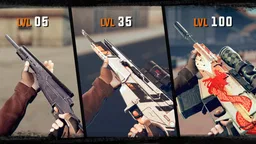
- A wide range of rifles gives players room to adjust their play style.
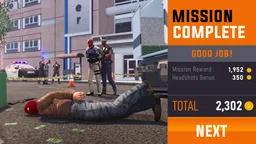
- Short missions make it easy to play in brief sessions.
- Targeting controls are straightforward for newcomers.
- Daily activities offer extra goals beyond the main missions.
- Offline missions provide some play without an internet connection.
What could be better
- Energy limits can interrupt longer play sessions.
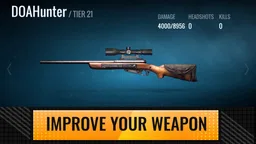
- Upgrades may require substantial grinding or in-game purchases.
- Ads can appear between missions.
- Later levels can feel repetitive as objectives recur.
- Online features require a stable connection.







