




Kick the Buddy-Fun Action Game review
 Analysis by Appsdrops
I can see why Kick the Buddy makes a strong first impression: its premise is immediate, its humor is deliberately over the top, and there is no complicated story to learn before you start. Playgendary Limited’s action game turns a cartoon dummy into the focus of a short, silly stress-break. I found the appeal less in mastering a challenge than in choosing how to spend a spare minute and watching the game respond. That makes it easy to try, though it also means the question is not simply whether it is entertaining at first, but whether the joke stays enjoyable once it is familiar.
Why the first few sessions are easy to enjoy
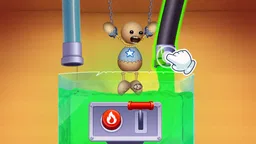
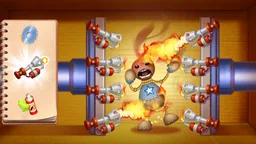
The basic idea needs almost no explanation: interact with Buddy, experiment with the options the game presents, and enjoy the exaggerated reactions. That low barrier is useful when I want something light between tasks rather than a game that asks me to remember a map, follow a plot, or plan a long session. The focus stays on quick feedback and comic spectacle, so a new player can understand the mood almost immediately.
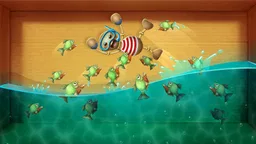
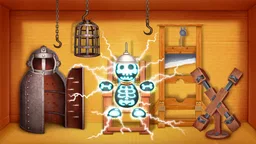
Its humor is intentionally broad. Buddy is a cartoon figure, and the presentation aims for slapstick rather than realism. I think that distinction matters: the game is best approached as absurd digital play, not as a thoughtful meditation exercise or a realistic action simulator. If you enjoy goofy, exaggerated reactions, the premise can make a brief break feel more playful. If that style irritates you, the central joke is unlikely to become more appealing with time.
The game’s scale helps with casual use. I can imagine opening it while waiting for a meal, taking a short pause between chores, or looking for a quick distraction during a commute when it is safe and appropriate to use a phone. It does not demand that every session become a major commitment. That convenience is one of its most practical strengths, especially for people who prefer small bursts of entertainment over a game they must keep up with every day.
Kick the Buddy is free to download, and its Teen content rating is worth considering before handing a device to a younger player. “Free” also does not mean that every optional purchase is free: the game offers in-app purchases priced from $0.99 to $99.99 per item. I would treat the purchase prompts as part of the experience to keep an eye on, particularly on a shared or child-used device, and check purchase controls before letting someone play unsupervised.
What makes the loop work
The short-session format suits the game’s central interaction. There is no need to reserve a quiet hour or build a routine around a daily objective; I can play briefly and put it down. For a stress-break, that can be a better fit than a competitive action game, where a match may take longer and other players’ performance can affect the mood. Here, the fun is self-directed and deliberately unserious.
A useful way to approach it is to set a small personal limit before opening it: one short break, rather than an open-ended scroll through every available option. That is not a rule imposed by the game; it is simply a way to preserve the novelty. When the point is a quick laugh, stopping while the gag still feels fresh can make the next visit more appealing than trying to extract a long session from a simple premise.
Does it hold up after the novelty?
The game has a clear ceiling as well as a clear strength. Its central pleasure is repetition with variation in how I choose to interact, but the broad setup remains the same: Buddy is there to react, and the humor comes from that interaction. Players who like tinkering with a familiar toy may enjoy returning to it. Players who need new levels, a sustained story, skill progression, or a changing strategic puzzle are more likely to feel that the core loop has shown them what it can do.
That difference is important when comparing it with the usual alternatives. A conventional action game tends to reward timing, tactics, or improvement against an opponent; a physics sandbox may invite experimentation through more open-ended systems; and a calming game may focus on quiet repetition or gentle tasks. Kick the Buddy is closer to a cartoon stress toy than to a demanding action campaign. I would choose it for comic release and casual interaction, not for deep combat or a sense of long-term achievement.
Its popularity suggests that many people have found the premise appealing: the game has over 500 million installs, around 3.6 million ratings, and a 4.1 average. Those figures are useful context, but they do not predict whether its humor will suit you. A large audience can confirm that the idea is easy to understand; it cannot make a repetitive loop feel fresh for someone who wants more structure.
Keeping it on a phone without making it a chore
For me, the maintenance burden appears low in terms of habit: this is not a game that needs a daily check-in to make sense. Its current version is 2.21.0, and it requires Android 7.0 or later. Those details help with basic compatibility planning, while the more important day-to-day question is whether the app earns a place in the small group of games you actually open. If it becomes a one-week novelty, there is little reason to keep making room for it simply because it is popular.
One practical approach is to use it selectively. Keep it as an occasional comic break if the reactions still make you smile, rather than turning it into the default answer whenever you have a spare minute. That small distinction helps reveal whether you genuinely enjoy the game or are just tapping through familiar interactions out of habit. If sessions start feeling automatic, putting it aside for a while is more sensible than trying to force a lasting routine.
Another useful consideration is the purchase boundary. Because optional items range up to $99.99, I would not let the word “free” stand in for a spending plan. Decide in advance whether you want to spend anything, and use the device’s purchase protections if the phone is shared. This is especially helpful for families: the Teen rating and the purchase range are both reasons to make a deliberate choice about access, rather than treating the game as an unattended children’s distraction.
Where fatigue can set in
The main source of fatigue is not a complicated control scheme; it is the risk that a repeated gag stops landing. The first few sessions can feel lively because the premise is new, but a player who expects each return to bring a dramatically different kind of experience may be disappointed. I would not recommend it as the only game on a device for someone who wants a steady stream of goals or a story that unfolds over time.
The stress-relief label also deserves a personal test. Some people find exaggerated slapstick funny and satisfying, while others prefer something quieter when they are tired or tense. If the busy, cartoonish approach leaves you more irritated than amused, a relaxing puzzle or a low-pressure creative app may be a better match. A game cannot guarantee a particular emotional effect; what matters is whether its style actually helps you unwind.
It is also not the right choice for players looking for realistic violence, serious combat, or a competitive test of reflexes. The point is comedic interaction, not tactical mastery. Likewise, if you prefer games that reward careful progress and give you a clear reason to return over months, you may be better served by an action title with a campaign or a deeper sandbox. I would rather be clear about that mismatch than mistake a simple, funny toy for a full-scale action experience.
Who I would recommend it to
I would recommend Kick the Buddy to someone who wants an uncomplicated, cartoonish diversion and is comfortable with a loop built around playful interaction rather than a long-term challenge. It is particularly suited to short breaks, to players who enjoy slapstick, and to people who like experimenting without the pressure of competing with others. The game’s free entry makes it easy to sample, but I would still keep its optional spending and Teen rating in mind.
I would suggest skipping it if you quickly tire of repeated jokes, want a substantial narrative, or prefer action games where improvement in timing and strategy is the main reward. I would also avoid presenting it as a guaranteed way to manage stress: it may be a welcome distraction for one person and an annoying bit of noise for another. A brief trial is the best way to find out whether its humor fits your taste.
My long-term verdict
For lasting space on my phone, this earns a place only if I treat it as an occasional novelty rather than an all-purpose game. Its uncomplicated premise, quick sessions, and intentionally silly tone make it easy to revisit when I want a brief laugh. Its repetition and limited appeal for players seeking progression are real constraints, not minor details to overlook.
Playgendary Limited’s action game is most worthwhile for people who enjoy a cartoon stress toy and understand that the fun comes from brief, self-directed sessions. I would keep it installed if I still found myself opening it for a quick break, and remove it without regret if the joke had worn thin. That is the fairest measure of its recurring value: not how often it can be played, but whether a short visit still feels like time well spent.
What we like
- Simple controls make it easy to start playing.
- A wide range of weapons and tools keeps experiments varied.
- Short sessions suit quick breaks.
- Cartoon violence gives the action a playful tone.
- Unlockable items offer goals beyond each attack.
What could be better
- Frequent ads can interrupt play.
- Some items may require in-app purchases.
- Repetitive gameplay can lose its appeal over time.
- The focus on attacking may not suit every player.
- Progress can feel slow without spending or watching ads.