


Stick Hero: Tower Defense review
 Analysis by Appsdrops
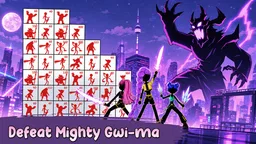
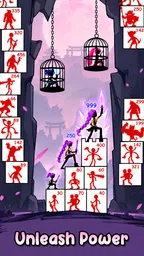
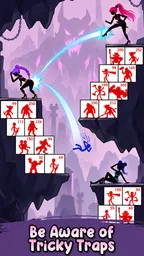
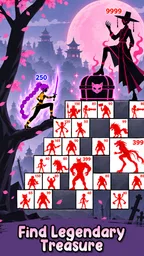
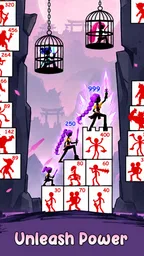
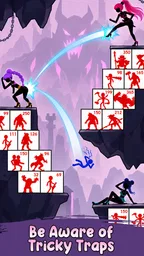
Stick Hero: Tower Defense is a strategy game I’d pick up for short bursts rather than settle into as a long, involved campaign. Its appeal is the simple promise of bringing red and blue warriors together and building up an inventory, but the real test is whether you enjoy making repeated tactical decisions as you work toward a win. I found it best approached patiently: take a moment to read the situation, make one deliberate move, and treat each attempt as a chance to learn rather than a reason to rush.
Starting with a steady routine
In the opening moments of a session, I recommend resisting the urge to tap through every choice as quickly as possible. Strategy games built around compact encounters can make a fast decision feel efficient, but a brief pause helps you notice what your current resources and options actually allow. With this game’s focus on warriors and inventory growth, it’s useful to think of each move as part of a small sequence instead of an isolated action.
A practical routine is to check the available choices, decide what you need most immediately, and then commit. Afterward, take stock again before making the next move. That habit keeps a run from turning into a string of guesses. It also makes it easier to see whether a setback came from a poor decision or simply from trying a strategy that didn’t suit the situation.
I’d use this approach especially when playing in spare moments: waiting for a ride, taking a break, or filling a few quiet minutes between tasks. The game’s broad premise is easy to understand, so you don’t need to set aside a long block of time just to get oriented. Still, “easy to pick up” doesn’t mean every choice is automatic. A little attention goes further than frantic tapping.
My most useful early habit is to decide what a move is meant to accomplish before making it. If you’re building your inventory, for example, consider whether the choice helps your immediate position or supports a later plan. That distinction prevents collecting options simply because they are available. It’s a modest change in approach, but it gives each decision a clearer purpose.
Making progress without turning every run into a grind
The game encourages collecting warriors and expanding an inventory, so progress has a satisfying accumulation angle. I would avoid treating that as a demand to chase every possible addition at once. Instead, pay attention to which choices seem to help you move forward consistently, and repeat those patterns when a similar situation comes around. A repeatable routine is more useful than trying a different tactic every time without learning from the result.
If a run goes badly, I find it more helpful to identify the decision that changed the outcome than to restart immediately and play in exactly the same way. Was the choice too early? Did you prioritize adding to your inventory when you needed a more immediate answer? Thinking through that one point turns a failed attempt into useful feedback. It’s a simple form of self-coaching, and it doesn’t depend on an unmentioned guide or special system.
Settings and setup: keep the experience comfortable
Before settling into a longer session, it’s worth checking the options your device and the game make available, particularly anything that affects sound or how comfortably you can play. I don’t assume that every player will see the same controls or settings, so I’d keep this practical: use the available choices to make the game easy to follow in your usual environment, and avoid changing several things at once if you’re trying to work out what feels better.
For a commute or a shared room, a quieter setup can make a quick session less disruptive. At home, sound may help the game feel more engaging if you like that feedback. The important point is not to hunt for a hidden advantage in the menus. Treat setup as comfort and accessibility, then focus your attention on the decisions the game actually presents.
It’s also sensible to check your device’s available storage and compatibility before installing. Stick Hero: Tower Defense is listed for devices running Android 7.1 or later, and the current version is 1.0.121. Those details matter if you’re using an older phone or tablet: confirm that your operating system meets the requirement, and leave enough room for the installation and normal device updates.
Small habits that make play more deliberate
One useful pattern is to pause at the same points in every attempt: before committing to a choice, after a notable change, and whenever you’re unsure what your inventory is doing for you. This creates a natural rhythm without making play feel like homework. It also reduces the chance of repeating an impulsive move simply because the previous run ended quickly.
Another good habit is to change only one part of your approach after a disappointing result. If you alter several decisions at once, it becomes difficult to tell which adjustment helped. A single deliberate change gives you a clearer comparison the next time a similar situation appears. That’s especially useful for a game whose appeal depends on learning through repeated tactical choices rather than following a long written tutorial.
When you have only a minute or two, set a modest goal for the session: make a careful attempt, test one idea, or see whether a familiar approach still works. That keeps short play satisfying even when you don’t make a major breakthrough. If you have more time, use a few consecutive attempts to compare decisions instead of simply trying to accumulate progress as fast as possible.
These routines are not shortcuts in the sense of bypassing the game. They’re ways to make your attention count. In particular, separating “I want more in my inventory” from “I need the best immediate move” helps prevent an attractive collection goal from taking over every decision. The game is more enjoyable when you can explain to yourself why you chose something, even if it turns out not to work.
Where the strategy has limits
Stick Hero: Tower Defense is not the right choice if you want a deep strategy experience built around extensive planning, elaborate simulations, or a long narrative. Its central appeal is more compact: make decisions around warriors and inventory, then work toward victory. Players who enjoy small, repeatable tactical challenges may find that focused structure refreshing; players looking for a sprawling campaign may prefer a more complex strategy title.
There is also a natural limit to how much you can gain from repetition if you stop examining your choices. Replaying with the same reflexes can feel repetitive, particularly if you expect every session to deliver a new kind of challenge. The remedy is to vary your reasoning deliberately, not to assume that faster play automatically means better play. If you prefer games where progress comes from exploring a large map or managing a broad set of interconnected systems, this may feel too focused.
The game is free to download, with in-app purchases priced from $0.99 to $9.49 per item. I’d treat optional spending as a personal choice rather than a requirement for enjoying the basic premise. If you’re trying it for the first time, begin without buying anything and decide whether the core loop holds your interest. That gives you a fair sense of the experience before you spend money.
Its Everyone 10+ age rating makes it a possible option for families considering a strategy game, but I’d still make the usual choice based on the player’s preferences and your household’s approach to in-app purchases. It may suit someone who likes collecting and tactical decisions in short sessions; it may not suit a child or adult who gets frustrated by repeating attempts or who expects an entirely hands-off experience.
How it compares with other strategy games
Compared with strategy games that emphasize lengthy planning or large-scale management, this one is easier to approach in brief sessions. You can focus on the immediate choices and the growth of your inventory instead of learning a dense collection of systems before the game becomes enjoyable. That makes it a more convenient fit for casual play, but it also means players who want extensive strategic depth should look elsewhere.
Against very simple, reflex-led games, Stick Hero: Tower Defense asks for a little more reflection. The useful distinction is that you can improve by noticing patterns and adjusting decisions, rather than relying only on speed. If you enjoy a quick game that still rewards a measured approach, that middle ground is its strongest case. If your favorite strategy games are competitive, richly detailed, or built for long sessions, this is better treated as a lightweight alternative than a replacement.
Who should give it a try
I’d recommend it to players who enjoy collecting warriors, making compact tactical choices, and revisiting a game in short bursts. It’s also a reasonable choice for someone who wants to try strategy without first learning a complicated interface. The developer is Unicorn Studio Official, and the game has an average rating of 4.6 from around 462,000 ratings, with more than 50 million installs. Those figures suggest broad interest, though the best test is whether its particular rhythm suits you.
I’d skip it if you want every session to unfold like a carefully scripted story, or if you dislike revisiting decisions after a loss. The game asks for some patience: not an elaborate commitment, but enough attention to notice what your choices are doing. If you’re expecting a large, ever-changing world, choose a deeper strategy game instead. If you want a focused mobile diversion that gives you room to refine a simple routine, this is a more fitting option.
My verdict after settling into its rhythm
What I like most about Stick Hero: Tower Defense is that it gives short sessions a clear tactical focus. The premise is approachable, and the inventory-building angle gives you something to think about beyond simply tapping through. I’d get the most from it by keeping a steady pace, reviewing a poor decision, and changing one thing at a time. Those habits make repeat play feel purposeful without pretending the game is more complex than it is.
The trade-off is that its focused design won’t satisfy everyone. It can feel limited beside strategy games with broader systems, and repetition becomes less rewarding if you don’t learn from it. But for a free game that you can try in spare moments, I think it has a clear audience: people who want approachable tactical play and don’t mind refining their choices. If that sounds like you, I’d give Stick Hero: Tower Defense a try, keep purchases optional, and see whether its steady, decision-led rhythm clicks.
For me, the best reason to keep it installed is not the promise of endless depth; it’s the small satisfaction of spotting a better decision on the next attempt. That makes Stick Hero: Tower Defense a solid casual strategy pick when you want something more thoughtful than a reflex-only game but less demanding than a sprawling campaign.
What we like
- Simple controls make it easy to start playing.
- Short levels suit quick gaming sessions.
- Tower defense adds strategy to familiar stick-figure combat.
- Character upgrades give players goals to work toward.
- The game works well for casual play.
What could be better
- Repeated battles can make the experience feel predictable.
- Progress may slow as enemy waves become tougher.
- Upgrade choices may feel limited for strategy fans.
- Frequent retries can interrupt the pace.
- Ads may disrupt play depending on the version.







