
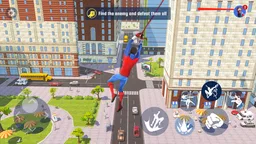

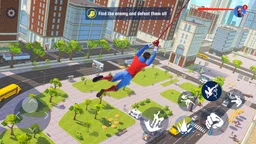
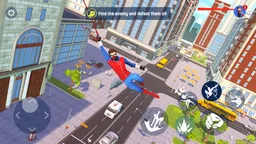
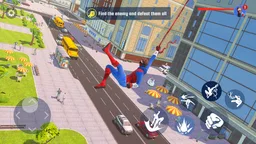


Spider Fighting: Hero Game review
 Analysis by Appsdrops
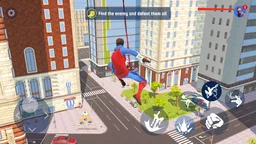
I went into Spider Fighting: Hero Game expecting a straightforward action game, and that is the right way to approach it: a superhero-flavored fight you can pick up when you want immediate action rather than a deep, carefully paced adventure. Its premise puts you in the role of a spider-themed hero in a crime-filled city. The appeal is easy to understand, but whether it suits you depends on how much you enjoy repeating combat and working through a mobile game at its own pace.
Made by Zego Studio, this free action game has attracted a large audience: it has more than 100 million installs and an average rating of 4.5 from around 178,000 ratings. Those figures suggest broad interest, but they don’t tell you whether its fighting feels satisfying on your phone. My practical advice is to judge it by the moment-to-moment action, not by its popularity or its superhero framing.
What the city-fighting premise gets right
The game’s central fantasy is simple: step into a spider hero’s shoes and take on trouble around town. That gives each session a clear purpose without asking you to learn a complicated setting first. I’d recommend it to someone who wants a quick action distraction, especially if superhero battles sound more appealing than realistic military combat or a slower role-playing game.
That same simplicity is a trade-off. Players looking for a detailed story, nuanced characters, or a large set of tactical decisions may find the premise too thin to carry long sessions. The title promises fighting, and that is where expectations should stay. I wouldn’t choose it as a substitute for a narrative adventure or a competitive fighting game built around careful matchups and mastery.
One useful way to decide is to consider your usual play window. If you often have a few spare minutes while waiting for a ride or taking a break, a direct action setup is easier to fit into the day than a game that expects uninterrupted attention. If you prefer to settle in for a long session with a layered plot, this may not hold your interest in the same way.
Who is likely to enjoy the action
I see the strongest fit for casual action players, younger teens who meet the game’s age guidance, and superhero fans who are comfortable with a game focused on fighting rather than a faithful recreation of a particular comic universe. It is rated Teen, so parents should take that rating into account rather than assuming that a cartoonish or fantastical hero theme makes it suitable for every child.
It is less compelling for someone who dislikes combat as the main activity, wants a calm game, or expects a polished esports-style experience. The action category matters here: if you routinely uninstall games once their core loop starts feeling familiar, a fighting-focused title may have a short shelf life for you even if the first sessions are entertaining.
Spending, progress, and the pressure to keep playing
The game is free to download, with optional in-app purchases listed from $0.99 to $94.99 per item. That is useful context before installing: you can try the game without paying upfront, but the presence of purchases means you should be attentive to any prompts that appear during play. I’d treat the free entry as a chance to test whether the combat is fun for you, not as proof that every part of the experience will remain cost-free.
Those purchase figures do not reveal what an item provides, how often purchase prompts appear, or whether spending changes the pace of progression. I can’t responsibly infer that purchases are required, that they provide a competitive edge, or that they are purely cosmetic. If you are deciding whether to spend, first play without buying anything and see whether you still enjoy the core action. That is a sensible check for any free-to-play game with a wide purchase range.
A realistic everyday approach is to install it for a short break, play a little, and stop before making a purchase decision. If the game feels enjoyable without spending, you have learned something important at no cost. If you find yourself frustrated or tempted to pay simply to get past a point, pause and consider whether the game is still delivering the kind of entertainment you wanted. For families, it is worth setting a clear purchase rule before handing over a device.
Progression is another area where I’d keep expectations measured. The available confirmed details establish the game’s action premise and purchase range, but not the structure of its progression, the pace of unlocks, or the exact role purchases play. Rather than assuming there is a particular upgrade system or a specific grind, I would use your own first sessions to check whether progress feels rewarding and whether the game lets you enjoy the fighting at the pace you prefer.
How to judge fairness for yourself
There is no confirmed basis here to call the game pay-to-win or to say that purchases affect competition. In fact, I would avoid treating it as a competitive fairness test unless the experience itself gives you a reason to do so. A more useful distinction is between paying for optional convenience or content and feeling that payment is necessary to enjoy the game; the purchase range alone does not tell us which description applies.
If fairness matters to you, watch for practical signals during play: whether you can continue at a comfortable pace without paying, whether purchase offers interrupt the action, and whether the game explains what you would receive before a transaction. These are questions to check directly, not claims about features. If you do not want to assess spending prompts at all, a paid game with a clearly stated upfront price may be a better match for your preferences.
For players who want head-to-head skill to be the central measure, the usual alternative is a dedicated fighting game with clearly defined matches and opponents. This title’s city-hero premise points toward action entertainment rather than a verified tournament-style format. I would choose based on that distinction: enjoy it for the superhero fighting theme, but don’t assume it offers the same balance, depth, or competitive structure as a specialist fighter.
Compatibility, expectations, and the details worth checking
The game’s current version is 3.9.2, and it requires Android 7.0 or later. If you are using an older device, checking the operating system before trying to install it can save time. It is available for free, but the optional purchase range is broad enough that I’d also make sure the device’s purchase settings suit whoever will be playing.
The game was released on August 31, 2023. That gives a useful point of context, but a release date by itself does not tell you how frequently it has changed or what every update contains. The rating and install figures show that many people have tried it, while the 1,300 reviews offer another indication of player feedback. Neither popularity nor review volume guarantees that the combat will match your tastes, so a short trial is still the best personal test.
There are details I would want to inspect in the game itself before making a stronger recommendation: how the controls feel on your particular screen, whether combat remains varied for you, how often spending prompts appear, and how much play is available without paying. Those are the practical questions that matter to a prospective player, and they should be answered by your own experience rather than guesses about unconfirmed systems.
Compared with a typical open-world action game, the attraction here is the direct superhero-fighting idea; compared with a dedicated fighter, the appeal is a broader city-and-hero framing rather than a clearly established focus on competitive matchups. That makes it a middle-ground choice for someone who wants action with a recognizable fantasy but does not need intricate combat strategy. If you want a lengthy campaign or a tightly balanced competitive scene, look elsewhere.
My best tip is to set a small test before committing: try a brief session, notice whether the controls and repeated fights feel enjoyable, and avoid spending until you know what purchases actually offer. This is more useful than downloading it solely because of its high install count. If the central activity clicks quickly, the game may be an easy casual pick; if it already feels repetitive, extra time or money is unlikely to fix a mismatch in taste.
My trust verdict
Spider Fighting: Hero Game is a reasonable free try for players who want a superhero-themed action game and are comfortable with fighting as the main attraction. I like that the concept is easy to understand and that there is no upfront price to test it. Its large audience and strong average rating are encouraging signals, but they are not a substitute for checking whether the actual play feels good on your device.
My recommendation is cautious rather than unconditional. Give it a chance if you enjoy quick action and can keep optional spending in perspective. Skip it if you need a story-rich experience, dislike in-app purchases, or want confirmed competitive balance before investing time. With Zego Studio behind it and a Teen rating, it has a clear audience; the fairest way to decide is to try the free experience, watch how it handles purchases, and spend only if you understand what you are buying.
What we like
- Responsive controls make attacks easy to chain.
- Short missions suit quick play sessions.
- Several hero abilities add variety to combat.
- Enemy waves provide steady action.
- The game is playable offline.
What could be better
- Repeated fights can make missions feel similar.
- Ads may interrupt play between stages.
- Some upgrades require considerable grinding.
- Touch controls can feel imprecise in crowded fights.
- Progression offers limited depth for experienced players.







