






South Park: Phone Destroyer™ review
 Analysis by Appsdrops
I went into South Park: Phone Destroyer™ expecting a quick card battler with a familiar animated cast, and that is exactly where its appeal begins: you make a small set of choices, watch them collide on a compact battlefield, then decide whether to try again with a better plan. It is a strategy game from Ubisoft Entertainment, but it wears its tactics lightly. The jokes and character matchups provide the hook; the interesting part is learning when to spend a card, when to wait, and how to respond when an opponent changes the pace.
From choosing a card to making a move
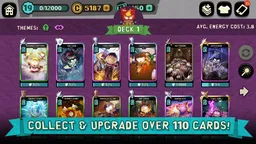
The basic interaction is easy to grasp. You build a deck from the characters and cards available to you, then bring them into a duel where timing and placement matter. A card is not simply a button that deals damage: committing it uses resources you may want for a more urgent threat a moment later. That gives even a brief match a useful decision point. Do I protect the character already under pressure, or save my next play for a stronger counter?
That question is the game’s best entry point for people who enjoy strategy but do not want a complicated rules lecture before their first match. You can understand the immediate problem by looking at what is happening on the field, while gradually learning which combinations and responses suit your style. I found it more satisfying to think of each card as a role in a small team than as an isolated attack. A deck that can answer several kinds of trouble is often more dependable than one built around a single exciting play.
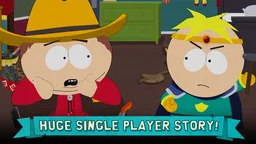
The South Park setting gives those choices a deliberately ridiculous edge. Familiar characters and the game’s playful tone keep a loss from feeling too solemn, while the recognizable cast makes it easier to remember what you are bringing into a fight. The humor is part of the experience, not a separate layer you need to ignore to reach the strategy. Still, the presentation is aimed at adults: the game carries a Mature 17+ rating, so I would not treat its cartoon look as a sign that it is appropriate for younger players.
Why the opening decisions matter
In a fast duel, it is tempting to play the first useful card as soon as it becomes available. I would resist that habit. Holding back can leave you with the option to answer an opponent’s move instead of having to improvise with an awkward hand. On the other hand, waiting too long can let a threat build. The practical skill is not saving everything; it is judging whether the field is stable enough to spend resources on progress.
A useful way to learn is to notice what caused a match to turn. If a unit was left unchecked, or you spent too much answering a minor threat, adjust one decision next time before rebuilding your whole deck. That small, controlled experiment makes the game easier to understand. Changing several cards at once may feel productive, but it also makes it harder to tell whether your plan improved or the next opponent simply played differently.
This is where the game differs from a purely casual card collection. The cards are the tools, but the duel asks you to read a moving situation. Someone who likes making quick tactical choices will likely enjoy that pressure. Someone who wants a slow, fully turn-based game with ample time to inspect every possibility may find the pace less comfortable.
The rhythm of a match: pressure, response, and another try
The feedback arrives quickly. A card enters the field, the opponent responds, and you can see whether your choice helped or exposed a weakness. That short distance between decision and consequence is what makes another attempt tempting. You do not have to wait long to learn that a plan was too expensive, too slow, or poorly matched to the threat in front of you. The game’s central loop is easy to describe: act, read the result, collect progress, then return with a changed approach.
That rhythm also creates its main source of friction. When several things happen close together, a new player can lose track of why a match went wrong. I recommend focusing on one cause at a time: perhaps you spent too early, perhaps your deck lacked an answer to a particular kind of pressure, or perhaps you committed to one side of the field when the other needed attention. Thinking in these terms turns defeat into information rather than a vague reason to keep pressing rematch.
For a practical everyday use case, this works well as a short break when you want an active game rather than a passive distraction. A commute wait or a few minutes between tasks can suit the compact duel format, provided you are comfortable giving a match your attention. It is less suited to moments when you need to stop instantly or cannot concentrate: the tactical choices are simple, but they are still choices, and playing carelessly can make the result feel arbitrary.
Compared with familiar collectible-card alternatives, Phone Destroyer makes the act of deploying cards feel more immediate and battlefield-focused. It is not the best fit if your main pleasure comes from leisurely turn planning, intricate deck theory, or treating each match like a long puzzle. Its strength is a brisk exchange where card selection and timing meet visible action. If you prefer direct tactical feedback over extended preparation, that distinction is a good reason to try it.
What rewards do to the loop
Winning and making progress give the next session a purpose beyond simply replaying the same match. The collection side encourages you to think about how new options might change your approach, while the duel gives you a chance to test that thinking. I like that the reward feels most useful when it prompts a decision: do I keep refining a reliable deck, or make room for a new option and accept that I will need to learn how it fits?
There is a trade-off here. Collection progress can make experimentation appealing, but it can also nudge players toward treating every setback as a reason to chase more resources rather than improve their decisions. I would first ask whether the deck has a clear answer to the problems you keep seeing. If it does not, adding cards without a plan can make it less coherent. If you enjoy collecting and tinkering, that gradual process is part of the attraction; if you only want an even competitive test from the outset, progression may feel like an extra layer between you and the matches.
The game is free to download, with in-app purchases ranging from $0.99 to $49.99 per item. That makes it accessible to sample, but I would set a personal spending limit before buying anything. A purchase is not a substitute for learning when to hold a card or how to respond to pressure, and players who prefer a one-time purchase with no optional spending may be more comfortable choosing a different game. You can begin without paying, then decide whether the collection and progression loop is worth spending on for you.
The public response suggests that many players have found the format compelling: it has an average rating of 4.6 from around 658,000 ratings, with over 10 million installs. I would treat those figures as a sign of broad interest rather than proof that it will suit everyone. The game’s strongest appeal is specific: South Park’s adult comedy, short tactical clashes, and the urge to adjust a deck after seeing what happened. If any one of those is a turnoff, popularity will not make the experience feel right.
Resetting with a better plan
The reset after a match is more interesting when you use it deliberately. Rather than immediately swapping half your cards, keep a note in your head of the moment that mattered most. If you lost because you had no answer to a threat, look for a way to cover that gap. If your response worked but left you unable to act afterward, consider whether the timing or resource commitment was the real problem. This is a small habit, but it keeps the game from becoming a string of emotional rematches.
It also helps to decide what kind of session you want before opening the game. If you are in the mood to experiment, accept that a less familiar deck may perform unevenly while you learn it. If you want a steadier run, use choices you already understand and focus on cleaner timing. Separating those goals avoids blaming a new strategy for every loss when the real issue was that you were testing it in a moment when you wanted reliable results.
Version 5.4.2 is the current version, and the game supports devices running Android 7.0 or later. The release date was November 8, 2017, so this is an established title rather than a brand-new experiment. That history may appeal to players who want a game with a long-running identity, though anyone choosing an older title should still check that it runs well on their own device before settling into it.
One more consideration is the audience. Its Mature 17+ rating matters not just because of the jokes, but because the game’s irreverent South Park style is central to the experience. If you are choosing something to play with a child, or you simply dislike crude adult comedy, the theme is a reason to skip it even if the card mechanics sound appealing. There are plenty of strategy games with a more neutral presentation that would be a better match.
Who should keep playing—and who should move on
I would recommend Phone Destroyer to someone who likes short, reactive strategy, enjoys the South Park cast, and gets satisfaction from noticing one mistake and correcting it in the next duel. It can also suit players who want a collection to shape over time rather than a single fixed puzzle. The most rewarding approach is to treat each fight as a test of a specific idea: one deck adjustment, one timing change, or one better response to a familiar threat.
I would steer away from it if you want quiet, fully turn-based planning, dislike adult humor, or have little patience for progression and optional purchases. It is also not ideal if your preferred mobile game is something you can play without watching closely. The matches move around your decisions, and the loop works best when you pay attention to what the opponent is doing rather than tapping cards on instinct.
Overall, the reason to begin another session is clear: the last duel showed you something, and you want to see whether a small change can produce a better result. That action-and-feedback cycle gives the game its momentum, while collection progress supplies a longer-term reason to refine your approach. I like it most when I treat the rewards as tools for experimentation, not as the point of the game itself. If fast card tactics and South Park’s distinctly adult sense of humor sound like your combination, this free strategy game is worth a try; if you prefer slower planning or a family-friendly tone, another card game will serve you better.
What we like
- Familiar characters give the battles plenty of personality.
- A wide range of cards encourages different deck strategies.
- Short matches work well for quick play sessions.
- New cards and upgrades add goals for returning players.
- The free-to-play format lets you try the game without buying it.
What could be better
- Card upgrades can require substantial time or resources.
- Progress may feel slow without spending money.
- Online matches depend on a stable internet connection.
- Some battles can be difficult when your deck is underleveled.
- The humor and language may not suit younger players.







