


Slow Mo Strike: Knives in Time review
 Analysis by Appsdrops
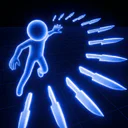
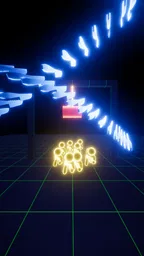
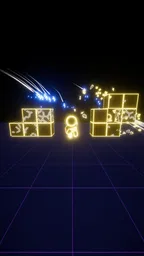
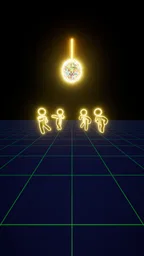
I like action games that give me something to do immediately rather than making me work through a long setup, and Slow Mo Strike: Knives in Time is built around a quick, readable idea: line up a group of knives, then send them forward together. Its appeal is less about mastering a sprawling combat system and more about the small thrill of planning a path and watching the result unfold. That makes it easy to understand at a glance, though the narrow focus also means it will not suit everyone looking for an action game.
A compact action game built around timing
Made by KAYAC Inc., this is a free action game for players who enjoy short bursts of tactile, visual problem-solving. The central interaction asks you to trace a route and release a volley of knives, with time behaving differently for the action than it does for the player’s planning. I find that contrast does the work of a much larger combat system: the satisfying part is choosing a line, committing to it, and seeing whether the result matches the plan.
The game’s premise is easy to explain to a friend, but the choice of route gives each attempt a little more thought than a simple tap-to-attack game. You are not just reacting to an enemy in real time; you get a moment to consider where the knives should travel before letting them go. That brief pause is important. It makes the game feel deliberate without turning a quick session into a complicated exercise.
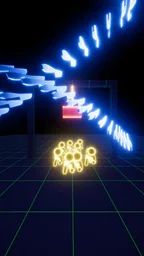
The store summary describes a burst of thirty knives, which captures the spectacle at the heart of the experience. I would treat that number as part of the advertised concept, not as a promise that every moment of play has identical pacing or that every target can be handled in one particular way. What matters in practice is the visual payoff of releasing a planned spread, and whether that kind of payoff keeps you interested from one attempt to the next.
What the free price does—and does not—tell you
There is no purchase price to weigh before trying it: the game is free to access. That makes the decision straightforward for anyone curious about its unusual slow-motion knife action. It does not, by itself, tell me whether there are optional purchases or other monetization choices, so I would not treat “free” as a guarantee that every element has no cost. For a value-minded player, the useful distinction is simple: trying the core game does not require an upfront payment.
That matters because this is a focused concept rather than an obvious all-purpose action game. You can sample its central interaction without first deciding whether a larger campaign, elaborate progression system, or extensive collection is worth paying for. If you enjoy the feel of tracing a line and watching a volley play out, the free entry point is a welcome low-commitment way to find out. If that interaction does not click, you can move on without having bought into a style you do not enjoy.
Why the planning feels more engaging than a tap
The most useful way to approach each release is to think of the trace as a decision, not merely a gesture. Before letting go, I would look at the visible situation and ask whether a direct path is really the best one, or whether a slightly different route gives the volley a more satisfying chance to connect with what is in front of me. That small pause turns the game’s central action into a test of anticipation. It also gives you a practical habit: make one clear plan, release, then use the outcome to decide what you would change next time.
This makes the game a good fit for small pockets of downtime. On a short break, I can focus on one attempt, take in the result, and stop without needing to remember a complicated story or a long sequence of objectives. It is also an easy game to show someone nearby: the action is visually legible, and the basic idea is quick to grasp. That does not mean it is automatically a good shared game, though. The enjoyment depends on the person finding the planning-and-release rhythm appealing, not simply on watching knives move in slow motion.
A less obvious strength is that the pause before release can make failure feel useful rather than purely frustrating. If the result is not what you wanted, you can focus on the choice you made—your route and timing—rather than assuming the game demanded reflexes you could not meet. I would use that as a simple improvement loop: keep the next attempt’s plan distinct, changing one decision at a time. This helps you tell whether a different trace actually improves the result instead of making every retry feel like guesswork.
The tradeoff: one strong idea has to carry the session
The same focus that makes the game accessible also sets its limits. If you want a deep action game with several kinds of attacks, a rich story, or extensive character-building, this is not the choice I would make. Its identity rests on a single recognizable pleasure: planning a knife path and releasing a dramatic burst. Players who need a fresh mechanic around every corner may find that premise wears thin sooner than it does for someone who likes repeating a compact skill challenge.
There is also a difference between spectacle and control. A large volley can look satisfying, but the visual impact alone does not guarantee that each attempt will feel strategically varied. I would judge the game by whether changing my trace feels meaningful, not by how dramatic the release looks. If the planning starts to feel like a formality and I am tapping through the same experience without making interesting choices, that is a fair sign to take a break or switch to a game with more varied combat.
It is better suited to a player who is comfortable learning through repeated attempts than to someone who expects a tutorial-heavy, carefully explained system. The basic premise is intuitive, but intuition does not answer every practical question about how a particular situation will resolve. My advice is to begin with modest expectations: treat the first attempts as a chance to understand the interaction, rather than assuming the game will immediately reveal a large set of hidden tactics. That keeps experimentation enjoyable and avoids mistaking a simple design for a more elaborate one.
Who is likely to get the most from it?
I would recommend it to people who enjoy quick action with a planning twist, especially players who like seeing a clear choice turn into an immediate visual result. It can work well between errands, during a quiet wait, or as a brief change of pace from games that demand sustained attention. Someone who likes to replay a short challenge and refine a gesture may get more from it than someone who prefers a long progression arc. The best fit is a player who values a distinctive central action over breadth.
It may also suit younger teens and older players looking for an uncomplicated action concept, but the age guidance is Teen, so I would pay attention to that when deciding whether it is appropriate for a younger child. The game is free and has passed the point where it is an obscure experiment: it has over five million installs, a 4.7 average rating from around eleven thousand ratings, and 209 written reviews. Those figures suggest that many players have found the idea approachable, but they do not replace your own judgment about whether the knife-based action is a good fit for your household.
For a realistic everyday use case, picture a few minutes waiting for a ride. This is the kind of game I would open when I want a small, self-contained challenge rather than a session that needs a quiet room and a long stretch of concentration. I would avoid starting it when I need to keep my attention on a conversation or move around, since tracing a route is more engaging when I can actually look at the screen and make a considered choice. It is casual in scale, but it still asks for focus at the moment of planning.
How it compares with familiar action games
Compared with the usual reflex-led action game, where success often comes from reacting quickly to incoming threats, this one puts more emphasis on deciding what to do before the action unfolds. That makes it a useful alternative when I want action without the same constant pressure to make split-second responses. Compared with a broad combat game, it is much more narrowly defined: there is no reason to expect a large set of weapons or a deep tactical toolbox from a concept centered on knife trajectories.
That difference is a strength if you are tired of games that bury a simple idea under menus and systems. It is a weakness if variety is the main thing you want. I would choose this over a conventional action game for a brief, visually satisfying planning challenge, but I would choose a fuller combat title for a long evening, narrative momentum, or the feeling of steadily developing a character. Neither is inherently better; they serve different moods, and this game is most compelling when you want its particular rhythm.
One practical tradeoff is that the game’s interaction rewards a little space to observe. A noisy commute or a moment when you are repeatedly interrupted may make the planning feel less satisfying, even if the session itself is short. I would save it for a pause when I can focus on the screen long enough to trace deliberately. That is a small adjustment, but it helps distinguish a quick game that is genuinely relaxing from one that becomes annoying because I keep playing while distracted.
Compatibility and what to expect from the current build
The current version is 017, and the stated minimum operating system is Android 5.1. That gives older Android devices a clear baseline to check before installing. If your device runs a newer system, the main question is less about the concept and more about whether you enjoy its focused gesture-based play. I would not assume that a minimum OS requirement alone guarantees the same performance on every device, so it is sensible to try a short session before deciding it belongs in your regular rotation.
The game was released on May 14, 2026. Since release timing can help explain why someone is encountering a title for the first time, it is useful context, but it does not tell me how often the game changes or what future updates may bring. I would judge the experience by what is playable now rather than expecting a particular update schedule or a promised addition. That is the fairest way to assess a small, sharply focused game.
My verdict on whether it is worth your time
Slow Mo Strike: Knives in Time is worth trying if a free, compact action game built around route planning and a dramatic knife release sounds appealing. Its most convincing value is the immediate, low-commitment chance to test that unusual interaction. I like that it asks for a deliberate choice rather than only a fast tap, and I can see it working especially well as a short break-time game for someone who enjoys refining a simple move.
I would skip it if you want a long campaign, a wide range of combat systems, or action that constantly introduces new mechanics. The same restraint that keeps the game easy to approach also leaves it with a narrow lane, and not every player wants to revisit one core idea. My recommendation is to install it when you are curious about the planning-and-release loop, give it a few focused attempts, and decide based on whether changing your trace keeps the action interesting. If that loop clicks, the free starting point makes it an easy recommendation; if it does not, a more varied action game will give you better value for your attention.
What we like
- Simple controls make it easy to start playing.
- Slow-motion effects add a clear visual hook.
- Quick rounds suit short play sessions.
- Knife throws provide immediate feedback.
- The arcade format is easy to understand.
What could be better
- Repeated throws can make gameplay feel repetitive.
- Timing challenges may frustrate younger players.
- Ads may interrupt the flow of play.
- Progress can feel limited without varied challenges.
- Precise timing may be harder on smaller screens.







