
Shuriken Cut review
 Analysis by Appsdrops
I like action games that explain themselves quickly, then leave room for a little practice. Shuriken Cut starts from a simple idea: aim thrown shuriken so they slice through enemies. That direct setup is its strongest appeal. There is no need to learn a complicated backstory before playing, and the central action is easy to understand even if you only have a few minutes.
That simplicity also sets expectations. This is a focused arcade-style game, not a sprawling action adventure with a long campaign to explore. I would consider it when I want a brief burst of target-focused play, rather than a deep progression system or a demanding test of complicated controls. Whether that trade-off sounds appealing is more important than the compact premise itself.
How the central action feels
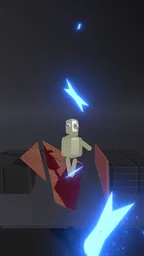
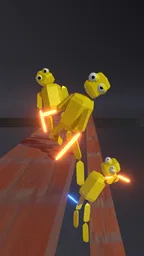
The pleasure of a shuriken game depends on the relationship between aim and outcome. A throw should feel deliberate, and a successful cut should be easy to read. Shuriken Cut puts that interaction at the center, making each attempt feel like a small problem: choose a line, commit to the throw, and see whether it clears the threat in front of you.
That makes it approachable for quick sessions. I can imagine opening it while waiting for a ride or taking a short break, because the premise does not ask me to remember a complicated sequence of objectives. The useful mindset is to treat each throw as a decision rather than simply moving as fast as possible. When an attempt goes wrong, changing the angle or timing is a more satisfying response than repeating the same motion without thought.
It also means the game’s appeal rests heavily on the feel of the interaction. Players who enjoy lining up attacks and getting a clear response from them are the natural audience. Someone looking for elaborate combos, character builds, or a large set of systems may find the basic loop too narrow. The store summary captures the action, but the more practical question is whether repeated aiming stays enjoyable for you after the novelty wears off.
A useful way to approach a run
Instead of treating every target as an invitation to throw immediately, I would pause long enough to read the scene. Look for the cleanest path through the enemies and consider whether a direct line is safer than a hurried, imperfect attempt. This small habit can make a simple action game feel more thoughtful without turning it into homework.
For short play sessions, that decision-making is a good fit: I can focus on one attempt at a time and stop without needing to reach a major story checkpoint. It is less suitable when I want a relaxed game that plays itself in the background. Aiming asks for attention, and the basic premise does not promise the kind of passive progress offered by idle games.
Where it sits among action games
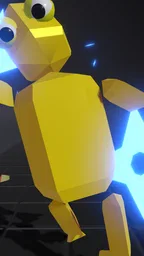
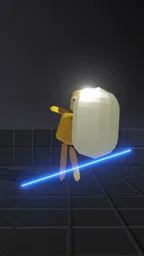
Shuriken Cut is an action game from KAYAC Inc., and its narrow focus distinguishes it from the usual alternatives in the category. Many action games emphasize sustained movement, extended combat, or a broad range of weapons and abilities. This one leads with a single recognizable tool and the satisfying prospect of cutting through enemies with a well-placed throw.
That focus can be an advantage on a phone. There is less conceptual overhead than in an action game built around a complex control scheme, and the premise is easy to return to after a break. But a player who wants a large battlefield, long-form missions, or a deep combat toolkit will likely be happier with a more expansive action title. Shuriken Cut is better judged as a compact, repeatable diversion than as a substitute for a full-scale adventure.
It is free to play, which makes trying the basic idea less of a commitment. Free does not automatically mean frictionless, though: I would still decide whether the game’s core action holds my attention rather than assuming that the price alone makes it worthwhile. Its Teen content rating is also useful context for families choosing a game, but it should not be mistaken for a detailed description of every scene or interaction.
Who is most likely to enjoy it
I would recommend giving it a try if you like simple controls, quick decisions, and attacks where precision matters more than learning a long list of moves. It could suit a player who wants a small action game to dip into during a spare moment, or someone curious about a shuriken-focused take on the genre.
I would be more cautious if you usually need a story, varied environments, or steadily expanding mechanics to stay interested. It may also be a poor match if you dislike aiming-based play: the central idea is the point, so there is little reason to expect the experience to become a completely different kind of game. For those players, a conventional action title with movement and combat variety is likely the better choice.
What its release and current version tell me
The game was released on January 23, 2025, and its current version is 053. Those details place it in a relatively recent stage of its life, but they do not by themselves show what changed between versions. I would not read a version number as proof of a particular feature, balance update, or improvement. It is a useful marker of the build currently offered, not a changelog.
For someone already playing, the practical takeaway is modest: check that the installed build is current before judging a problem as a lasting part of the game. If you are new, version 053 is the version to evaluate rather than an imagined earlier state. I would separate that confirmed present from any hopes about future content; no release detail here establishes what KAYAC Inc. plans to add next.
The game has an average rating of 4.7 from around 60,000 ratings, and it has passed 10 million installs. Those figures suggest that the quick, direct concept has reached a substantial audience and found many players who rate it positively. They are useful signals of broad appeal, not a guarantee that every player will enjoy the same loop. Ratings cannot tell me whether you personally prefer precision-based action or a deeper campaign.
On Android, the minimum operating system requirement is version 6.0. That helps readers with older devices decide whether compatibility is plausible before they commit time to a download. Device performance can still vary, so I would treat compatibility as a starting point, not a promise that every supported phone will feel identical in use.
What existing players should keep in mind
If you have played from the beginning, the current version number offers a simple way to confirm that you are looking at the latest available build. The release date gives context for the game’s age, but neither detail tells us whether the core experience has changed substantially. I would judge any update by what I can actually observe after installing it, rather than assuming that a higher version number means a new mode or a major redesign.
For new players, there is no need to wait for a hypothetical overhaul if the central premise already appeals. The clearest evidence about the experience is still its defining action: aiming shuriken at enemies. If that sounds fun, the game is easy to understand as a focused pick-up-and-play option. If you need evidence of a long-term content roadmap before starting, this is not enough information to make that promise.
Limitations and sensible expectations
The main limitation is also the game’s clearest identity: it concentrates on one kind of action. That can make a session feel refreshingly focused, but it can also become repetitive for players who expect each stage or encounter to introduce a substantially different way to play. I would avoid treating the straightforward premise as evidence of hidden depth. Enjoyment here should come first from the moment-to-moment act of aiming and cutting.
Another trade-off is that precision-based play is not equally relaxing for everyone. If you are tired or distracted, a game that asks you to line up throws may feel less soothing than a puzzle with no time pressure or a casual title built around collection. I would use it when I am ready to pay attention, even briefly, instead of expecting it to work as background entertainment.
The usual comparison is between this and a larger action game. Choose Shuriken Cut when you want an uncomplicated, shuriken-centered challenge and do not need a broad arsenal or lengthy narrative. Choose a more feature-rich action game when variety, exploration, and a stronger sense of progression matter more than getting into the action quickly. That is not a flaw that can be fixed by liking the premise; it is a matter of matching the game to the kind of session you want.
What I would watch for next
As the game continues to develop, I would pay attention to clearly documented changes rather than infer them from version numbers alone. For players, the most meaningful signs would be changes that preserve the quick aiming appeal while offering a reason for experienced users to return. Until such changes are visible, it is fairer to assess the game on the focused experience it has now.
I would also watch whether the central action remains satisfying over repeated short sessions. That is the key test for a game built around throwing shuriken: not simply whether the idea sounds exciting at first, but whether aiming and seeing the result continues to feel worthwhile. A broader feature list would not matter much to me if that interaction stopped being enjoyable.
My recommendation is straightforward: try it if a compact action game based on aiming attacks sounds appealing, and go in expecting a focused diversion rather than a full-scale adventure. Shuriken Cut has a clear identity, a free entry point, and a large audience, but its narrow premise will naturally suit some players better than others. I would keep it in mind for short, attentive breaks—and choose a more varied action game when I want a longer journey or a richer combat toolkit.
What we like
- Quick swipe controls make cutting feel responsive.
- Short levels suit quick play sessions.
- Colorful visuals make targets easy to spot.
- Satisfying effects reward accurate cuts.
- Simple rules make it easy to learn.жа
What could be better
- Repeated cutting challenges can feel predictable.
- Precise swipes may take practice on small screens.
- Some levels may require several attempts.
- Fast action can make mistakes frustrating.
- The game may offer limited variety over time.







