

RP Grand - Open World Game review
 Analysis by Appsdrops
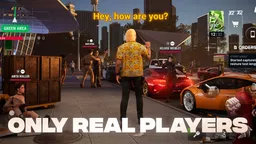
The most interesting part of RP Grand - Open World Game is not simply that it puts cars, gangs and police in the same setting. It is the promise of sharing that setting with real players and turning ordinary movement through the world into roleplay. That changes what I look for in a session: instead of treating every moment as a race toward a mission reward, I pay attention to the other people around me and the stories that can emerge from crossing paths.
That focus makes the game a better fit for players who enjoy making their own fun than for anyone seeking a tightly scripted, single-player RPG. I find the idea appealing because a multiplayer world can feel less predictable than a fixed sequence of encounters. At the same time, it asks for patience: other players are part of the experience, and their choices may not match the scene I had in mind.
Why shared roleplay is the main attraction
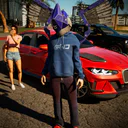
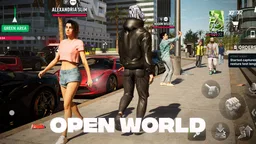
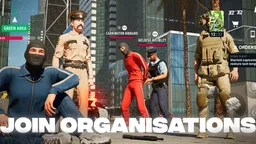
Grand Games AV developed this free role-playing game, which sits in a lively action-world niche rather than the more traditional, menu-driven RPG mold. Its central appeal is being in an open world with other people, where vehicles, gangs and police provide a setting for roleplay. The result is less about following a predetermined hero’s journey and more about deciding how you want to take part in a shared environment.
That distinction matters when choosing what to play. In a conventional RPG, I expect the world to respond through authored quests, dialogue and progression. Here, the social element is the draw: a scene can depend on who is online and how they choose to behave. If you enjoy improvisation, that can create memorable moments. If you need a clear objective every time you open a game, the freedom may feel like a lack of direction.
The game has an average rating of 4.3 from around 56,000 ratings, and it has passed 10 million installs. Those figures suggest a broad audience, but they do not tell me whether a particular session will suit a particular player. The more useful question is whether you like interacting with strangers in a game world, or would rather keep your play focused on solo progress and predictable tasks.
What the multiplayer emphasis changes
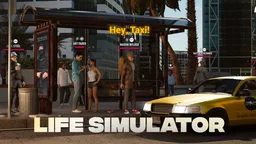
When people share an open world, the setting becomes more than scenery. A drive can be a way to get somewhere, but it can also bring you into contact with other players and invite an improvised interaction. The cars, gangs and police establish a recognizable frame for those encounters, while the roleplay angle leaves room for participants to decide what a situation means.
That freedom is also a trade-off. A carefully written single-player game can control pacing and make sure each encounter has context. A shared world cannot guarantee that every person will be in the mood to play along. I would approach it with flexible expectations: treat a good interaction as a bonus, and do not assume that every encounter will develop into a satisfying story.
How I would approach a session
I would start with a modest goal rather than expecting the game to deliver a complete story on demand. For example, I might set aside a short session to explore the world and see whether its social rhythm suits me, instead of going in with a long checklist of objectives. In a roleplay game, a few minutes of observing how people use the shared space can be more useful than immediately trying to force a particular scenario.
A practical habit is to decide what kind of session you want before opening the game. If you only have a little time, keep the aim simple: explore, take part in an encounter if one develops, and stop when you have had enough. If you have a longer stretch, there is more room for an interaction to unfold naturally. This is not a promise that other players will cooperate; it is a way to avoid judging the game by whether it produces a polished story on your schedule.
It also helps to separate the setting’s themes from the kind of play you personally enjoy. The presence of gangs and police gives the world an action-oriented identity, but a player looking for thoughtful, quiet roleplay may still need to decide whether that atmosphere appeals. Conversely, someone who wants continuous combat should not assume that a roleplay-focused environment will function like a straightforward action campaign.
Because this is a social experience, I would also pay attention to how comfortable I feel with unpredictable interactions. The game carries a Teen content rating, which is useful context for families and younger players, but it does not replace a parent’s judgement about whether an online roleplaying environment is appropriate for them. For younger users, I would discuss expectations around playing with real people before treating the game as a casual solo pastime.
A useful everyday scenario
Imagine having a free half-hour after school or work and wanting something more open-ended than a quick match. This is where the shared-world premise could work well: you can enter without needing to complete a long, carefully sequenced chapter, then see whether the world and its other players offer an interesting moment. If nothing clicks, you can still treat the session as a brief visit rather than a failed attempt to finish a mission.
That same scenario shows why the game is not ideal for every break. If you have only a few minutes and want an immediate, reliable payoff, an offline puzzle or a tightly structured level-based game may be a better choice. An online roleplay session depends on the human element, and people do not always create an engaging situation at the moment you happen to log in.
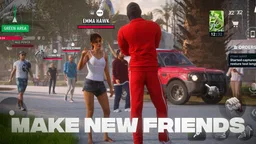
For friends, the appeal may be easier to understand: a shared world gives you a place to meet and make your own activity out of the setting. Even then, I would not recommend installing it solely because a friend promises a particular kind of experience. The fun depends on what you and the people you encounter actually do, so the best test is whether you enjoy the basic idea of improvising together.
Where it differs from familiar alternatives
Compared with a classic role-playing game built around a campaign, RP Grand appears to put more weight on the shared world and player interaction than on a prescribed narrative. That can be liberating if you are tired of following quest markers and want the possibility of unscripted encounters. It is less appealing if you judge an RPG mainly by the depth of its authored story, character development or carefully balanced solo challenges.
It also differs from a conventional competitive action game. A match-based game usually makes the immediate goal clear and provides a defined endpoint. In an open-world roleplay setting, the point may be to inhabit the world rather than win a round. That is a meaningful difference, not a flaw, but it means competitive players should check their expectations before assuming that the game will deliver the same tight structure as a team match.
For players who want a crime-and-police setting but prefer playing alone, a single-player action game may be a better fit. For people who want social improvisation and do not mind that a session can vary, this game’s premise has a more distinctive advantage. I would choose between those options based on whether other players make the world more exciting for me or simply add noise.
Practical expectations before installing
The game is free to download, with in-app purchases listed from $0.49 to $99.99 per item. That wide range is a reason to make purchase decisions deliberately, not a reason to assume that spending is required to enjoy the central concept. I would begin without buying anything, work out whether I actually like the multiplayer roleplay, and only then decide whether an optional purchase is worthwhile for me.
It is currently at version 110 and requires Android 8.0 or later. Those details make it easier to check basic compatibility before installing, particularly on an older device. The listed age guidance is Teen, so anyone choosing the game for a child should consider both that rating and the fact that the experience involves real players.
One practical limitation of the premise is that a social game can be hard to evaluate in a single quick visit. A quiet session may not show what makes it appealing, while an unusually lively one may set expectations that are difficult to repeat. I would give it a fair trial across a few sessions if the core idea interests me, but I would not keep returning out of obligation if the unpredictable social side is consistently frustrating.
Who is likely to enjoy it most
I would recommend giving it a try if you like open-world settings, enjoy meeting other players in games, and are happy to shape your own reasons for being there. It is particularly suited to someone who sees roleplay as a collaborative activity rather than a script the game must provide. That player can treat a quiet stretch as breathing room and an unexpected encounter as an opportunity, without needing every session to follow the same plan.
I would be more cautious if you prefer solo campaigns, dislike interacting with strangers, or want every play session to have a dependable objective and endpoint. The game’s central draw is also its main uncertainty: the human element can make a world feel alive, but it means the experience is not fully under your control. Players who want a polished narrative arc or a predictable competitive loop should look elsewhere in the role-playing and action categories.
My overall view is that RP Grand - Open World Game is most compelling as a social space with an action-themed setting, not as a substitute for a traditional story-driven RPG. Its strongest reason to install is the chance to create unscripted moments with real players; its biggest limitation is that those moments depend on timing, mood and company. If that trade suits you, the free entry point makes trying it a reasonable decision. If you want a self-contained adventure with guaranteed structure, I would choose a different kind of game.
What we like
- Large open-world areas offer room to explore.
- Driving adds variety to the role-playing experience.
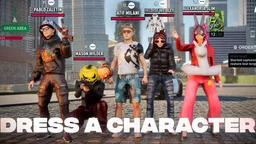
- Character customization helps players create a personal look.
- Social features make it easier to interact with other players.
- A wide range of activities supports different play styles.
What could be better
- Online features require a stable internet connection.
- Some areas may feel quiet when few players are online.
- Progress can require repeated tasks over time.
- Controls may take practice to master.
- Performance can vary across devices.







