







Prison Life: Idle Game review
 Analysis by Appsdrops
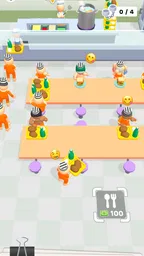
I would approach Prison Life: Idle Game as a small management game rather than a deep role-playing adventure. Its premise puts you in charge of a prison and asks you to handle a growing flow of prisoners. That gives the game a clear starting point: you are not choosing a hero or exploring a huge world, but trying to keep a busy institution moving. If that kind of incremental oversight sounds satisfying, it is easy to understand why the game has attracted a broad audience. If you want a story-led RPG with detailed character choices, though, this is a different sort of experience.
What to expect from running a prison
The role-playing label is best understood through the part you play: you are the manager, and the central appeal is watching a facility develop as you respond to demand. The idle-game framing suggests a loop built around steady progress and management decisions, not the tactical battles or long dialogue scenes many players associate with role-playing games. I would go in expecting a focused management routine, with the prison itself as the reason to keep checking in.
That narrow focus is a strength when you want a game you can grasp quickly. You can think about the broad question—how do I keep this place functioning as more prisoners arrive?—without first learning a large cast or a complicated fictional history. At the same time, the setting may not suit everyone. If prison-management themes put you off, or if you would rather build a peaceful town, solve quests, or compete in combat, the premise is likely to matter more than the idle format.
It is free to download, and Supercent, Inc. is the developer. The game is rated Everyone, which makes it broadly accessible in age-rating terms, though parents should still decide whether the prison setting fits their household. Optional in-app purchases range from $0.99 to $99.99 per item, so I would treat spending as a separate choice rather than something needed to understand the basic idea. Its 4.0 average from around 127,000 ratings and more than 50 million installs indicate that it has found a substantial audience, but popularity cannot tell you whether this particular loop will hold your attention.
Start with the job, not the long-term plan
When I try a management game for the first time, I resist the urge to optimize everything immediately. In Prison Life, the most useful first question is simply what the game is asking me to manage right now. A flood of prisoners sounds like the central pressure, so I would pay attention to the on-screen requests and available actions before making assumptions about how the whole prison should be run. That approach keeps the first session practical: learn the immediate loop, then decide whether its rhythm feels rewarding.
There is no need to arrive with a detailed strategy borrowed from another idle game. Similar titles often use familiar ideas such as expanding a business or increasing production, but a prison has a different theme and a different managerial fantasy. The useful comparison is not that every idle game works the same way; it is that this one appears to turn ongoing growth into a facility-management task. If you prefer a game where each minute involves a fresh puzzle, that steady-growth structure may feel too repetitive.
Make the first session useful
For a first-time player, I would define a successful opening session modestly: understand what action the game expects, complete it, and notice what changes afterward. That is more helpful than tapping through quickly and then wondering why the prison feels busier. Watch the relationship between the task you perform and the result the game shows you. Once you can connect an action with a visible improvement or a new demand, you have learned the basic language of the experience.
A realistic use case is a short break between errands or during a quiet moment at home. I would open the game, deal with the most obvious current task, and stop once I had seen how that action affected the broader management loop. That gives the game a chance to fit around ordinary life rather than turning a casual install into a commitment. If you find yourself wanting to return because you are curious about the next stage of running the prison, that is a better sign than simply playing for a long stretch on the first day.
One practical tip is to make a small mental note of what you changed before closing the game. When you return, check whether the game’s current situation has moved on and whether the same action remains the priority. This is especially useful in idle games, where progress can be less obvious than in a level-based adventure. It also helps distinguish two different feelings: enjoying gradual management, and merely tapping because the interface presents another prompt.
Where first-time players can get confused
The biggest potential misunderstanding is expecting “role-playing” to mean a conventional RPG campaign. The central identity here is prison manager, not a named protagonist moving through a story. If you install it expecting character builds, branching conversations, or a long narrative, you may think the game is missing something when it is actually focused on a different kind of progression. I would judge it by whether managing a growing prison feels engaging, not by how closely it resembles a fantasy or action RPG.
Another point to keep in mind is the difference between free access and optional spending. The game is free, while in-app purchases are available at a wide range of prices. That does not by itself mean you need to buy anything, and I would not recommend spending just to make an unfamiliar game feel more rewarding. First learn what the ordinary loop offers. If you later consider a purchase, pause and ask whether it improves a part of the game you genuinely enjoy, rather than responding to impatience with gradual progress.
It is also easy to mistake activity for strategy. A busy screen or a stream of prisoners can make a player want to act everywhere at once. I find it more useful to focus on one visible bottleneck at a time: identify what seems to be holding the prison back, act on that, and then check whether the situation has improved. This is a general decision-making approach, not a claim that the game has a particular hidden system. It helps keep your choices deliberate even when the setting implies constant pressure.
Decide whether its pace fits your routine
The idle format is likely to suit people who enjoy gradual development and brief check-ins more than players who want every session to deliver a self-contained challenge. If you like seeing a management project grow and are comfortable with progress that unfolds over time, the prison premise gives that routine a distinctive frame. If you need precise control over every moment, or want a clearly narrated sequence of missions, a more traditional strategy or story RPG may be a better match.
I would also think about how you feel about repetition. Management games often ask you to revisit a central activity as the scale changes, and the concept here is deliberately concentrated on handling prisoners and running the prison. That focus makes the game easy to read, but it can also limit variety for someone who wants a new mode or a different kind of challenge every session. The right question is not whether repetition exists in the abstract; it is whether seeing the prison’s demands change is enough to make repeating its core routine worthwhile for you.
For a parent considering it for a younger player, the Everyone rating is a useful starting point, but it is not a substitute for checking whether the theme feels appropriate. For an adult looking for a casual game, the same rating mainly signals broad accessibility rather than a promise about depth. I would make the decision based on the setting and management loop, then use the first session to see whether the actual pace feels comfortable.
What to try after the first success
Once you have handled an initial task and understood what the game is asking of you, the next step is to observe rather than rush. Look at how the prison’s needs evolve, and decide which action seems to make the biggest practical difference. That simple habit gives you a personal way to judge progress without needing to chase every prompt. It also reveals whether you enjoy the role of manager: the appeal should come from making the place run more smoothly, not from guessing at systems the game has not yet introduced.
If you are choosing between this and another idle title, compare the theme first. A business or city-building game may offer a more familiar setting, while Prison Life makes the institution itself the focus. If you are choosing between this and a conventional role-playing game, compare the kind of involvement you want: ongoing oversight here, versus characters, combat, exploration, or story elsewhere. Those distinctions are more useful than assuming that games in the same broad category will deliver the same experience.
The game was released on November 17, 2023, and its current version is 45.12.0. It requires Android 6.0 or later, a practical detail to check before installing on an older device. I would still make my decision based on the gameplay rather than version numbers: the key question is whether the steady work of managing a prison sounds enjoyable to you. These details can help confirm compatibility, but they do not replace trying the opening loop for yourself.
My recommendation
I would recommend Prison Life: Idle Game to someone who wants an accessible management game with a clear, unusual setting and is happy to build progress through an ongoing routine. Its broad reach—around 1,000 written reviews alongside its much larger rating count—shows that many players have taken the time to respond, but I would not treat that as a guarantee of a personal fit. The strongest reason to try it is the specific pleasure of taking responsibility for a prison that keeps getting busier.
I would skip it if the subject itself is unappealing, if you want a narrative RPG, or if repetitive management tasks quickly feel like chores. I would also avoid making an early purchase before you know whether the core loop holds your interest. Downloading is free, so the sensible test is to play the opening, learn the basic rhythm, and see whether you naturally want to return. If you do, the game has found its audience in you; if not, a story-driven RPG or a management game with a setting you prefer will probably be a better use of your time.
What we like
- Simple controls make it easy to manage the prison.
- Idle earnings provide progress between play sessions.
- Prison upgrades give players clear short-term goals.
- The casual pace suits quick gaming breaks.
- The premise offers a playful twist on management games.
What could be better
- Progress can slow without frequent upgrades.
- Repeated tasks may feel monotonous over time.
- Some upgrades may require extended waiting.
- The management systems offer limited strategic depth.
- Ads or in-app purchases may interrupt the experience.







