
Shadow Fight 3 - RPG fighting review
 Analysis by Appsdrops
Shadow Fight 3 is a role-playing fighting game that makes the rhythm of a duel matter as much as the fighter you bring into it. I like that it asks for more than a quick tap: watching an opponent, choosing a moment to attack, and adjusting when a move misses are all part of the appeal. It suits players who want action with room to learn, though it is less appealing if you want a purely casual game that never asks for patience.
How the fights feel at different speeds
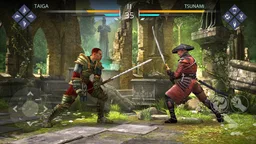
The pace is deliberate enough that I wouldn’t describe every encounter as a button-mashing rush. A fight can feel brisk when I read an opponent well and keep my actions measured, but hesitation or an ill-timed attack can turn the same exchange into a slower back-and-forth. That makes the game rewarding when I’m focused, and occasionally frustrating when I only have a minute and want an instant win.
That pacing also gives the role-playing side a purpose. I’m not just looking for a flashy move; I’m thinking about what kind of fighter I want to develop and how that choice suits the challenges ahead. The result is a useful middle ground between a straightforward arcade brawler and a more elaborate role-playing adventure. If you enjoy learning a combat rhythm, the slower moments feel like part of the skill test rather than dead time.
There is a practical way to approach short sessions: treat a single match as a complete activity rather than trying to make major progress every time you open the game. That mindset works well during a commute break or while waiting for an appointment. If I’m tired or distracted, though, I’m more likely to mistime an exchange, so this isn’t the best pick for playing while my attention is divided.
What makes its combat worth learning
Many mobile fighting games lean on quick reactions and simple exchanges. Here, the appeal comes from combining action with the longer-term choices expected from a role-playing game. I find that the two parts complement each other: combat gives progression a reason to matter, while progression gives repeated battles a sense of direction. The trade-off is that players who want a self-contained duel with no investment beyond the next match may find the surrounding structure less satisfying.
A useful habit is to notice which kinds of exchanges are going wrong before changing everything about your approach. If I keep attacking into an opponent’s response, the problem may be timing rather than a need to play more aggressively. Slowing down and paying attention can be more productive than treating every loss as a prompt to push harder. This is a small but meaningful distinction in a game where the feel of the fight is part of the challenge.
Longer sessions and heavier play
When I settle in for a longer session, the main benefit is having time to get comfortable with the combat and enjoy the sense of developing a fighter. The downside is that repetition can become noticeable if I’m chasing progress without paying attention to what makes each encounter interesting. I’d recommend playing in focused blocks: take a few matches, reassess how they went, and stop when the battles start to feel like chores.
This is also where expectations matter. Shadow Fight 3 is free to download, but it offers in-app purchases ranging from $0.99 to $249.99 per item. That wide span is worth keeping in mind before spending: I would decide on a personal limit in advance and avoid treating a purchase as an automatic fix for a difficult fight. Players who prefer a game with no optional spending at all may be happier choosing a different title.
For everyday use, I’d choose a stable moment rather than opening it in the middle of a crowded, interruption-heavy routine. A sudden pause can break concentration during a fight, and the game is more enjoyable when I can give the action my attention. It works as a deliberate break between tasks better than as background entertainment while I’m doing something else.
Reliability and what to expect from a session
I would not promise a particular loading speed, frame rate, or recovery behavior across every phone: those experiences depend on the device and conditions. What I can say is that the game’s measured combat makes it sensible to judge performance during an actual exchange, not just by how quickly the opening screen appears. A brief pause during a fight matters more here than it might in a game where timing has little effect.
If a session is interrupted, I’d avoid assuming that every situation will resume in exactly the same way. The practical approach is to finish a match when possible and treat a short play window as a chance for one contained activity, rather than beginning a longer run when I know I may need to put the phone away at any moment. That makes the game easier to fit around a normal day, even without relying on a specific recovery feature.
For reliability, the simplest check is to try a few fights on the device you plan to use and see whether the controls feel consistent. If movement or attacks seem delayed, it can be hard to tell whether the issue is the phone, the connection, or my own timing from one brief encounter. I would look for a pattern over several matches before deciding the game itself is the problem.
Device fit, storage, and practical limits
The minimum operating-system requirement is Android 8.0, so older software may rule out installation even if a phone still handles other games. I’d check that first, then consider whether the device has enough free space and whether it stays comfortable during a longer play session. Those are sensible checks for a substantial action game, but I wouldn’t infer exact storage needs or battery use without testing the particular device.
Because fights reward concentration, screen comfort matters too. On a small display, I’d pay attention to whether I can see the action clearly and make inputs without feeling cramped. If the controls feel awkward in your hands, no amount of character progression will solve that basic issue. A short test session is more useful than assuming that a phone suitable for other games will automatically feel right here.
It is rated Teen, which is relevant for families deciding whether it fits a younger player. I’d also consider the optional purchases when setting expectations for a child: the free entry point does not mean every later choice is free. For shared devices, agreeing on purchase boundaries beforehand is an easy way to avoid an unwelcome surprise.
Who will enjoy it—and who may prefer another kind of game
With a 4.6 average from around 4.5 million ratings and more than 100 million installs, Shadow Fight 3 has clearly reached a large audience. Those figures tell me it has broad appeal, but they don’t guarantee that its pacing suits everyone. I’d especially recommend it to someone who enjoys combat that rewards attention and likes the idea of developing a fighter over time.
If you mainly want fast, disposable matches, a simpler arcade brawler may be a better fit. If you want a deep tactical role-playing experience where battles are only one part of a much larger structure, another RPG could serve you better. Shadow Fight 3 sits between those preferences: it puts fighting at the center and adds progression around it, without being the right answer for every kind of mobile player.
The developer is NEKKI, and the game first released on November 16, 2017. Its current version is 1.46.1. I mention the version as a practical detail for anyone checking compatibility, but I would still judge how smoothly it runs on the actual phone rather than assuming that a version number says everything about performance.
My verdict after weighing speed and stability
My recommendation is strongest for players who want a mobile fighter with a learning curve and a role-playing layer, and who are comfortable giving each match their attention. The deliberate rhythm is a strength when I’m in the mood to improve, but a drawback when I want effortless action. Optional purchases and the possibility of repetitive longer sessions are real considerations, not reasons to dismiss the game outright.
For a realistic everyday routine, I’d keep it as a focused break: open it when I have enough time to finish a match, play attentively, and stop before repetition takes over. I’d also check the Android requirement and try it on my own device before committing to extended sessions. If those conditions suit you, this is a compelling choice for deliberate mobile fighting; if you want instant, interruption-proof entertainment, I’d look elsewhere.
What we like
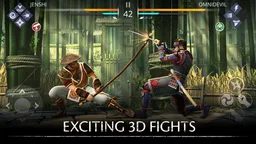
- Distinctive 3D visuals make fights easy to follow.
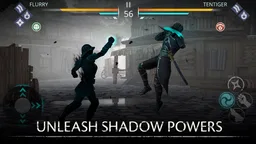
- Three combat styles add variety to battles.
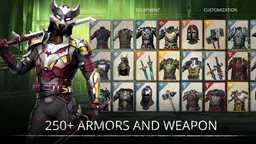
- Equipment upgrades offer meaningful character progression.
- Story missions provide a clear goal between fights.
- Controls are simple to learn on a touchscreen.
What could be better
- Energy limits can interrupt longer play sessions.
- Some upgrades require substantial grinding.
- Online events may depend on a stable connection.
- Randomized equipment rewards can slow build planning.
- Combat difficulty can spike between story missions.







