
Masha and the Bear Pizza Maker review
 Analysis by Appsdrops
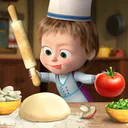
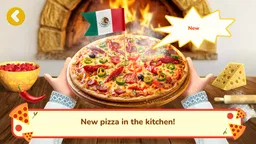
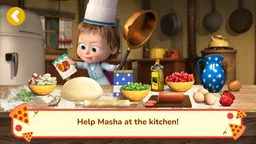
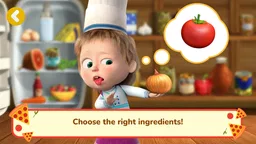
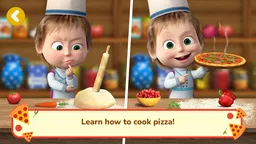
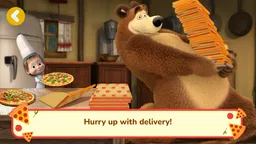
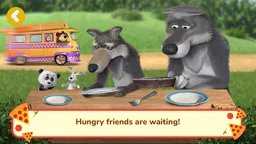
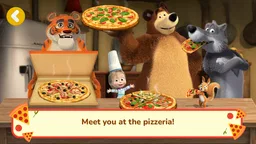
I like that Masha and the Bear Pizza Maker gives children a clear, playful idea to focus on: preparing pizza alongside familiar characters. It is a role-playing game from DEVGAME KIDS games, but its appeal is closer to a gentle make-believe activity than a story-heavy adventure. That makes it easy to understand at a glance, while leaving parents with a practical question: will the simple task of making pizza hold a child’s attention beyond a short visit?
My impression is that the game works best as a casual, child-friendly activity with a small, immediate goal. It is free to download, rated Everyone, and has reached over 100 million installs. Its average rating is 4.6 from around 247,000 ratings, which suggests broad appeal, though those figures cannot tell you whether its particular style suits your child. The useful distinction is that this is not a deep role-playing game built around long-term character development. Its charm rests on the familiar Masha and the Bear setting and the appeal of doing something with a visible result.
Small goals make the first session easy
For a young player, an activity such as making pizza can be more inviting than a game that begins with a long explanation, a complicated map, or a list of objectives. The premise gives a child a simple answer to “What do I do?” without asking them to learn a large set of rules first. I would choose it for a brief, supervised play session when a child wants to interact with Masha and the Bear rather than watch a video passively.
The early goal is also the game’s main strength and its main constraint. A concrete task gives play a natural beginning and a satisfying sense of direction, but it may not provide the kind of varied objectives that keep an older child invested for weeks. If your child enjoys repeating familiar pretend-play routines, the straightforward focus could be comforting. If they want a chain of increasingly demanding missions, elaborate choices, or a strong narrative, a more substantial role-playing game is likely a better match.
I would treat the first session as a quick test of the child’s interest rather than assume the familiar characters alone will carry the experience. Notice whether they enjoy the activity itself: deciding to engage with pizza-making play, following its flow, and seeing the task through. That gives you a better idea of likely staying power than the character branding does. A child who is eager to repeat the activity has found a reason to return; one who quickly asks for a different kind of challenge may have reached the limit of what this simple premise offers.
Progress feels more like completing an activity than building a character
In many role-playing games, progress is communicated through levels, equipment, story chapters, or a growing set of abilities. Here, I would approach progress more modestly: the satisfaction is in completing the pizza-making activity, not in expecting a complex arc of character growth. That difference matters if you are comparing it with fantasy adventures or collection-driven games. The label “role-playing” may set up expectations of a large progression system, but the central attraction is a familiar, hands-on theme.
For younger players, completion can be enough of a progress signal. Finishing a small task is easier to grasp than abstract experience points, and a parent can use it to set a simple stopping point: play through the activity, then put the device away. This is a practical advantage during a short wait or a quiet moment at home. It also makes the game less suitable for someone who measures enjoyment by unlocking a long sequence of new content. I would not choose it specifically to satisfy a child who wants a steady stream of visible rewards.
One useful way to keep the experience from becoming automatic is to let the child explain what they are doing as they play. Asking them to describe the pizza they are making can turn a short game session into a little pretend-play conversation without needing extra systems or rules. This is not a hidden game feature; it is simply a way for a parent to add engagement when the on-screen task alone feels brief. It works especially well for a child who likes narrating their own play, and less well for someone who wants the game itself to supply constant new prompts.
A gentle pace suits beginners, not challenge seekers
I see the relaxed, accessible premise as a better fit for a child’s first taste of game-like interaction than for someone seeking a demanding skill test. There is no reason to approach it expecting the rising difficulty or tactical decisions common in action role-playing games. That can be a relief when the priority is a low-pressure activity, but it also limits replay appeal for children who want to master difficult stages or compare performance.
Because the task is easy to understand, a child can probably return after a break without needing to remember a complicated story or strategy. That makes it handy as an occasional pick rather than a game that requires a daily routine. On a rainy afternoon, for example, I could see a parent offering a short turn while preparing a real snack nearby. The game supplies a themed activity, and the real-world conversation can make the moment feel more engaging without pretending the app is a cooking lesson.
For a child who already enjoys more demanding games, the same gentle pacing may feel flat. The usual alternatives in the role-playing category often emphasize exploration, combat, collecting, or story choices; those can offer stronger long-term goals, but they also tend to ask more of a player’s attention. This pizza-focused game trades that breadth for an approachable theme. I would pick it when simplicity is the point, not when a child is asking for a bigger world to explore.
What may bring a child back—and what may get in the way
Familiar characters and a repeatable activity can make the game easy to revisit. A child who likes Masha and the Bear may be glad to spend time in that setting, while the pizza theme gives the play a clear focus. Still, familiar characters do not automatically create lasting progression. If the child’s interest depends on discovering new goals or unlocking an expanding collection of content, the basic premise may not be enough on its own.
There is also a practical purchasing consideration. The game is free, but it includes optional in-app purchases ranging from $0.49 to $39.99 per item. That is a broad enough range that I would check the purchase settings on the device before handing it to a child. A free download does not mean every available item is free, and a young player may not distinguish an optional purchase from part of the ordinary activity. Setting up purchase controls in advance is a more useful precaution than relying on a child to recognize a checkout prompt.
For a shared device, I would also try the game with the child before treating it as an independent activity. That lets you see whether the pace works for them and gives you a chance to explain how to handle any purchase prompts. It is a small step, but it avoids two common mismatches: expecting a longer adventure than the game is meant to provide, and letting a child navigate spending choices without guidance. If you want a game that can occupy an older child for a long stretch without adult involvement, I would look elsewhere.
Who should choose it, and who should pass
I would recommend Masha and the Bear Pizza Maker to families looking for an uncomplicated, character-led game for a young child who enjoys pretend play and food themes. The Everyone age rating makes it broadly accessible, and the free starting point makes it easy to try. Its current version is 1.6.18, and it supports Android 7.0 or later. Those details are useful when checking whether it can run on an older device, but they do not change the central question of whether a simple pizza-making activity is what the child wants.
I would pass if the goal is a substantial role-playing experience, a difficult progression curve, or a game with a strong reason to keep returning over a long period. I would also be cautious if a child tends to tap through purchase prompts or becomes frustrated when a game’s goals are modest. In those situations, a more structured adventure may be a better fit, while a purely offline pretend-play activity may be preferable if you want to avoid app purchases altogether.
My verdict is that the game’s progression is best understood as short, approachable task completion rather than a deep ladder of unlocks and challenges. That is a sensible design direction for its audience, but it places a clear ceiling on how much challenge and long-term development I would expect. Try it when you want a brief Masha and the Bear-themed activity; choose a more expansive role-playing game if your child wants a world that keeps opening up. As a free option from DEVGAME KIDS games, it is worth a look for the right child, provided you keep expectations—and purchase controls—realistic.
What we like
- Simple controls make pizza-making easy for young children.
- Familiar characters can make the activity more engaging.
- Creative toppings let children customize each pizza.
- Short play sessions suit casual use.
- The cooking theme encourages imaginative play.
What could be better
- Gameplay may feel repetitive after several sessions.
- Limited challenge may not hold older children's interest.
- Some items may require in-app purchases.
- Ads may interrupt play depending on the version.
- The game offers little educational depth beyond basic food play.







