RAID: Shadow Legends review
 Analysis by Appsdrops
What kept me interested in RAID: Shadow Legends was not simply collecting heroes, but deciding what to do with the ones I already had. Every fight asks me to weigh damage against survival, and every upgrade raises the question of whether those resources would help more somewhere else. That makes this free role-playing game a better fit for players who enjoy planning between battles as much as watching them unfold.
Choosing a team is the first real strategy
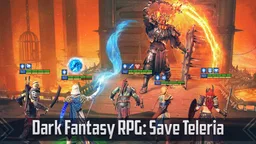
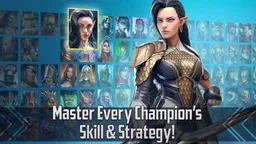
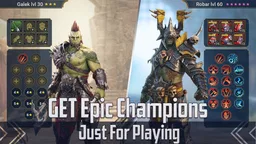
Built by Plarium Global Ltd, the game sets its turn-based battles in Teleria, where a roster of more than 800 heroes gives team-building plenty of room to explore. That breadth is exciting, but it can also feel like a lot to absorb early on. A large collection does not automatically make a strong team: the useful question is how each hero contributes alongside the others.
I found it more productive to think in terms of roles than rarity or appearance. A hard-hitting hero may look like the obvious choice, but a team that cannot stay alive or set up its attacks can struggle against a tougher opponent. When a battle stalls, I first consider whether the lineup lacks damage, durability, or a helpful effect before spending heavily on another upgrade.
That habit matters because progress involves more than finding a favorite champion. Improving one character may help immediately, while spreading attention across several can create a more flexible group. I prefer to build a dependable core first, then experiment with new additions when I have a clear reason to change the lineup.
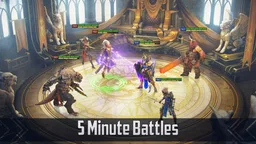
The game suits people who enjoy small tactical decisions. Turn order and ability timing matter, so I treat each fight as a sequence rather than a button-mashing exercise. If an enemy is close to being defeated, using a powerful ability at the wrong moment can leave the rest of my team exposed. Saving it for a more dangerous turn can be the smarter play.
Plan around the fight, not just the hero
A useful adjustment is to review what actually caused a defeat. Did my team lose a key member too early? Was the opponent's tougher unit left standing while my attacks were scattered? Did I spend a major ability before the most threatening part of the encounter? These questions turn a loss into a practical plan instead of a reason to keep repeating the same approach.
I also avoid treating every newly acquired hero as an immediate upgrade. A character can be appealing on paper and still be a poor fit for the team I am currently developing. Before committing scarce improvement resources, I ask what problem this hero solves and whether I can support that role with the rest of the lineup. That simple check helps curb the urge to upgrade just because something new arrived.
This is one of the game's more satisfying trade-offs: a roster encourages experimentation, while limited attention and materials encourage focus. Players who like tinkering will enjoy that tension. Those who want every new character to be instantly useful may find it frustrating.
Risk, reward, and the cost of impatience
RAID is free to download, but it includes in-app purchases priced from $0.59 to $199.99 per item. That wide range is worth knowing before starting, especially if you are sensitive to spending prompts or prefer games with a straightforward one-time cost. I would decide on a personal budget before playing and treat purchases as optional, not as a requirement for enjoying the tactical side.
The practical risk is less about one particular purchase and more about impatience. When progress slows, spending can seem like a shortcut around the planning that makes the game engaging. I would first revisit team composition and how I use abilities; if the same obstacle remains, I would consider whether I am simply at a point where steady progression is the better pace.
There is also a time trade-off. Turn-based combat gives me room to think, but roster management and progression can make a short session feel less self-contained than expected. If I only have a few minutes, I prefer to enter with a specific aim—such as testing a lineup or making one improvement—rather than trying to resolve every open goal at once.
For an everyday example, imagine having a short break and wanting to make progress without committing to a long session. I would choose one clear task, use the team I am currently building, and pay attention to where the fight goes wrong. Later, with more time, I could decide whether that result calls for a different hero or a better use of existing abilities. That split keeps the game from turning every spare moment into an unplanned grind.
Adaptation makes defeats useful
The most helpful response to a difficult encounter is often a change in approach, not simply more power. I try to notice which enemy is creating the most pressure and whether focusing attacks on that target would reduce the danger sooner. If my team is being worn down, I reconsider whether I have enough staying power; if fights drag on, I look at whether the lineup can deal damage efficiently.
This is where the turn-based format works in the game's favor. Because actions happen in a readable order, I can think about what my next move exposes or protects. The counterplay is not a promise that every encounter has one clever answer; it is the habit of making a deliberate adjustment and seeing whether it addresses the problem.
I would be wary of changing too many things at once. If I replace several heroes and invest in multiple upgrades before trying the fight again, I cannot tell which change helped. A more useful experiment is to alter one part of the plan, such as the target priority or the balance between offense and survival, then judge the result. That makes roster development feel more like learning and less like guessing.
Players who prefer direct action may find this process slow. RAID's pleasure comes from choices around the battle as well as the battle itself, so someone looking for a quick reflex challenge or a tightly scripted story experience may be happier with another kind of role-playing game. Here, patience and comparison are part of the loop.
Depth that rewards a longer horizon
The game has been available since February 26, 2019, and its current version is 11.90.0. Its audience is substantial, with a 4.6 average from around 2.3 million ratings and over 50 million installs. Those figures suggest a widely played game, but they do not decide whether its style suits you: the important question is whether you enjoy gradual roster-building and repeated tactical decisions.
Its Teen content rating is also useful context for choosing a game for a household. I would still encourage parents to consider the in-app purchase range and decide how they want purchases handled, particularly if a younger player will use the device. The game's free entry point does not mean every part of its economy should be ignored.
On Android, the listed minimum operating system is version 7.1. If you are checking whether it will run on a particular device, that is the compatibility detail to compare with your software version before installing. For iOS players, I would check the app store entry for their device rather than assume Android requirements apply to Apple hardware.
Compared with many role-playing games that emphasize real-time action, RAID gives more weight to party composition and the order of decisions. Compared with simpler collection games, it asks for more thought about how heroes work together and where to invest effort. That makes it appealing if you like optimizing a team, but less compelling if collecting alone is the main draw or if you want every new character to transform your progress immediately.
For a new player, I recommend setting a modest first goal: learn how your current team behaves before chasing a perfect roster. Try a few different combinations, notice who helps the team survive and who makes a meaningful contribution, and avoid spending resources simply to keep every hero equally developed. This gives you a clearer sense of what kind of lineup you enjoy before the choices become more involved.
Who should give it a try—and who should pass
I would recommend RAID: Shadow Legends to someone who likes turn-based combat, collection, and the slow satisfaction of improving a plan. It is particularly suited to players who enjoy asking why a battle went badly and adjusting their team instead of expecting a single powerful character to solve everything.
I would skip it if you dislike long-term progression, have little patience for managing a growing roster, or do not want a free game with optional purchases. If you prefer a one-and-done adventure, a story-first RPG, or action that depends on quick reactions, another title in the genre may fit your habits better. The large hero pool can be a draw, but it also asks you to make choices and live with the trade-offs.
My verdict is that RAID is strongest when I treat it as a planning game with battles attached. Its collection gives me options, while its turn-based fights reward attention to team balance, timing, and adaptation. I would start free, set spending boundaries, and focus on learning one reliable team before chasing every new possibility. If that kind of measured progress sounds satisfying, it is worth trying; if you want immediate action and little upkeep, its deeper management may feel like work.
What we like
- Champions offer varied skills and roles for building different teams.
- Turn-based battles make it easy to plan each move.
- Frequent events provide extra goals and rewards.
- The campaign offers a clear path for new players.
- Clan activities add cooperative goals and shared rewards.
What could be better
- Progress can slow down without spending money.
- Energy limits how many battles you can play at once.
- The large champion roster can make team choices overwhelming.
- Upgrading champions requires substantial time and resources.
- Random champion summons can make specific team plans hard to achieve.







