
Rope Fighter Action Game review
 Analysis by Appsdrops
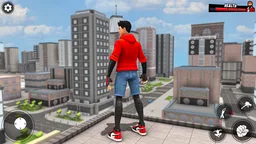
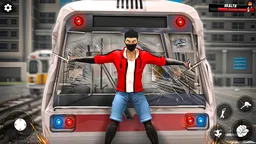
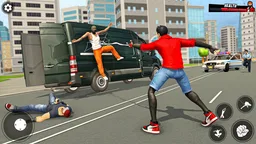
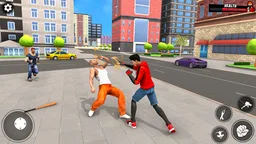
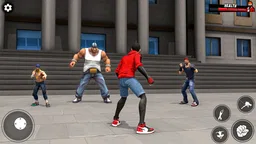
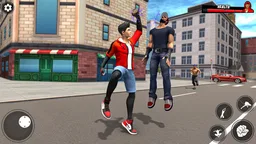
I approached Rope Fighter Action Game as a quick, casual role-playing adventure rather than a deep RPG. Its central appeal is easy to grasp: move through an open-world city, swing around, fight, and use powers while taking on the role of a hero. That mix gives it a more kinetic feel than a menu-driven role-playing game, and it is the main reason I would try it when I want something lively without first learning a complicated setting.
The game is free to download, which makes trying it a low-commitment choice. It does offer optional in-app purchases, priced from $0.99 to $19.99 per item, so free access should not be confused with a promise that every part of the experience is cost-free. I’d start without buying anything and decide whether the way the game feels is worth spending on. The title is made by HitBox Games and is rated Teen, useful context for anyone choosing a game for a younger player.
What the free entry point gives you
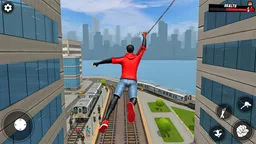
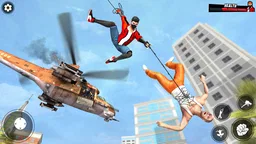
For a free mobile game, the value question is not simply whether there is a download charge; it is whether the basic play loop is enjoyable before optional spending enters the picture. Here, the draw is the combination of movement and combat. Swinging through an open city can make getting from one place to another part of the entertainment, rather than treating travel as a pause between fights. Powers add another layer to the action, so the premise is broader than just punching through encounters.
I like that this setup suits short sessions. If I have a few minutes to spare, I can jump in looking for immediate movement and combat rather than committing to a long story chapter. That is a practical strength for a phone game, especially for players who enjoy improvising in a city environment. The trade-off is that an open-world premise can create expectations of broad exploration and a large amount of varied content. I would judge the game by how satisfying its moment-to-moment movement and fighting are, not by assuming that “open world” automatically means a sprawling, endlessly fresh adventure.
There is a useful way to test whether the free version is enough for you: play several sessions without treating purchases as a shortcut. Pay attention to whether you naturally want to keep swinging and fighting, or whether you are only continuing because you expect a later upgrade to make the core loop enjoyable. If the basic movement already feels fun, optional spending may be easier to evaluate. If it does not, paying is unlikely to fix a mismatch in taste.
How the action loop earns its place
Rope movement changes the rhythm of an action game. Instead of approaching every encounter from the same direction, you can think about where you are moving and how to arrive. That makes traversal more than a cosmetic feature: it can be the part that keeps a short session engaging between fights. My practical tip is to give yourself a little time to get comfortable with movement before deciding whether the combat is for you. In games built around swinging, clumsy navigation can make even a good fight feel frustrating, while a few confident routes can make the city feel more playful.
The powers also make the game’s role-playing label relevant, but I would not pick it expecting the structure of a traditional, story-heavy RPG. The pitch is action-forward: a hero, a city, movement, fighting, and abilities. That will appeal to someone who wants to act first and think about builds or narrative second. If you want extensive dialogue, careful party planning, or a slow progression system, a conventional RPG is a safer choice. This game’s value is in its active, hands-on premise.
That distinction matters when comparing it with familiar alternatives. A standard action brawler tends to keep the player close to the ground and focused on successive fights; a platform game emphasizes timing and routes; an open-world role-playing game may devote more attention to quests, characters, and long-term character development. Rope Fighter sits closer to the action side, with swinging and powers giving its city play a distinctive angle. I would choose it over a conventional brawler when moving through the environment sounds as appealing as combat, but choose a deeper RPG when story and progression are the main reason for playing.
Where the trade-offs show up
The biggest potential friction is the gap between the promise of an open city and what an individual player wants from that space. Someone looking for carefully directed missions may find free movement less satisfying than a tightly designed sequence of stages. Someone who enjoys roaming may see that freedom as the point. Before installing, it helps to ask yourself whether you want a clear objective at every moment or are happy to make your own fun by moving around and engaging with the action.
Optional purchases are another consideration. The listed range is $0.99 to $19.99 per item, which is wide enough that I would not treat every purchase as equally minor. I would avoid spending in response to a moment of impatience: first work out what you are buying and whether it addresses a specific frustration or simply promises a faster path. If you are choosing the game for a teenager, it is sensible to discuss in-app spending beforehand, even though the game itself is free to start.
There is also a difference between a free game being accessible and being the right fit. If you dislike action controls on a touchscreen, a game whose appeal depends on movement and fighting may demand more patience than a slower, turn-based RPG. Likewise, if you want a calm experience to play while distracted, swinging and combat may call for more attention than you have available. I would save it for a moment when I can focus on the movement rather than expecting it to work as background entertainment.
The practical setup is straightforward in broad terms: the current version is 7.5, and the minimum operating-system requirement is 7.1. Those details help with compatibility, but they do not tell me how the game will feel on every device. If your phone is older, I would check that it runs comfortably before making any purchase. The game has a 4.5 average from around 30,000 ratings, and has passed 10 million installs. Those figures suggest that many players have tried it, but they cannot settle the personal question of whether its movement style suits you.
Who is most likely to get good value
I think the strongest audience is players who enjoy superhero-style action and want traversal to be part of the fun. It is a sensible pick if you like the idea of getting around a city in an unusual way, then switching into fights and using powers. It also suits people who prefer to sample a game before paying: free access lets you see whether the core concept clicks, while purchases remain optional rather than an entry fee.
A realistic use case is a short break between errands or during a commute when you have time for a focused burst of play. You could open the game, spend a little time moving around and engaging with action, then put it down without needing to schedule a long session. I would not assume that every session will feel equally purposeful, though. If you need a tightly guided objective to make a few minutes feel rewarding, a level-based action game may serve you better.
For parents and gift-givers, the Teen content rating is worth considering alongside the purchase range. The game may be a better fit for a teenager who already enjoys action games than for a younger child who needs something gentler or simpler. I would also make the spending conversation part of the decision: free to download does not mean that all optional items are free, and a clear household rule can prevent unwanted purchases.
On the other hand, I would skip it if your priority is a substantial narrative, a carefully paced quest campaign, or a traditional role-playing experience built around planning and character management. I would also look elsewhere if you want a purely competitive game or a quiet puzzle experience. The distinctive appeal here is the blend of movement, combat, and powers in a city setting; if that combination is not what you want to spend time doing, the broad genre label will not change that.
My verdict on trying it or spending
My recommendation is to try Rope Fighter Action Game for free if swinging through a city and mixing movement with combat sounds entertaining. Its value is clearest when the basic action itself is enough to keep you engaged, not when you view optional purchases as a way to turn it into a different kind of game. I would play first, decide what feels enjoyable, and spend only if a specific item seems worthwhile to me after that.
For its free starting point, this is an easy game to consider, particularly for action fans who want a more mobile, roaming feel than a straightforward brawler. Its limitations are just as important: it may not satisfy players seeking a deep RPG, a guided story, or a low-attention pastime, and the purchase range calls for a little restraint. If you know what you want from it—quick hero action built around movement and powers—it is worth a look. If you want depth first and action second, I’d choose another role-playing game instead.
What we like
- Simple controls make it easy to start swinging quickly.
- Short action rounds suit quick play sessions.
- Rope movement adds a distinct twist to combat.
- Bright visuals keep the action easy to follow.
- Offline play is useful when internet access is limited.
What could be better
- Rope movement can feel imprecise at first.
- Repeated fights may become predictable over time.
- Advertising can interrupt the flow of play.
- Progress may depend on repeated upgrades.
- Small screen controls can feel cramped during busy fights.







