
Rise of Kingdoms: Lost Crusade review
 Analysis by Appsdrops
I like strategy games that make planning matter beyond a single battle, and Rise of Kingdoms: Lost Crusade is built around that longer view. It asks you to grow a civilization, manage its development, and make choices that pay off over time. That creates an appealing sense of momentum, but it also means the game suits players who enjoy steady progress more than anyone looking for quick, self-contained matches.
A civilization game with a long horizon
Made by LilithGames, this free strategy game has been available since May 24, 2018. It is rated Everyone 10+ and runs on Android 6.0 or later. Its 4.5 average from around 2.6 million ratings and more than 50 million installs point to a broad audience, though popularity alone cannot tell you whether its pace will suit you.
The central appeal is the gradual shaping of a civilization. Rather than treating strategy as a series of isolated puzzles, the game gives decisions a longer tail: progress today affects what you can do later. I find that structure satisfying when I want a game to return to over several days, not just something to finish during a short break.
That ongoing commitment is also the main trade-off. A session can feel like one small step in a larger plan, and players who prefer a clear ending or a fresh start after every match may find the persistent progression less rewarding. If you enjoy watching an account develop and making patient choices, the premise has more room to hold your attention.
How it feels in ordinary play
A useful way to approach it is to treat each visit as a check-in with a plan. Before closing the game, decide what you want your next session to accomplish; when you return, look at whether that goal still makes sense before tapping through tasks on autopilot. This simple habit helps keep long-term progression from feeling like a pile of disconnected chores.
For example, imagine checking in during a commute or between errands. You may have only enough time to review progress and make a few decisions, rather than settle in for a long session. That can work well for a game designed around continuing development, provided you are comfortable with progress unfolding across many visits. If you need every session to deliver a complete, satisfying contest, a match-based strategy game is likely a better fit.
Another practical tip is to set a personal spending boundary before you begin. The game is free to download, but it offers in-app purchases ranging from $0.29 to $499.99 per item. Those prices make it sensible to decide in advance whether you intend to spend anything at all. I would treat purchases as optional, not as a reason to rush decisions or as a shortcut to enjoying the strategic side.
Why its approach stands out
Compared with the usual alternatives in mobile strategy, this is less suited to players seeking short rounds with a clean win-or-lose result. Its draw is the broader arc: building toward future choices and returning to see how the civilization has developed. That can make it feel more personal than a sequence of disposable battles, but it also asks for patience that a quick tactical game does not.
The best way to decide whether that distinction matters is to ask what you want from strategy on your phone. If you like planning ahead and seeing a project grow, this structure is a strength. If you would rather test a tactical idea, get an immediate result, and leave without worrying about ongoing progress, choose a game centered on standalone matches instead.
The key trade-off is commitment: the longer progression gives decisions context, but it can make the game feel like an obligation if you try to keep up with everything. I recommend choosing a comfortable pace and treating it as entertainment, not a checklist. That approach is especially helpful if you are fitting play around work, school, or family time.
What the game's history can—and cannot—tell you
Its release in 2018 gives the game a substantial history, and its large audience shows that many players have found a reason to stick with it. But age and popularity are not proof that every current detail will suit a new player. I would judge the experience you can access now by how the opening hours feel on your device and whether the ongoing style matches your habits.
The product details establish a release date and platform requirement, not a complete account of how the game has changed since launch. So I would not assume that a particular feature, balance adjustment, or quality-of-life improvement arrived at a specific time without checking the current app itself. For someone considering a download, the useful point is simpler: this is an established game, but your own experience will depend on its present build and your preferred pace.
That distinction matters most to returning players. If you last played long ago, expect that your memory may not describe the version you encounter today; review the current interface and progression options before committing to an old routine. New players should likewise avoid treating older guides as automatically current, especially when they make specific claims about the best route through the game.
Where friction may appear
The long-term format can blur the line between a hobby and a daily duty. If you dislike returning to a game to maintain momentum, the sense of ongoing development may become pressure rather than pleasure. I would skip it if you want a campaign that can be completed at your own pace without an ongoing account to tend.
There is also a real difference between free access and a completely cost-free design. You can start without paying, while the range of optional purchases means spending is part of the surrounding experience. If seeing purchase prompts tends to weaken your self-control, decide on a firm limit—or avoid installing it. A free starting point does not guarantee that every player will find the purchase choices easy to ignore.
Finally, the age rating of Everyone 10+ is a helpful starting point for families, but I would still check the game together and consider how its purchase options fit your household rules. The rating does not answer whether the pace, ongoing progression, or spending prompts are right for a particular child. A parent who wants short, neatly bounded play sessions may prefer a different kind of strategy game.
Who I would recommend it to
I would recommend it to patient strategy fans who like having a project to return to, enjoy thinking beyond the current session, and are comfortable setting their own pace. It may also suit someone who wants a mobile game that can be checked in on between other activities, so long as they do not expect every short visit to feel like a full match.
I would steer away anyone who wants instant tactical payoffs, dislikes persistent progression, or prefers not to encounter in-app purchases. For those players, a turn-based game with fixed rounds or a finite campaign offers a clearer stopping point and less pressure to keep an account moving. That is not a criticism of this game so much as a matter of choosing the right structure for your free time.
If you are unsure, try the opening experience with one question in mind: do you enjoy making a small decision now because it supports a larger plan later? If yes, keep exploring at a pace that feels comfortable. If the answer is no, there is little reason to force yourself through a format whose main attraction is exactly that gradual commitment.
My verdict on starting or returning
Rise of Kingdoms is most compelling when I treat it as a continuing strategy project rather than a quick distraction. Its scale, long-range decisions, and steady development are the reasons to try it; the same qualities can make it a poor choice for someone who wants brief, independent matches. Starting free lowers the barrier to trying it, while the purchase range makes a spending boundary worth setting early.
For a returning player, I would begin by checking how the present version feels instead of assuming the game is unchanged since the last visit. For a newcomer, I would give the core loop enough time to show whether long-term planning is enjoyable, but stop if progress begins to feel like an obligation. My recommendation is specific: install it if you like tending a strategy game over time, and choose a more self-contained alternative if you value a clean start and finish in every session.
Ultimately, this is a game for people who enjoy the journey of managing a growing civilization more than a quick victory screen. That focus has kept a large audience engaged, but it will not suit everyone. Choose it for its patient, ongoing strategy—not because you expect a short match-based experience.
What we like
- Distinctive civilizations offer varied starting bonuses and commanders.
- Scouting reveals the map and rewards exploration.
- Alliance rallies make large battles feel coordinated.
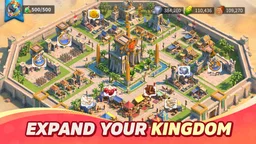
- City building gives clear goals between major battles.
- Historical commanders add personality to army strategies.
What could be better
- Progress can slow considerably without spending.
- Upgrades and research often require long waits.
- Powerful players can overwhelm newer cities.
- Events may demand frequent logins to earn top rewards.
- The map can feel crowded during intense kingdom wars.







