




Real Gangster: Open World 3D review
 Analysis by Appsdrops
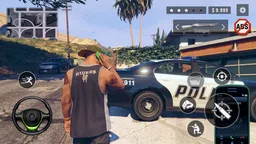
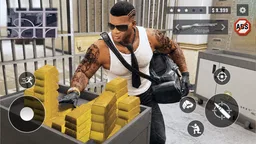
Open-world action has a straightforward appeal: step into a city, get a feel for its streets, and decide how you want to approach the trouble ahead. Real Gangster: Open World 3D presents that kind of crime-themed role-playing experience, with an emphasis on action and freedom to explore. Its premise is easy to grasp, which makes it approachable if you want a mobile game that gets to its central idea without a long introduction.
A city-first approach to open-world action
At its best, an open-world game invites you to settle into a repeatable rhythm rather than rush through every moment. I like to begin by getting oriented: take time to understand the surroundings, notice where movement feels comfortable, and get familiar with the basic pace of play. That baseline matters in a game built around an open-world setting, because feeling at home in the environment can make action sequences less chaotic and exploration more enjoyable.
The role-playing label also sets an expectation of spending time in a game world, not simply completing a single, self-contained action challenge. Here, the core attraction is the combination of an open setting and gangster-themed action. Players who enjoy crime-inspired games may appreciate having room to approach the experience at their own pace, while those who prefer tightly guided missions should keep in mind that the open-world framing is a major part of its appeal.
The store description promises open-world action, and that’s the lens I would use when deciding whether to try it. Rather than expecting a carefully scripted cinematic adventure, think of it as an invitation to explore and engage with a 3D setting. That framing helps keep expectations grounded: the draw is the broad action-game premise, not a promise of a particular story, feature set, or progression system.
Build a comfortable baseline
My first recommendation is to avoid treating every session as a race. Give yourself a little time to learn how the game responds to your inputs and how its environments feel on your device. A calm first session can reveal whether you prefer moving steadily through the world or jumping straight into action. Once that basic rhythm feels natural, it becomes easier to focus on what you enjoy rather than on wrestling with unfamiliar controls.
That approach is useful for any mobile role-playing game, especially one presented as open-world action. Keep your attention on the immediate task, and make small adjustments when something feels awkward. If a moment becomes messy, slow down and reorient instead of repeating the same hurried attempt. These are simple habits rather than secret techniques, but they can make a session feel more deliberate and satisfying.
It also helps to think in short, repeatable loops: explore a little, act when you feel ready, then pause long enough to decide what you want to do next. That kind of routine keeps open-world play from feeling aimless. It gives you room to enjoy the setting while still maintaining a sense of purpose, even when you are only picking up the game for a brief break.
Check the settings before settling in
Before committing to a long session, I’d take a moment to inspect whatever settings the game offers on your device. The useful principle is simple: look for options that directly affect comfort, readability, sound, or control, and change only what you understand. I won’t pretend there is a particular hidden menu or specialized control scheme; checking the available choices is a sensible routine, not a claim about a feature that may not be present.
Mobile play can feel different across devices, so it’s worth paying attention to how the game behaves in your hands. Are the controls comfortable to reach? Is the action easy to follow on your screen? Does the audio suit the setting where you’re playing? Those practical questions can guide any adjustments that are actually available. Small, familiar changes are preferable to altering several things at once, because you can tell what helped and return to a comfortable setup.
If the controls feel unfamiliar, give yourself a few minutes to practice before judging the whole experience. A short learning period often makes the difference between feeling overwhelmed and understanding the game’s basic flow. I also recommend keeping sessions focused while you learn: concentrate on movement and orientation first, then let your attention shift naturally toward the action. That’s a reliable way to build confidence without assuming the game has tutorials or options beyond what you can see.
Make repetition work for you
Experienced players often get faster not by finding a shortcut nobody else knows, but by reducing hesitation. In an open-world game, that can mean recognizing where you are, choosing a clear immediate goal, and avoiding unnecessary backtracking. The point isn’t to rush; it’s to make each decision with a little more intention. Once you have a comfortable baseline, repeating a familiar approach can make play feel smoother.
I’d use a simple decision habit: pause briefly, identify the next thing you want to do, and stick with that choice until you have a reason to change it. It sounds modest, but it prevents aimless wandering and makes action easier to follow. If you lose your bearings, reset your attention rather than trying to force progress while confused. A composed response is often more effective than frantic input in a mobile action game.
Shortcuts should also be understood in the everyday sense: use the quickest path you can clearly identify, keep your actions simple, and avoid making the same mistake repeatedly. There’s no need to assume the game contains special fast-travel tools, hidden commands, or advanced systems. A dependable routine built from observation and patience is enough to make your own sessions more efficient.
For players returning after a break, consistency is more useful than trying to remember every detail at once. Spend a moment reorienting, then resume with one clear objective. This keeps the game approachable and makes it easier to enjoy the open-world premise without turning every session into a test of memory. The best habit is the one that fits your pace and helps you stay engaged.
Where the open-world appeal has limits
Open-world language can lead to big expectations, so it’s worth separating the general premise from assumptions about specific content. The game is presented as a 3D gangster action experience, but that description alone doesn’t establish the depth of its world, the variety of activities, or the shape of its progression. I’d approach it for its central theme and see whether that style of play suits you, rather than expecting a particular feature simply because other games in the genre include it.
That distinction is especially important for players who want a very structured role-playing adventure. If you need a detailed narrative, a complex character-building system, or a large list of activities, make sure those are actually visible in the version you install before treating them as reasons to play. The sensible expectation is narrower: a gangster-themed game with open-world action at its center. That can be appealing on its own, but it isn’t the same promise as an expansive simulation or a story-heavy role-playing game.
There is also a difference between a game being easy to start and being instantly mastered. The basic premise may be familiar, but comfort comes from learning the controls and finding a pace that works for you. I’d give it a fair chance across a few focused sessions rather than forming a verdict from a rushed first impression. At the same time, if the core action or presentation isn’t your style, there’s no need to force yourself to keep playing simply because the genre sounds appealing.
The game is free to play, and its audience numbers show that it has attracted considerable attention: it has over five million installs and a 4.7 average from around thirteen thousand ratings. Those figures offer useful context, but they can’t tell you whether its particular style will click with you. I’d treat them as a sign of broad interest, then make the decision based on whether crime-themed open-world action is the kind of mobile experience you actually enjoy.
Who may enjoy this kind of session
Real Gangster: Open World 3D is likely to make the most sense for players who want a mobile game centered on gangster-themed action and an open setting. It may suit someone who enjoys exploring at a relaxed pace, learning a game through direct play, and repeating familiar routines until they feel natural. If you’re coming from role-playing games, the category may catch your eye, but it’s best to focus on the game’s action-oriented presentation when deciding what you want from it.
It is rated Mature 17+, so it is intended for an adult audience. That age guidance is important when choosing a game for yourself or someone else, particularly when the crime-themed premise is part of the appeal. The game is free, and its current version is 0.0.7. It was released on August 19, 2026, and requires operating system version 7.1 or later. These practical details can help you decide whether it fits your device and household before you begin.
For Android players, compatibility and comfort are worth checking before a longer session. Make sure your device meets the stated minimum operating-system requirement, then pay attention to how the game runs and feels for you. I’d start with a short play session, get comfortable with the basics, and only then decide whether you want to spend more time exploring its open-world action.
My verdict on getting comfortable
The strongest way to approach Real Gangster: Open World 3D is with practical expectations and a little patience. Start by learning the feel of play, check the settings that are actually available, and build a repeatable rhythm around clear immediate goals. That method won’t reveal imaginary features, but it can help you get more out of the experience the game is presenting: gangster-themed action in a 3D open-world setting.
I see it as a straightforward option for players who want a free, crime-inspired mobile game and are happy to let the open-world premise guide their sessions. It is not something I’d recommend approaching with a checklist of assumed systems or a demand for a particular kind of story. Instead, give the core idea room to work, learn at your own pace, and decide whether the action and setting hold your interest.
Overall, the game’s appeal comes down to whether you enjoy this blend of role-playing categorization and open-world action. If that sounds like your kind of mobile play, a steady baseline, thoughtful settings checks, and simple repeatable habits are the best route to a smoother experience. If you prefer a more guided or deeply specified adventure, you may want to look closely at what you value in a game before installing. Either way, keeping expectations grounded makes it easier to judge the experience on its own terms.
What we like
- The open world lets you explore at your own pace.
- Driving adds variety beyond on-foot missions.
- The 3D setting gives the city a sense of depth.
- Quick action suits short play sessions.
- Its crime theme may appeal to fans of gangster games.
What could be better
- Frequent combat may feel repetitive over time.
- The open world can feel sparse between missions.
- Controls may take time to get used to.
- The crime theme is not suitable for every player.
- Performance may vary across different devices.







