





Raid Rush: Tower Defense TD review
 Analysis by Appsdrops
I like strategy games that make me think without demanding a long, uninterrupted session, and Raid Rush: Tower Defense TD is aimed squarely at that kind of player. Its appeal is the repeated puzzle of defending a route: choose how to respond to an approaching raid, see whether the plan holds, and adjust when it does not. The focus is less on a sprawling strategy simulation and more on tactical decisions made in bite-sized battles.
Small goals give each battle a purpose
Raid Rush is a free strategy game from Panteon, with a broad Everyone age rating. The basic draw is easy to understand: defend against enemies through tower-defense battles, with chapters providing a sense of forward movement. That makes it approachable if you want a clear objective rather than a game that asks you to learn a large set of interconnected systems before anything interesting happens.
What I find useful about this format is that a battle gives a short-term goal while the chapters suggest a longer one. You can focus on getting through the encounter in front of you, then decide whether you want to keep advancing. That rhythm suits a quick break: play a battle, consider what went wrong or right, and stop without needing to keep track of a long campaign in your head.
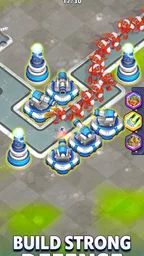
The game’s central challenge is not simply placing defenses and hoping for the best. Tower defense works when the player has to weigh where to invest attention and how to respond to threats as they arrive. In Raid Rush, the tactical framing gives those choices the main role. I would approach each attempt as a small experiment: make a plan, watch where it struggles, and change one part of the approach rather than repeating the same moves automatically.
That habit is especially helpful for newcomers to the genre. Instead of treating a loss as proof that the game is unfair, ask which part of the defense failed and whether a different choice could have addressed it. The value is in learning to read the battle and adapt. If you enjoy that kind of incremental improvement, the chapter structure gives you a reason to return after a setback.
Progress feels clearest when you learn from a failed attempt
Progress in a strategy game is not only a new stage or unlock; it can also be a better understanding of how to handle a particular encounter. Raid Rush’s chapter-based setup gives you a visible direction, while its tactical battles give each attempt a practical lesson. I find that combination more satisfying than a progression track that only asks me to accumulate rewards without changing how I play.
A useful routine is to pause after a difficult battle and identify the decision that mattered most. Was the trouble caused by committing too much to one part of the defense, or by failing to respond to a threat quickly enough? Even without turning every loss into a long analysis, making one deliberate adjustment can make the next attempt feel more purposeful. This is a non-obvious strength of the format: the short battle loop makes experimentation manageable.
There is a trade-off, though. If you prefer progress that is mostly about collecting a large variety of units, building a persistent base, or managing a detailed economy, this is not the kind of strategy game I would choose first. Its emphasis is on tactical tower-defense encounters, not on offering every strategy subgenre at once. Players who want a richer planning layer may be happier with a more complex defense or management game.
The challenge asks for attention, not just repetition
The best tower-defense games make difficulty feel like a question: can I change my approach to answer what the next battle is asking? Raid Rush’s focus on tactical battles and chapters points toward that kind of progression. The challenge should be most appealing to players who enjoy refining a plan from one encounter to the next, rather than those who want every stage to be a relaxed victory.
When a stage becomes frustrating, I would avoid immediately replaying it on autopilot. Take a moment to think about the part of the route or encounter that caused trouble, then make a targeted change. This is a practical way to keep a strategy game from becoming a grind. If the same decision keeps producing the same failure, repeating it is unlikely to feel rewarding; a small change gives you a clearer test of what works.
That said, players looking for a very gentle, story-led experience may find the tactical focus less relaxing than expected. A defense game asks for attention even when a session is short. It can also be a poor fit if you dislike retrying encounters or adjusting a strategy after things go wrong. I see that as a matter of taste rather than a flaw: the appeal depends on enjoying the puzzle, not merely watching progress happen.
The game is a better match for short, focused sessions than for play that relies on doing several other things at the same time. A realistic use case is a commute break or a quiet pause at home: start a battle when you have a little time, concentrate on the defense, and stop after the encounter. If you need a game that can be ignored for most of a session, an idle-style alternative would suit you better.
Unlocks and spending are worth considering before settling in
Raid Rush is free to download, but it offers in-app purchases ranging from $0.49 to $99.99 per item. That is a wide span, so I would treat optional spending as a personal choice rather than assume it is needed to enjoy the tactical core. If you prefer to keep a mobile game budget-free, you can decide before playing that you will not make purchases and judge the experience on its battles and chapter progress.
For players who are comfortable with optional purchases, the practical question is whether a purchase would solve a genuine frustration or simply shorten the process. I recommend playing long enough to understand what part of the game you enjoy before spending. In a strategy title, learning a better response can be more satisfying than paying to move past a difficult moment, particularly if the challenge itself is what brought you in.
There is no need to treat every unlock or chapter milestone as a deadline. If progress slows, you can take a break and return when you feel like tackling another tactical puzzle. That approach helps keep the game’s pacing on your terms. It is also a sensible way to avoid turning a free game with purchases into an obligation to keep playing or paying.
How it compares with other tower-defense choices
Compared with a traditional tower-defense game built around long sessions and extensive resource planning, Raid Rush is a more straightforward choice for people who want the battle itself to stay central. Its chapter framing gives play a direction without requiring the player to commit to a sprawling management layer. That makes it easier to recommend to someone who likes tactical defense but does not want strategy to become a second job.
On the other hand, fans of tower-defense games that reward elaborate route planning, a large roster of defenses, or deep long-term customization may want to compare alternatives before settling here. I would not pick Raid Rush expecting every favorite feature from the genre. The more useful question is whether you like the loop of facing a raid, making tactical decisions, and trying again with a smarter plan.
The game has a 4.1 average rating from around 233,000 ratings, with roughly 4,700 written reviews and over 5 million installs. Those figures suggest that it has reached a substantial audience, but they do not tell me whether its particular pacing will suit you. A fan of short tactical challenges may find the appeal obvious; someone who wants a deeper strategy sandbox could still prefer a different game despite the broad audience.
Who I would recommend it to
I would recommend Raid Rush to players who enjoy tower defense, like improving through trial and error, and want chapter-based goals to guide their sessions. It is a particularly sensible pick if you are new to strategy games and want to start with battles whose purpose is clear. The game’s focus also makes it easy to return to after a pause: you can concentrate on the current defense rather than reconstructing a complicated campaign state.
I would suggest skipping it if you mainly want a passive game, dislike retrying, or expect extensive base management and long-term economic planning. It may also disappoint players who want a story or social layer to carry the experience; the central reason to play is the tactical defense. Knowing that up front should make it easier to judge the game on what it sets out to do.
The current version is 1.502, and the game runs on Android 7.1 or later. It has been available since December 16, 2022. Those details make it straightforward to check basic compatibility before installing, while the free entry point lets you test whether its battle rhythm suits you without paying upfront.
A focused defense game with a clear reason to return
My overall view is that Raid Rush works best when I treat each battle as a compact strategy problem, not as a race through a checklist. Chapters offer direction, and a tough encounter can make progress feel earned when it encourages a more thoughtful attempt. Its strongest appeal is that combination of a clear immediate objective and a longer path through tactical challenges.
Try it if you want focused tower-defense decisions and are happy to learn by adjusting your plan. Keep your expectations measured if you are looking for deep management, a hands-off idle loop, or a very relaxed experience. For the right player, it is an approachable way to spend a short break thinking about how to hold a defense; for everyone else, a different strategy game may offer a better fit.
What we like
- Quick battles make it easy to play in short sessions.
- Combining towers adds a satisfying layer of strategy.
- Random upgrade choices encourage adaptable tactics.
- The colorful visuals make enemies and towers easy to follow.
- New stages offer fresh layouts and tactical challenges.
What could be better
- Random upgrades can make some runs feel unfair.
- Later stages may require repeated attempts to overcome.
- Progress can slow without frequent play.
- Tower placement options may feel limited on some maps.
- Frequent effects can make busy battles harder to read.







