


Puzzles & Chaos: Frozen Castle review
 Analysis by Appsdrops
I’d describe Puzzles & Chaos: Frozen Castle as a strategy game that uses match-three battles as its most immediate way into a larger fantasy setting. That combination is appealing if you like a quick puzzle to make progress, but want more around it than a string of isolated boards. My main advice to a first-time player is to take the opening at its own pace: learn what each screen is asking you to do before treating every available button as urgent.
What to expect from the frozen-castle setting
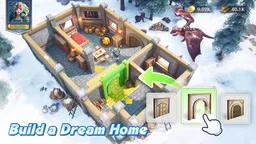
The central idea is easy to grasp: match pieces to fight, and make progress in a world threatened by cold. The puzzle action gives each turn a clear purpose, while the strategy framing invites you to think beyond simply clearing a board. In practice, that makes the game a better fit for someone who enjoys connecting small tactical choices to a broader sense of progress than for someone seeking a pure, self-contained puzzle challenge.
37GAMES is the developer, and the game sits in the strategy category. It is free to download, with in-app purchases ranging from $0.99 to $99.99 per item. I would go in expecting the option to spend money to be part of the experience, rather than assuming the free entry price means every kind of progress will feel equally quick. You can begin without paying, but it is sensible to decide for yourself whether you want to spend before a tempting purchase appears.
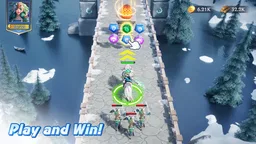
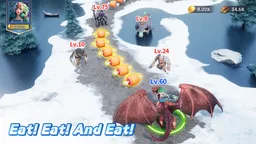
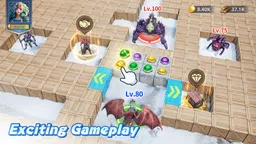
The match-three battles are the easiest part to understand at first. You look at the board, consider which match will help most, and act. The strategic interest comes from weighing an immediate match against the value of setting up a more useful move. A match that looks satisfying is not automatically the best one; I find it more helpful to ask what the move is meant to accomplish before making it.
That makes the game particularly suitable for short sessions with a little attention. I can imagine opening it during a quiet break, playing a battle, then stopping once I have finished the task in front of me. It is less suited to someone who wants to launch a puzzle, finish one board, and never think about connected progression. The wider strategy layer is part of the proposition, not just decoration around a standalone match-three game.
The game is rated for Teen audiences. Its current version is 1.104.01 and it requires Android 6.0 or later, which is useful to check before installing on an older Android device. It has a 4.1 average from around 122,000 ratings, alongside roughly 8,700 written reviews and over 10 million installs. Those figures suggest that many people have tried it, but they cannot tell you whether its particular blend of puzzles and strategy suits your tastes.
How it differs from a straightforward puzzle game
Compared with a typical match-three game built mainly around one board after another, this one asks you to care about the battles as part of a larger setting. That gives a successful move more context: the point is not only to clear a puzzle, but to contribute to progress in a fantasy strategy game. The trade-off is that players who dislike layered menus or broader progression may prefer a focused puzzle title where the board is the whole experience.
It also differs from a strategy game that puts most of its emphasis on planning and management. Here, the match-three action gives you a hands-on decision to make rather than asking you to approach everything through menus. If you enjoy alternating between puzzle decisions and a larger game framework, that mix is the draw. If you want either deep strategic planning without board puzzles or puzzles without anything surrounding them, this is an awkward middle ground.
A calm first setup makes the opening easier
When you first install it, I recommend treating the early screens as a guided introduction rather than rushing through them. Read the immediate instruction, then look at the board and identify what a successful move is supposed to do. That small habit helps distinguish a move that advances the current battle from one that merely creates a match. The first useful goal is not mastering every system; it is understanding the basic relationship between a board move and a battle result.
It is also worth pausing on any new screen that appears after a battle. In a game that joins puzzle combat to strategy, the interface may ask you to make choices outside the board as well. Instead of tapping through automatically, take a moment to notice what has changed and what the game is asking you to do next. This is a practical way to avoid losing track of the path from an individual win to meaningful overall progress.
For a first session, I would keep the aim modest: learn how matches affect the battle, complete the first tasks the game presents, and notice where the game sends you afterward. That sequence is more reassuring than trying to understand the whole experience at once. If you install it expecting a quick, self-contained puzzle, the broader structure could feel like a detour; if you expect a strategy game with accessible puzzle battles, the opening makes more sense.
Your first meaningful win is a lesson in choosing moves
In the first battle, try not to make the first match you notice simply because it is available. Scan the board for a move that seems to support the immediate objective, then watch what happens after you make it. The useful lesson is the connection between your choice and the outcome, not whether you can create a flashy sequence. Once you see that connection, later boards are easier to approach with intention rather than guesswork.
A good beginner routine is to identify the task, look for a match that serves it, and check the result before moving on. If a move does not produce the effect you expected, treat that as information about the board rather than a reason to rush. This is one of the less obvious strengths of the format: the puzzle gives you a concrete place to practise tactical thinking, while the surrounding strategy context gives the outcome a reason to matter.
After a win, pay attention to the next step the game highlights instead of assuming you should repeat the battle immediately. The transition is where a first-time player can begin to understand how individual encounters fit into the larger experience. My practical tip is to finish one clear objective before exploring unrelated options. That keeps the opening manageable and makes it easier to tell which actions are necessary for progress and which are simply available.
For an everyday session, that approach works well when you have a few minutes and want a task with a clear beginning and end. I would play a battle, follow its immediate next step, then stop rather than tapping through several screens without knowing why. If you have more time, you can explore at a slower pace. Either way, paying attention to the purpose of each move is more useful than treating speed as the measure of success.
Where new players can get confused
The biggest likely source of confusion is the difference between winning a match-three battle and understanding the full strategy game. A puzzle win is satisfying, but it may not answer every question about what to do next. If you feel unsure after a battle, look for the most direct prompt on screen and follow that before investigating other options. The game is easier to read when you separate the immediate objective from the larger progression.
Another point to keep in mind is that a match can be legal without being strategically helpful. It is tempting to choose the most obvious cluster, especially when you are learning, but pausing to consider the objective can make the board feel less random. This is not a promise that every decision will work out; it is a way to make your choices more deliberate and learn from the result.
There is also a real difference between free access and a completely purchase-free experience. Because optional purchases are available, a player who prefers to spend nothing should decide early to ignore purchase prompts and focus on the tasks they can complete through play. Someone who dislikes seeing paid options at all may find that aspect distracting. I would not spend just to remove the discomfort of being uncertain; first learn what the game asks of you and whether you are enjoying it.
Finally, do not assume that every strategy option needs attention during the first session. The combination of battles and broader progression can make the interface feel busier than a basic puzzle app. A useful rule is to follow the clearest current objective, understand its result, and only then look around. That simple order prevents the common beginner mistake of tapping through several choices without remembering what each one was meant to accomplish.
Who will enjoy it, and who may prefer another game
I would recommend it to someone who likes match-three puzzles but wants a fantasy strategy context around them. It can also suit a player who enjoys learning through short, visible decisions rather than facing a large planning challenge immediately. The first battles offer a straightforward place to start, and the surrounding structure gives a reason to continue beyond a single board.
I would steer a player toward a simpler puzzle game if they want every session to be only about matching pieces, with no broader strategy layer to follow. I would also suggest looking elsewhere if optional purchases are a deal-breaker or if you want a strategy game with no match-three combat. The mix is the defining feature, but it is also the main trade-off: not everyone wants both parts in the same game.
For anyone trying it with a younger player, the Teen content rating is worth considering. For Android users, checking that the device runs Android 6.0 or later is a sensible step before downloading. These are practical checks, not judgments about whether the game is right for you; personal preference, especially around puzzles and purchase prompts, matters just as much.
What to do after the first few battles
Once the basic battle loop feels familiar, shift from asking “What match can I make?” to “Which available match best supports what I am trying to accomplish?” That change is small, but it makes the strategy side more engaging. It also helps you decide whether the game’s broader progression is adding enjoyment or simply slowing down the puzzle play you came for.
I would give the game a few focused sessions before deciding whether its mix works for you. Keep those sessions simple: follow one objective at a time, observe the outcome, and avoid spending while you are still learning what you enjoy. If the battles and the larger setting reinforce each other for you, the game has a clear reason to stay installed. If you keep wishing the extra structure would disappear, a dedicated match-three title is probably the better choice.
Overall, Puzzles & Chaos: Frozen Castle is most appealing as a strategy game for people who want puzzle battles to feed into a wider fantasy experience. I like that a first-time player can begin with a clear board decision and gradually learn to think about the next step beyond it. The caveats are equally clear: the surrounding progression may not suit puzzle purists, and the optional purchases call for a bit of self-control. Start slowly, focus on the first objective, and judge the game by whether that blend feels rewarding to you.
What we like
- Large-scale battles offer plenty of strategic variety
- Alliance play makes coordinated attacks rewarding
- A fantasy setting gives the kingdom builder a distinct feel
- Regular events provide fresh objectives
- The core game is free to download
What could be better
- Progress can slow without frequent resource gathering
- Upgrades often require long waits
- Competitive play can favor players who spend money
- Alliance activity can affect your progress
- A steady internet connection is needed







