
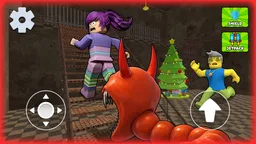
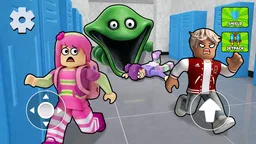
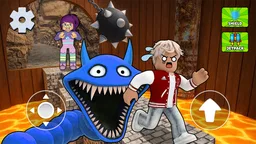

Prison Parkour: Worm Race review
 Analysis by Appsdrops
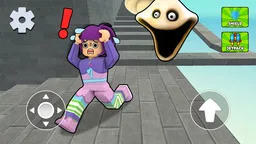
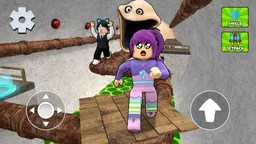
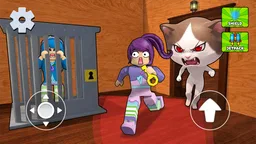
Prison Parkour: Worm Race has a simple hook: make your way up a hazardous tower while avoiding traps and staying alive through a pursuit challenge. I like that this gives the game an immediate purpose. Rather than asking me to learn a long setup before anything happens, it puts the focus on movement, timing, and reacting to danger. Its appeal is easy to understand, though whether that loop suits you depends on how much you enjoy repeating tricky sections to improve.
Why the tower climb is the central appeal
As a role-playing game built around prison parkour, this is a more action-focused take on the category than a typical adventure centered on dialogue, character builds, or long quests. The tower gives each attempt a clear direction: progress upward, watch for hazards, and keep moving when the hunting challenge raises the pressure. That concentrated objective is the game’s strongest quality because it makes a short play session feel purposeful.
Prison Parkour: Worm Race is developed by HIGAME GLOBAL and is free to play. It has a 3.6 average from around 1,200 ratings, with over a million installs. Those figures suggest that plenty of players have tried it, while the rating is a useful reminder to approach it as a focused, casual challenge rather than a guaranteed fit for everyone.
The key capability is not simply climbing; it is combining forward progress with hazard awareness. A trap changes how you approach the next stretch, and the threat of being hunted makes hesitation feel costly. I find that mix more interesting than a straightforward obstacle course, where the only question is whether I can make a jump. Here, I also have to decide when to take a moment to read the route and when to commit.
What the chase changes about each attempt
The pursuit element gives the climb urgency. When a game asks me to dodge hazards while surviving a hunt, I naturally pay attention to the space ahead instead of treating movement as a sequence of isolated inputs. That makes the tower feel like a route to manage, not just a stack of obstacles. The practical benefit is a loop that can hold my attention even when I only have a few minutes to play.
There is a trade-off in that same pressure. If I prefer to explore at my own pace, stop often, or study every obstacle without consequence, a chase-focused challenge may feel more tense than satisfying. I would approach each run as a compact attempt to learn and respond, not as a leisurely tour through a detailed world.
How I would approach a difficult climb
My first useful habit would be to look at the next hazard before worrying about the whole tower. Trying to plan too far ahead can distract from the immediate movement that keeps a run alive. I would focus on identifying what needs attention now, then adjust once that section is behind me. In a game built around traps and a hunt, that narrow focus is often more practical than rushing blindly toward the finish.
A second tip is to treat a failed run as information. If I get caught by a trap, I would remember what I was doing just before it happened: moving too quickly, reacting late, or committing without checking the path. That does not guarantee success on the next attempt, but it gives repetition a purpose. Instead of replaying the same section on autopilot, I can change one decision and see whether it helps.
I would also avoid confusing speed with efficiency. The hunting challenge creates a reason to keep moving, but rushing into an unfamiliar obstacle can cost more than taking a brief moment to judge it. The useful balance is to stay alert without freezing. That is a small but important distinction in a game where the climb and the pursuit pull in opposite directions.
A good fit for short breaks
The clearest everyday use case is a spare moment between other tasks. If I have a short break and want something that gives me an immediate goal, a tower run is easier to pick up mentally than a role-playing game that expects me to remember a sprawling quest or manage several systems. I can concentrate on surviving the climb, stop when I need to, and return later without treating every session as a major commitment.
That does not mean it will suit every quick-play habit. Someone who wants a calm game to wind down may find the traps and hunting pressure too demanding for that mood. Likewise, a player who expects each session to reveal a large new story may prefer a more narrative-driven role-playing game. This one is best considered when the desired reward is the satisfaction of handling a tricky route, not discovering a rich setting.
For a younger player, the Everyone content rating makes the game broadly suitable by age classification. I would still think about temperament: a child who enjoys repeating a challenge may find the pursuit engaging, while one who gets frustrated by mistakes may need a gentler game. The rating describes suitability, but it does not tell you whether this particular style of pressure is enjoyable for someone.
Where it differs from familiar role-playing games
Compared with conventional role-playing games, Prison Parkour: Worm Race puts less emphasis on the usual pleasures of building a character, following a complex plot, or exploring at leisure. Its identity comes from the physical challenge of climbing and evading danger. That distinction is useful when deciding what to download: if I want a compact action test, the premise is appealing; if I want strategic character development or a substantial story, a more traditional RPG is likely the better choice.
It also differs from a basic parkour runner because the pursuit gives the route a survival angle. A standard runner often encourages me to focus on distance or rhythm. Here, the idea of being hunted adds another reason to keep my attention on the next move. That is a meaningful change in feel, even though the game’s core promise remains direct and easy to grasp.
The game is free, so trying it does not require a purchase. I would still decide based on the kind of play I want rather than treating free access as a reason to expect endless variety. A focused obstacle challenge can be worthwhile on its own, but players looking for a broad set of activities should choose a game designed around that expectation.
Small decisions that make the challenge more manageable
One practical way to keep the experience enjoyable is to set a narrow goal for a session. Instead of expecting to master the whole climb immediately, I would aim to handle one troublesome stretch more cleanly or to react earlier to hazards. That keeps a difficult run from feeling like wasted time, even if I do not reach as far as I hoped.
Another useful approach is to notice whether mistakes come from impatience or uncertainty. If I already understand a section but move too quickly, slowing my decision-making may help. If I am unsure what is coming, paying closer attention to the path matters more than simply pushing harder. Separating those two causes gives each attempt a clearer lesson and prevents repetition from becoming mindless.
There is also a mood-based trade-off. The pursuit is the feature that gives the game its hook, but it can make the experience feel demanding when I am tired or distracted. I would save it for moments when I can focus on the screen, rather than expecting it to work as background entertainment. Players who want something they can play without much attention may be happier with a slower, less hazard-driven alternative.
What to expect from the current release
The current version is 1.6, and the game runs on Android 7.0 or later. Those details make it easier to check basic compatibility before installing, especially on an older device. It is also free and carries an Everyone age rating, so the main decision is less about entry cost and more about whether its chase-and-climb loop is the kind of challenge you want.
I would not choose it for multiplayer competition, a long campaign, or deep character customization; those are not what its central premise is about. I would choose it when I want a direct survival challenge that asks for quick attention and gives me a clear reason to try again. That distinction can save a player from downloading it with the wrong expectations.
Who will get the most out of it
Prison Parkour: Worm Race is most appealing to players who enjoy obstacle courses, tense escapes, and short attempts where learning from a mistake matters. Its strongest feature is the way tower climbing, traps, and pursuit combine into a single clear challenge. I can recommend giving it a try if you like focused action and do not mind repeating sections to improve.
I would skip it if I were looking for a relaxed exploration game, a story-led RPG, or a deep progression system. Its 3.6 average indicates that it has not landed equally well for every player, which fits a game whose appeal depends heavily on enjoying pressure and retries. My verdict is that it is worth considering for a quick, alert play session, but it is a specific kind of role-playing experience rather than a substitute for a full-scale adventure.
What we like
- Quick races make it easy to play in short sessions.
- Simple controls are approachable for new players.
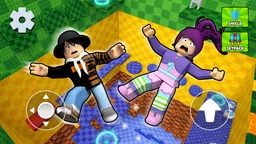
- Parkour stages offer a lively change of pace.
- Unlockable characters add goals beyond finishing races.
- The prison setting gives the game a distinctive look.
What could be better
- Repeated obstacle patterns can make later runs feel familiar.
- Crowded races may make precise jumps harder to judge.
- Progress can feel slow without frequent play.
- The visual style may not appeal to every player.
- Performance may vary across older devices.







