







Pokémon Quest review
 Analysis by Appsdrops
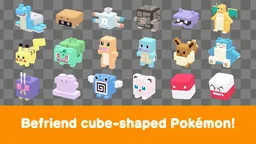
I like role-playing games that let me make a little progress in short bursts, but many of them ask for constant attention or bury simple decisions beneath menus. Pokémon Quest takes a different route: its blocky Pokémon, compact expeditions, and straightforward team-building make it easy to pick up when I have a few spare minutes. The look is playful, though the game still asks me to think about which Pokémon to take and how to improve them.
Developed by The Pokémon Company, it is a free role-playing game rated Everyone. It has a 4.2 average from around 222,000 ratings, and more than 10 million installs. Those figures suggest broad appeal, but the important question for me is whether its simplified expedition loop stays enjoyable after the novelty of cube-shaped Pokémon wears off. The answer depends on how much you enjoy gradual preparation and repeating a familiar routine.
How an expedition fits into a quick play session
The basic rhythm is easy to understand: choose a team, send it out on an expedition, then use what you earn to strengthen your roster and prepare for the next outing. Battles are designed to move along without requiring me to direct every individual action. I still make meaningful choices before setting off, but I can watch the team handle much of the fight rather than treating each encounter like a series of manual commands.
That makes the game a good fit for a break between errands or a quiet stretch on the sofa. I can check my current team, decide whether its mix looks suitable, and start another run without needing to settle in for a long, uninterrupted session. It is less satisfying if I want a role-playing game where every battle depends on quick reactions or carefully timed inputs.
The expedition format also gives the game a useful stopping point. Rather than expecting me to follow a long story scene after scene, it breaks progress into repeatable outings. I find that structure convenient when I might need to put my phone down at short notice. The trade-off is that the experience can feel more like managing a small routine than exploring a continuously unfolding adventure.
The visual style helps distinguish it from the usual Pokémon RPGs. These are familiar creatures reimagined as chunky, toy-like figures, and the cheerful presentation makes the game approachable even when I am just checking in briefly. If you want detailed character animation or the feeling of moving through a large world, this pared-back style may feel too simple. Its charm is in being legible and light, not in recreating the look of the mainline games.
Build a team with a reason, not just favorites
One of the most useful habits is to think about the team as a group rather than three separate favorites. A Pokémon I like may not automatically be the most helpful choice for an expedition. I get more out of the preparation screen when I pause to consider whether the lineup feels balanced and whether improving one member would help the whole team more than spreading attention across everyone.
This is where the game’s lighter approach still leaves room for judgment. I do not need to study a complicated battle interface before each outing, but the choice of who goes does matter. When progress slows, I try changing the team before simply repeating the same expedition with the same setup. That small adjustment is more useful than expecting a single favorite Pokémon to carry every situation.
For a newcomer, I would keep the first few decisions simple: get comfortable with the expedition loop, notice which team combinations seem dependable, and avoid treating every new Pokémon as an automatic upgrade. This is not a game that requires a spreadsheet to enjoy, yet paying attention to how the group performs makes the repetition feel purposeful.
Check the practical details before settling in
The game is free to download, with in-app purchases priced from $2.99 to $29.99 per item. I would approach those purchases as optional rather than as the starting point for enjoying the core loop. If you are deciding whether it suits you, try the free experience first and see whether you like the rhythm of expeditions and incremental team improvement before spending anything.
It is also worth checking the device requirement before installing: the listed minimum is Android 6.0. The current version is 1.0.10, and the game was released on June 26, 2018. Its age does not change the central appeal, which is a compact Pokémon-themed routine, but players looking for a constantly refreshed, high-intensity experience should consider whether that established structure is what they want.
Because purchases are available, I would be especially careful if a child is playing. The Everyone age rating makes the content broadly suitable, but it does not remove the need for an adult to manage spending on a device. In practice, agreeing on a no-purchase rule or checking purchase controls before handing over a phone is a sensible step.
I also recommend treating each check-in as a small planning moment rather than tapping through on autopilot. Look at the team, decide what you want to improve, and then choose an expedition that makes sense for that goal. This keeps the game’s repeatable structure from turning into a string of indistinguishable battles. It is a simple habit, but it helps me notice whether a run is actually moving my roster forward.
Make repetition work for you
Experienced players can get more from the routine by giving each session a clear purpose. One time I might focus on testing a different team arrangement; another time I might concentrate on improving the Pokémon I rely on most. I find that approach more satisfying than trying to change everything at once, because it gives me a concrete reason to pay attention to the outcome of each expedition.
A second useful pattern is to change one thing at a time when a team is not performing as hoped. If I replace several members and alter my priorities all at once, it becomes hard to tell what helped. A smaller adjustment makes the result easier to judge and keeps experimentation manageable. That is not a special hidden technique; it is simply a disciplined way to learn the game’s systems without turning a casual RPG into homework.
For everyday play, I would use a short check-in to make one decision, then leave the game until I genuinely want another. That suits the expedition-based pace better than opening it repeatedly with no goal. Players who enjoy collecting and gradually refining a team may find that routine relaxing. Players who need fresh objectives every few minutes may instead feel that the game is asking them to repeat the same broad sequence too often.
Compared with more traditional Pokémon role-playing games, this one trims back the sense of travel and hands-on battling in favor of quick preparation and automated action. Compared with more demanding mobile RPGs, it asks less of my attention during a fight. That makes it an easy entry point for someone who likes Pokémon but does not want a complex battle system. The compromise is less tactical control in the moment and a narrower feeling of adventure.
Where its simplicity starts to limit it
The same design that makes the game accessible can also make later sessions feel repetitive. Expeditions share a familiar structure, and the lightweight battle flow does not give me the same sense of control as a turn-based RPG where every move is a deliberate choice. If you mainly play for story, exploration, or intricate combat, you may reach the edge of what this format offers sooner than someone who enjoys steady, incremental progress.
There is also a difference between a game being easy to start and being endlessly engaging. Pokémon Quest explains its basic appeal quickly, but the player still has to enjoy returning to improve a team and set off again. I would not recommend it as a substitute for a deep console-style Pokémon adventure. It is better understood as a smaller, more casual side of the series, built around short sessions rather than a long narrative journey.
Nor is it the best choice if you want complete control throughout every encounter. Its streamlined battles let me concentrate on preparation, but they also mean I cannot treat each fight as a demanding tactical puzzle. If the pleasure you get from role-playing games comes from selecting every action and reacting to each turn, a more hands-on alternative will likely be a better fit.
On the other hand, that limited demand is exactly why I can recommend it to someone who wants a low-pressure game for occasional use. It works well for a Pokémon fan curious about a different presentation, a younger player who enjoys team-building, or an adult who wants a brief mobile diversion without committing to a long session. It is less suited to someone who dislikes repetition, expects a substantial story, or wants a competitive test of skill.
Who I would recommend it to
I would suggest giving it a try if you enjoy making small improvements and seeing how a team develops across repeatable expeditions. The cube-like art gives the familiar Pokémon roster a distinct personality, and the simple flow makes it approachable for people who do not normally spend much time with role-playing games. Since it is free to start, you can judge the pacing for yourself before deciding whether the available purchases matter to you.
I would steer a friend toward a different game if they wanted a sprawling world, complex combat, or a story that constantly pulls them into the next chapter. Those expectations do not match what this mobile game does best. It is not trying to replace the bigger Pokémon adventures; its appeal is the smaller loop of preparing, setting off, and making gradual progress when time allows.
My best advice is to keep your approach focused: choose a team you want to develop, make one thoughtful adjustment when progress feels stale, and do not spend money simply because a run was disappointing. The game is most enjoyable when I treat it as a relaxed, repeatable diversion rather than a demanding campaign. That perspective also makes its limits easier to accept.
Overall, Pokémon Quest is a charming and accessible role-playing game with a clear niche. Its short-session structure and toy-like Pokémon are genuinely appealing, while repeated expeditions and limited moment-to-moment control will not satisfy everyone. I would recommend it to casual players who like Pokémon and enjoy steady team-building, but not to anyone seeking deep tactical battles or a large story-driven adventure. For the right mood, it is an easy game to return to; for the wrong one, its simplicity can become its biggest drawback.
What we like
- Its blocky art style gives Pokémon Quest a distinct visual identity.
- Expeditions are short and easy to fit into a busy schedule.
- Simple tap controls make battles accessible to younger players.
- Recipes let you attract different Pokémon to your base camp.
- Decorations can provide useful bonuses during your adventure.
What could be better
- Battles offer limited direct control over your Pokémon.
- Energy limits how many expeditions you can start in a short period.
- Some Pokémon require repeated recipe attempts to recruit.
- Progress can slow down without stronger Pokémon and gear.
- The game includes optional purchases for in-game items.







