




Path of Kings review
 Analysis by Appsdrops
I approached Path of Kings as a role-playing game for players who want a mobile adventure centered on building a character and taking on monsters, rather than a complicated rules-heavy RPG. Its premise points toward a familiar fantasy loop: head into a realm, face enemies, and make choices about how your hero develops. That is appealing when I want a game I can pick up without first studying a long backstory or a dense set of mechanics.
My main reservation is that the game’s broad pitch leaves the practical questions that matter most to RPG fans—how much control you have over your build, how varied the encounters feel, and whether progression stays satisfying over time. I’d treat it as a promising option for casual fantasy play, but not assume it will deliver the depth of a large console-style role-playing game.
Where the game stands now
Path of Kings is a free role-playing game from VOODOO, currently at version 1.7. It has reached over a million installs, and its average rating is 4.6 from around 291,000 ratings. Those figures suggest that it has found a sizable audience, though they cannot tell me whether its particular style will suit someone who prefers tactical combat, a strong narrative, or long sessions of character optimization.
The game is rated Teen, which is useful context for families and players choosing a game for younger users. Optional in-app purchases range from $1.99 to $19.99 per item. The free starting point makes it easy to try, but I would check what a purchase offers in the moment rather than treating any paid item as necessary to enjoy the core experience.
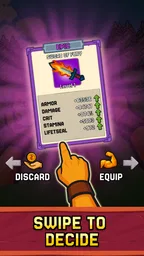
Its character-view framing is a meaningful clue about the intended feel: the focus is on seeing your hero as a character in the world, not simply managing a menu of statistics. That can make a fantasy adventure feel more immediate. At the same time, a character-forward presentation does not automatically mean deep exploration or a branching story, so I would judge the game by how its actual encounters and progression hold my attention.
A useful fit for short play sessions
I can see this working well in the small gaps of an ordinary day: a short break, a commute with a stable connection if required, or a few minutes on the sofa before moving on to something else. Monster encounters and character advancement are naturally easy to approach in chunks, while a sprawling RPG often asks me to remember a quest thread, return to a complicated map, and settle in for longer stretches.
That convenience has a trade-off. If I want a world that rewards slow exploration, memorable companions, or careful turn-by-turn tactics, a more traditional role-playing game is probably a better match. Path of Kings makes more sense when the appeal is direct fantasy action and a clear reason to keep shaping a hero, rather than a novel-length story or a demanding tactical puzzle.
What version 1.7 tells returning players
The game’s confirmed release date is October 3, 2025, and its current version is 1.7. That gives returning players a concrete snapshot of its present stage: it has progressed beyond its initial release, but a version number alone does not reveal what changed, how substantial those changes were, or whether a particular issue has been addressed. I would not read a specific feature or balance update into that number.
For someone who has already played, the practical takeaway is to look at the current in-game experience rather than rely on assumptions about a version label. If the game has recently updated on your device, give the controls, progression pace, and any newly visible options a fresh look before deciding that your old impression still applies. Version changes can matter, but the number itself is not a patch note.
What the current evidence means for new players
For a new player, version 1.7 is simply the version to assess, not a promise that the game is mature in every area. I would begin with the free experience and pay attention to whether the central loop stays enjoyable before spending anything. A useful test is to notice whether I look forward to the next encounter because I’m curious about my character’s growth, or whether I’m only repeating actions to reach the next reward.
That distinction is more revealing than a quick first impression. A straightforward RPG can be relaxing precisely because it does not demand constant planning, but if the decisions feel automatic after a few sessions, players seeking long-term build experimentation may want something deeper. Conversely, players who find elaborate gear systems exhausting may appreciate a lighter path through fantasy combat.
Progression, purchases, and sensible play habits
Because the game includes optional purchases, I recommend separating two questions: “Am I enjoying the game?” and “Would paying improve the way I enjoy it?” The first should have a clear answer before the second matters. With individual purchases priced from $1.99 to $19.99, it is sensible to pause before buying and consider whether the item solves a frustration or merely promises faster progress.
One practical habit is to play a few sessions without spending, then decide what, if anything, is actually getting in the way. If the fun comes from gradually developing a character, acceleration may remove part of the pleasure. If a purchase is purely optional and the free route remains satisfying, there is no reason to treat it as an entry fee. I also suggest checking the purchase screen carefully, especially if a younger player uses the device.
That advice is not a claim that progress is blocked or that purchases are required; it is a way to make a better personal decision in a game that offers them. The best value is the option that improves your own play, not the most expensive one. For younger players, the Teen rating and the presence of purchasable items are both worth discussing before handing over a device.
How it compares with familiar RPG choices
Compared with story-first mobile RPGs, Path of Kings appears aimed at a more direct character-and-monster appeal. That can be a relief if I do not want long dialogue sequences every time I open a game. Compared with tactical RPGs, the same simplicity may feel limiting to players who want to weigh positioning, party roles, or carefully timed abilities before every move.
It also occupies a different space from huge open-world adventures. Those games may offer more freedom and richer world-building, but they can take more time and attention than a quick mobile session allows. I would choose this one when I want a compact fantasy diversion; I would choose a narrative-heavy or strategy-focused alternative when I want the game to challenge me through story choices or combat planning.
The key is not to treat “role-playing game” as a guarantee of one particular experience. The label covers everything from relaxed progression to demanding systems. Here, the character-focused premise suggests a more approachable entry point, but players should still decide whether that kind of adventure is what they want before settling in for the long term.
Small decisions that can improve the experience
My first tip is to pay attention to the parts of progression that feel rewarding, rather than chase every available improvement. In a character-focused game, it is easy to mistake a larger number or a newly unlocked option for meaningful choice. Ask whether a change alters how you enjoy encounters; if it does not, there is no need to optimize every step.
Second, use the game’s short-session potential deliberately. A quick visit works best when I leave with a simple next goal—continue developing the character or take on another stretch of the adventure—rather than opening it without knowing what I want from the session. This helps reveal whether its loop is genuinely satisfying or merely convenient.
Third, if you are comparing it with another RPG, compare the kind of attention each demands. A few minutes of monster-focused play may suit a busy day better than a game with long missions, but it will not substitute for deep story immersion. Matching the game to the moment is a real strength; expecting it to satisfy every RPG mood is not.
Who should pass, and what to keep an eye on
I would steer away from Path of Kings if my priority were a clearly documented, intricate combat system, a rich branching plot, or extensive exploration. Those are reasonable expectations for some role-playing games, but the available picture here does not establish that those are the game’s focus. Players who dislike optional spending in mobile games may also prefer a paid title with a simpler purchase model.
For everyone else, the next useful things to watch are not promises about future content, but signs in your own play: whether character development remains engaging, whether encounters feel varied enough for your taste, and whether the purchase options stay easy to ignore. These are the details that determine whether a pleasant first session becomes a game worth keeping installed.
My verdict: Path of Kings is an accessible-looking fantasy RPG from VOODOO with a strong audience and a free entry point. I’d recommend giving it a try if you want character-led monster adventures that can fit into spare moments, while keeping expectations measured about depth and long-term variety. The release date, October 3, 2025, and the current 1.7 version help place it in its present lifecycle, but the best reason to stay is still simple: the moment-to-moment progression should feel enjoyable to you, without requiring a purchase to make it so.
What we like
- Build choices let you tailor a hero to your preferred combat style.
- Exploration gives a welcome change of pace from fighting.
- A fantasy setting creates a clear sense of adventure.
- Character progression offers goals to work toward over time.
- Touch controls make it easy to play on mobile.
What could be better
- Progress may slow down as upgrade costs increase.
- Combat can feel repetitive during longer sessions.
- Some encounters may be difficult without stronger equipment.
- Small screen details can be hard to see on phones.
- The game may require a stable internet connection.







