




Neverending: AI Challenge review
 Analysis by Appsdrops
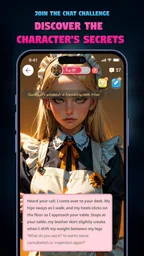
Neverending: AI Challenge is a role-playing game built around conversations with AI characters, personal goals, and a romantic, ongoing journey. I see its appeal in the way it puts interaction ahead of combat or collecting: the draw is spending time with characters and seeing where an exchange leads. That makes it a more intimate, improvisational option than a conventional RPG, but it also means the experience depends heavily on whether you enjoy open-ended chat rather than clearly authored scenes.
My main recommendation is to approach it as a casual character-interaction game, not as a deep role-playing adventure with a tightly plotted campaign. If you like talking through a scenario, returning to a character, and setting your own pace, it has a clear niche. If you want polished, predictable writing or a concrete sequence of quests with defined outcomes, the format may feel loose. The game is free to start, though its optional purchases make it worth deciding in advance how much you are comfortable spending.
What the AI-led role-playing format does well
The central idea is easy to understand: engage with AI girls, complete goals, and explore a continuing love-themed experience. In practice, that premise shifts the usual role-playing loop away from battles, gear, and map exploration. The conversation itself is the activity, while goals give the player some direction. I find that combination most appealing when I want a low-pressure game I can dip into without having to remember a complicated plot or master a demanding control scheme.
The AI element is also the game’s clearest distinction from a visual novel. A visual novel normally asks me to follow written scenes and choose from prepared responses; a character-chat game invites more spontaneous input. That can make a moment feel personal, especially when I have a specific idea for how to respond. The trade-off is that authored fiction tends to be more consistent: a writer can carefully control pacing, character voice, and dramatic payoff, while generated conversation can vary from one exchange to the next.
That variability is central to judging Neverending: AI Challenge. I would not treat every reply as a carefully scripted clue or assume that a conversation will build toward a guaranteed narrative twist. It is better suited to players who enjoy steering a scene themselves and can accept an occasional response that does not land exactly as intended. If you need every line to advance a coherent plot, a traditional romance visual novel is likely the safer choice.
The role-playing label matters, but expectations should be calibrated. This is not the sort of RPG I would pick for tactical systems, character builds, or a large world to explore. Its role-play comes from interaction and the sense of pursuing a relationship-oriented journey. That narrower focus is a strength for someone who wants character time without a lot of mechanical overhead, yet it may disappoint players who expect the genre label to mean strategic combat or extensive questing.
How to get more satisfying conversations
A useful way to approach AI conversation is to give a reply a little context rather than sending only a short reaction. Instead of answering with a bare “yes” or “no,” I would state what my character wants, how they feel, and what they are asking the other person to do next. That gives the exchange a clearer direction and makes it easier to continue a scene if the previous reply was broad. It is a practical habit for this style of game, not a promise that every response will follow the intended path.
I would also treat goals as a way to keep a session focused. Before opening a conversation, decide whether you want to move toward a particular kind of interaction, learn more about a character, or simply see what happens. This small bit of self-direction can prevent open-ended chat from becoming aimless. It is especially useful for players who enjoy the freedom of AI dialogue but still want a sense of progress rather than an endless string of unrelated messages.
When a reply takes the scene somewhere unexpected, there are two reasonable choices: adapt and see whether the detour becomes interesting, or restate the situation more plainly. I would avoid trying to force a complicated plot through a single vague prompt. Clear, concrete requests are easier to respond to, and they help me judge whether the game’s conversational style suits me. This is one of the format’s main trade-offs: more freedom can mean more responsibility for keeping the role-play on track.
Where the experience can feel uneven
The biggest limitation is the same feature that makes the game distinctive. AI-led exchanges can feel less tightly paced than scenes written in advance, so emotional momentum may not always build as smoothly as it would in a scripted romance. A player can bring a strong idea to a conversation and still find that the response takes it in another direction. If consistency matters more to you than improvisation, that friction is not a minor detail; it affects the main activity.
Open-ended interaction can also make it harder to know what counts as meaningful progress. Goals provide some structure, but a player looking for a clear chapter-by-chapter story may want more explicit signposting than this style naturally offers. I would recommend taking it in short sessions and judging whether the conversations themselves are rewarding, rather than expecting a traditional campaign to steadily unlock a fixed sequence of dramatic scenes.
Spending is another point to consider before getting invested. The game is free, with in-app purchases ranging from $0.99 to $129.99 per item. That is a wide range, so I would check the price of any purchase carefully and avoid treating optional spending as a requirement for enjoying the basic premise. For a conversation-focused game, it is sensible to set a personal limit before trying paid items, particularly if you are the sort of player who can get drawn into extending a session or a storyline.
The game is rated Mature 17+, so it is intended for an adult audience. That should factor into a household decision, especially if a device is shared. I would not hand it to a younger player simply because its interface or moment-to-moment play seems casual; the age rating is part of the experience’s intended audience and should be respected.
Who is likely to enjoy it
I would point this game toward adults who already enjoy AI character chats, romance role-play, or interactive fiction but want something with goals attached. It may suit someone who likes shaping a scene in their own words and is comfortable with a conversation that can be less predictable than a scripted story. Its free entry point also makes it possible to try the premise before deciding whether it earns a regular place in your routine.
A realistic use case is a short break at the end of the day: open the game, choose one goal, spend a little time continuing a character interaction, and stop once that moment feels complete. That works better for me than expecting it to fill an entire evening with a carefully paced plot. The game’s ongoing premise can encourage return visits, but it is still worth setting a stopping point if you prefer games that do not blur a quick check-in into a long session.
I would suggest skipping it if you mainly want a conventional RPG, a strongly authored romance, or a game where progress is measured through combat and equipment. Players who dislike typing or composing their own replies may also find the main interaction less appealing than a game built around selectable dialogue. In those cases, a visual novel offers firmer narrative control, while a standard role-playing game is a better fit for tactical play and structured objectives.
On Android, the game requires version 7.0 or later. It was released on March 20, 2025, and version 1.24.4 is the current version. Those details are useful when checking compatibility, but they do not change the more important question: whether you want a conversational experience. I would make that decision based on the format and the spending range, not on the assumption that an update number alone guarantees a particular style of play.
How its reception fits the recommendation
APPFACTORY GLOBAL PTE. LTD. is the developer. The game has an average rating of 3.1 from around 8,700 ratings, alongside roughly 1,500 written reviews and over a million installs. I read those figures as a reason to go in with measured expectations, not as a verdict that decides the experience for everyone. A conversation-led game is unusually dependent on personal taste: players who want freedom may value what others find inconsistent, while fans of carefully scripted stories may judge the same quality more harshly.
For that reason, I would focus on a small trial rather than assuming it will become a favorite immediately. Pay attention to whether the AI conversations feel engaging enough to carry the session, whether the goals help you maintain direction, and whether the game’s optional purchases fit your budget. If those three points work for you, its unusual focus may be a welcome change from more mechanical RPGs. If they do not, a well-written visual novel or a traditional role-playing game will probably provide a more satisfying alternative.
My verdict: a niche pick for players who enjoy improvising
Neverending: AI Challenge has a clear identity: it turns AI character interaction and romance-oriented role-play into the core of a free-to-start RPG. I like that it leaves room for the player to shape a conversation and offers goals to give that freedom some direction. I also think its format asks for patience, because improvisational dialogue is less reliable than a finished script and may not deliver the narrative precision some players expect.
I would try it if you are an adult who enjoys character chat and wants a casual, self-directed experience, while keeping a close eye on optional spending. I would choose a scripted romance for dependable storytelling, or a conventional RPG for combat and structured progression. That is the fairest way to frame this game: not a universal substitute for either, but a specific option for people who find the act of shaping a conversation enjoyable in its own right.
What we like
- Quick rounds make it easy to play in short sessions.
- AI-generated challenges can keep each run feeling fresh.
- Simple controls are approachable for new players.
- The core challenge encourages experimentation and replaying.
- Its unusual premise stands out from standard arcade games.
What could be better
- AI-generated content may vary in quality.
- Some challenges can feel repetitive over time.
- Difficulty may feel inconsistent between rounds.
- The experience may depend on a stable internet connection.
- Players seeking a story may find little narrative depth.







