


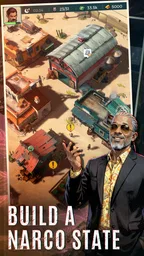
Narco Empire review
 Analysis by Appsdrops
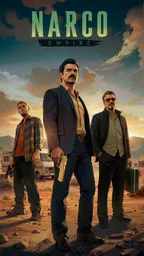
I would choose Narco Empire if the idea of turning a desert salvage yard into a source of strategic advantage sounds more appealing than managing a conventional kingdom or building a peaceful town. It is a free strategy game from Sparkhaven HK Limited, built around recovering wrecks, collecting useful parts, expanding a yard, and competing with rivals. That premise gives it a more hands-on, industrial flavor than the familiar cycle of farming, upgrading a castle, and sending troops. My main advice is to approach it as a progression game: the satisfying part is making each recovery contribute to a bigger operation, not simply watching a story unfold.
How to decide if this desert strategy game suits you
The first question I would ask is whether you enjoy strategy that begins with practical resource decisions. In Narco Empire, salvaged vehicles and parts are central to the fantasy, so the appeal is less about abstract empire-building and more about making a scrapyard productive and powerful. If you like the thought of turning discarded material into a stronger base, that theme gives the game a clear identity. If you want a purely tactical battlefield or a quiet construction sandbox, the premise may feel like the wrong fit.
It sits in the strategy category, but that label covers very different kinds of games. Compared with the usual fantasy kingdom builder, this has a grounded salvage-yard hook; compared with a puzzle strategy game, it points toward longer-term development and rivalry rather than isolated challenges. That distinction matters. I would pick it for a steady sense of building an operation, not for a quick match with a clean beginning and ending.
The game is rated Mature 17+, so I would not treat its rough criminal-desert setting as a family-friendly alternative to light city builders. The tone is part of the premise, and the age rating is a meaningful consideration for households choosing games for younger players. It is also free to start, but includes optional purchases priced from $0.99 to $199.99 per item. That wide range is worth keeping in mind before settling into a game that may encourage ongoing development.
There is already a sizeable audience: the game has more than a million installs and an average rating of 4.6 from around 107,000 ratings. Those figures suggest that many players have found something to like, but they do not tell me whether its pace or spending structure will suit you personally. I would use them as a reason to take a closer look, not as a substitute for asking whether you actually enjoy salvage-based progression.
The appeal is in making salvage feel useful
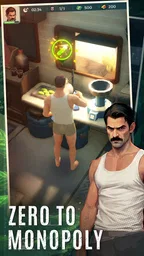
The most distinctive decision loop suggested by the design is the connection between recovery and expansion. A wreck is not merely scenery; it represents material that can help the yard grow. That gives ordinary progression a specific theme: instead of collecting generic resources for another anonymous upgrade, you can frame your choices around what a recovery contributes to your operation. The practical tip is to think about the purpose of each haul before treating every available part as equally valuable. That mindset makes the scrapyard concept feel more strategic.
There is also a useful way to judge whether the game is holding your interest. After a session, ask whether the yard feels more capable because of what you did, or whether you were mainly repeating actions without a meaningful choice. A strategy game can be enjoyable even when its loop is familiar, but it needs decisions that feel connected to an outcome. Here, the strongest reason to continue is the imagined chain from a wreck to parts, from parts to a stronger yard, and from that yard to a better position against rivals.
For a short everyday session, I would set one small goal before opening the game: make a recovery, identify what it advances, and stop once that task is complete. This is more satisfying than tapping around without a plan, especially in a progression-focused title where it can be easy to chase every possible improvement. It also helps you notice whether the game works in brief visits or whether you prefer giving it a longer stretch of attention.
Where it stands out from familiar strategy games
Many strategy games lean on familiar visual shorthand: a settlement, a fortress, a map, or an army. Narco Empire instead makes an auto-salvage yard the center of its identity. That is a real advantage if you are tired of the same medieval and kingdom-building settings. The desert backdrop and wreck-recovery theme give the act of expanding a base a different texture, and the rivalry angle supplies a reason for the yard to matter beyond simple decoration.
The concept can also make resource management easier to picture. Parts are tangible in the fiction, and the yard is a place where those materials belong. That can be more engaging than a menu full of interchangeable currencies, even if the underlying pleasure still comes from planning progress. My non-obvious recommendation is to pay attention to whether the game keeps the salvage theme relevant as your operation grows. If the wrecks remain tied to useful decisions, the premise can carry the experience; if they become only a repeated chore, the novelty is less likely to last.
That is where the game’s pitch is strongest: it promises a recognizable action with a clear strategic purpose. You are not just collecting wrecks for a collection screen; the idea is to turn salvage into an advantage and use your growing yard to challenge competitors. Players who enjoy seeing an operation develop from a rough starting point may find that more motivating than upgrading a town whose resources feel disconnected from its setting.
When a different kind of game may be better
If what you want is close tactical control over individual battles, I would look at strategy games designed around combat decisions instead. The salvage-yard premise is not, by itself, a promise of deep battlefield tactics. Likewise, if you prefer a relaxed builder with no emphasis on rivals, the competitive framing here may not match the mood you want after work. A peaceful farming or city-building game is likely the better choice for players who want to optimize a place without treating other groups as obstacles.
There is a trade-off in the theme, too. A scrapyard-and-rivalry setting is more unusual than a cheerful village, but it may be less welcoming if you dislike gritty or crime-adjacent worlds. The Mature 17+ rating reinforces that this is not the option I would casually hand to a younger player. I would also skip it if your ideal strategy game is a self-contained board-game-style challenge; the focus on building an ongoing empire points in a different direction.
Another reason to choose an alternative is a strong preference for playing without purchase prompts. Narco Empire is free, yet its in-app purchases range from under a dollar to nearly two hundred dollars per item. That does not mean a purchase is required, but the presence of a high-priced top tier makes spending boundaries sensible. Before you invest time, decide whether you are comfortable ignoring optional offers and progressing at the pace available without buying. If you would rather avoid that decision entirely, a paid game with a straightforward one-time purchase may suit you better.
What to consider before committing time or money
The current version is 1.0.65, and the minimum operating-system requirement is 7.0. If your device meets that requirement, the practical question is less about the number on the version label and more about whether the core loop keeps rewarding your attention. I would give the opening sessions a fair test without spending: see whether recovering wrecks and growing the yard feels enjoyable on its own. A game that only becomes appealing after a purchase is not a good match for a player seeking a free strategy experience.
For an ordinary evening, imagine having a few minutes while waiting for dinner. If you can make one clear piece of progress and leave with a sense of what the yard needs next, that is a promising sign. If you find yourself wanting to stay longer because you have spotted a new way to improve the operation, that suggests the strategic loop is working for you. If instead you feel pressured to keep going or to pay to avoid waiting, take that as a reason to pause rather than a challenge to spend.
One useful switching question is what you would lose by moving from another strategy game. If you currently enjoy fantasy armies, elaborate battle planning, or calm decoration, Narco Empire asks you to trade some of that familiar appeal for salvage and industrial growth. The switch makes sense when the new setting itself excites you and when turning recovered materials into progress sounds satisfying. It makes less sense if you are only looking for another generic base-building game and do not care about the wreck-yard identity.
Because there are 960 written reviews alongside the broader rating, I would not rely on one short impression—positive or negative—to decide whether the game is right for me. Players can value different things: the theme, the pace of progression, or the competitive premise. I would focus on the question that matters most to you: does the game make each recovery feel like a useful decision, and do you enjoy building toward a stronger yard? That is a better test than expecting every strategy fan to respond to it in the same way.
My recommendation for the right player
I recommend Narco Empire to strategy players who want an unusual setting and like the idea of turning vehicle salvage into a growing operation. Its strongest draw is the clear relationship between wrecks, parts, yard development, and rivalry. The developer, Sparkhaven HK Limited, has a focused concept to work with, and the game’s popularity indicates that the premise has found an audience. I would start free, set a personal spending limit, and judge it by whether the salvage loop remains satisfying after the novelty of the setting wears off.
I would not recommend it to someone looking for a gentle builder, a precise tactical combat game, or a child-friendly theme. Nor would I choose it if optional purchases are a deal-breaker. Those are not minor preferences here: they affect whether the central setting, competitive angle, and free-to-play structure feel enjoyable or irritating. A different strategy subgenre can be a better fit without being a worse game.
Overall, I see this as a specific alternative to the familiar castle-and-village formula rather than a universal strategy pick. If the prospect of building power from desert salvage makes you curious, it is worth trying without paying first. If that industrial premise does not grab you, the game’s other broad category labels are unlikely to be enough to change your mind. My final advice is simple: choose it for the scrapyard strategy and the sense of making wrecks matter, and skip it if you would rather build, fight, or relax in a very different way.
What we like
- A clear tutorial helps new players learn the core mechanics.
- Short play sessions make it easy to check in throughout the day.
- Building upgrades provide steady goals and a sense of progression.
- The strategic theme gives the management gameplay a distinct identity.
- Free access lets players try the game before spending money.
What could be better
- Progress can slow down while waiting for resources or timers.
- Optional purchases may give paying players a faster path forward.
- Repeated upgrade tasks can make later sessions feel routine.
- Frequent check-ins may be needed to keep production moving.
- The subject matter may not suit younger players or sensitive audiences.







