

Mech Arena - Shooting Game review
 Analysis by Appsdrops
Mech combat has a satisfying physicality that many mobile shooters lack: machines turn, weapons kick, and a short clash can swing a match before I have time to settle in. Mech Arena is an action game built around that quick team-fight feeling. I find its strongest appeal in the repeated cycle of choosing a mech, reading a skirmish, making a push, and immediately wanting another attempt. It is free to play, but its in-app purchases range from $0.72 to $299.99 per item, so it is worth deciding early how comfortable you are with optional spending.
From the first move to the first fight
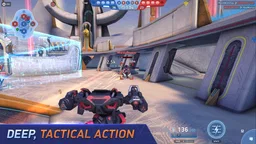
The first useful decision is not simply where to aim; it is how to approach a fight in a large, armed machine. A mech makes movement and positioning feel weightier than in a standard run-and-gun shooter. I have to consider whether to advance, hold a lane, or avoid being caught in the open. That gives even a brief match a small tactical question before the shooting starts.
The game is designed for PvP team combat, so opponents are not just targets placed in front of me. Their positioning can interrupt a push or make a seemingly safe route risky. If I charge straight toward visible enemies, I may draw fire without helping my team. A better habit is to look for a useful angle and move with the action rather than treating every encounter as a solo duel.
This makes Mech Arena a good fit when I want direct action without committing to a long, story-led campaign. Its developer is Plarium Global Ltd, and its store summary points squarely toward robot battles and team shooting. I would recommend it to players who enjoy controlling a combat machine and adapting to opponents. If the appeal of a mech is purely cosmetic and you want a calm building game, this is not that kind of experience.
Make the opening seconds count
In a match, I try to establish what the fight needs before I spend the opening moments firing at the nearest target. Is the team already engaging? Is there a gap to exploit, or would moving into it leave me isolated? This simple check makes the controls feel more purposeful. It also helps newcomers avoid a common shooter habit: confusing constant movement with useful movement.
Because the action is team-based, a good contribution does not always mean finishing an opponent personally. Pressuring a contested area or drawing attention away from a teammate can be more valuable than chasing a target into an unfavorable position. I find that mindset especially helpful when a match starts poorly. Instead of trying to rescue everything with one reckless charge, I can re-enter the fight with a clearer objective.
One practical tip is to treat each early encounter as information. Notice how quickly an opponent can punish an exposed approach, and use that lesson on the next push. The game’s appeal is not only the impact of the weapons; it is learning when to commit. That small adjustment gives the combat more texture than tapping toward the nearest enemy and hoping for the best.
Feedback that makes another attempt tempting
The rhythm I enjoy is action, feedback, and adjustment. I move into a fight, see whether my approach works, and then decide what to change next time. When a push succeeds, the payoff is immediate: the team has made progress, and I can feel the result in the match. When it fails, the lesson is often just as clear. I was exposed, arrived too late, or picked a fight that did not help the team.
That quick feedback is a real strength for short play sessions. I do not need to remember a complicated plot or reconstruct a long chain of objectives after putting the game down. I can return, get into combat, and focus on the immediate contest. At the same time, the same pace can make losses feel abrupt. If I prefer games where every setback can be carefully undone through a long planning phase, these matches may feel too fast and reactive.
The most useful improvement is often small rather than dramatic. If charging the same route repeatedly gets me into trouble, I can try approaching from a different angle or wait until my team is closer. If I keep focusing only on damage, I can pay more attention to the state of the fight. Those choices create a personal learning curve without requiring a player to turn every session into a study exercise.
For a realistic everyday use case, I would pick it up during a short break when I want active play rather than a passive distraction. A match gives me a clear beginning and end, and I can stop when the current session is over. That is more convenient than a game that expects me to keep a long quest chain in mind. The trade-off is that a quick match still asks for attention: this is not something I would choose while multitasking or looking for a low-effort background activity.
Why team awareness matters more than chasing
Mech Arena rewards a useful kind of restraint. The urge to pursue a damaged or retreating opponent is understandable, but following alone can pull me away from the fight that matters. I get better results when I ask whether the chase improves the team’s position. If the answer is no, staying near the main engagement can be the more effective move, even if it feels less exciting in the moment.
This is one of the game’s more interesting trade-offs: individual action is vivid, but the match is still a team contest. A player who treats every encounter as a personal highlight may miss the broader flow. I recommend thinking in terms of pressure and timing, not just aiming. That approach makes defeats easier to interpret too; instead of blaming every loss on a missed shot, I can consider whether I entered the fight at the right moment.
The game’s age rating is Everyone 10+, which makes it a more accessible choice for younger players than a mature-rated shooter. Still, the team-versus-team intensity and the possibility of optional purchases are worth discussing with younger players. If I were handing it to a child, I would set expectations around spending rather than assuming that a free download means there is no purchase temptation.
Rewards, spending, and the reason to return
A rewarding match does not have to be a flawless win. I enjoy the sense of improvement that comes from making a better decision than I did in the previous round. That is a more durable reason to return than expecting every session to produce a perfect result. The reward loop works best when I focus on learning one thing at a time: a smarter approach, a more patient engagement, or a better sense of when to support the team.
There is also a practical question for anyone considering a free-to-play action game: can I enjoy it without spending? The game is free, while optional items are priced from $0.72 to $299.99. That wide range is a reminder to treat purchases as a personal choice, not a necessary part of starting out. I would first play enough to decide whether the combat itself holds my interest, then set a spending limit if I choose to buy anything.
I would not assume that spending is a shortcut to enjoying the game. The part that keeps me engaged is the moment-to-moment decision-making, and purchases cannot replace paying attention to the fight. Players who dislike in-app purchase offers or feel pressure to keep up through spending may be more comfortable with a premium game that has a single upfront cost. Mech Arena is a better match for people who are happy to try a free game and make their own boundaries.
Its scale suggests that the game has found a large audience: it has over 50 million installs, with an average rating of 4.2 from around 618,000 ratings and roughly 29,000 written reviews. Those figures tell me it is widely played, but they do not guarantee that every player will enjoy the same pace. If I prefer a quiet solo campaign, a slower tactical game, or a shooter with no optional purchases, I would look elsewhere rather than expecting this team-focused action loop to change its character.
Where it sits among mobile shooters
Compared with the usual mobile shooter built around a human character, Mech Arena makes the machine itself central to the fantasy. That gives the battles a distinctive silhouette and a heavier-feeling style, while the team format keeps attention on how the whole encounter develops. It is a strong alternative for someone tired of familiar infantry combat, but it is not automatically better for every shooter fan. Players who value precise, fast movement above the feel of controlling a mech may prefer a conventional arena shooter.
It also differs from slower strategy games. I can think tactically about positioning and teamwork, but the point is to act in the clash, not spend a long time planning a turn. That blend works for me when I want decisions with immediate consequences. If I want a deep planning session or a story to carry me through a long evening, a strategy or role-playing game would serve that mood better.
For players deciding whether to install it, the current version is 3.496.00 and the minimum operating system is Android 7.1. The age rating is Everyone 10+. Those details make it easy to check basic compatibility and suitability before starting, but the more important personal test is whether short, reactive team fights sound fun. I would not recommend it just because someone likes robots; they should also enjoy the pressure of PvP and the need to adjust after each encounter.
Each match resets the question
The session reset is a large part of the appeal. A lost fight does not have to define the next one; I can take the lesson, start fresh, and test a different approach. That gives the game a repeatable loop without requiring me to treat every round as a major commitment. It is easy to understand why one match can lead to another: there is always another chance to coordinate better, choose a smarter route, or react more calmly under pressure.
That same reset can be a weakness if I am looking for lasting narrative consequences or a sense of progress built around a carefully written campaign. Mech Arena’s main draw is the contest itself. I would skip it if I dislike competitive play, if losing to other players quickly sours my mood, or if I want a one-time purchase with no optional spending. Those are not small exceptions; they go directly to the kind of experience the game offers.
My verdict is that Mech Arena is worth trying if you want quick mech-based team action and enjoy learning through repeated fights. I like that its best moments come from a concrete choice—when to push, when to hold back, and how to help the team—rather than from noise alone. Keep spending optional, take a moment to read the match instead of chasing every target, and the loop has a good chance of staying fun. For me, that balance between immediate combat and a fresh chance to do better is the reason to return.
What we like
- Matches are short and suit quick play sessions.
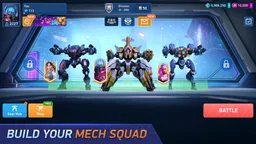
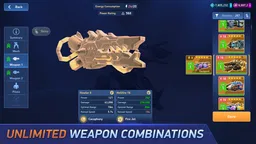
- A variety of mechs and weapons support different combat styles.
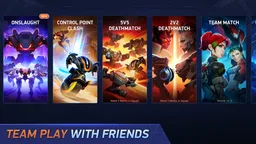
- Team modes reward coordination with other players.
- Controls are easy to learn on a touchscreen.
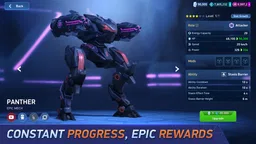
- Regular events offer new goals and rewards.
What could be better
- Progress can slow without frequent play.
- Premium purchases may speed up mech upgrades.
- Matchmaking can pair players with uneven gear.
- The interface has many menus and upgrade options.
- A stable internet connection is needed to play.







