



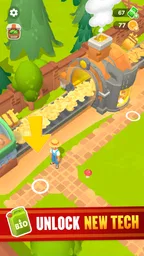
Little Farm Story: Idle Tycoon review
 Analysis by Appsdrops
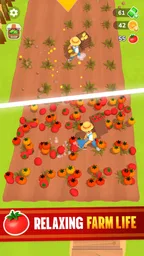
I like farm games best when a short visit still feels worthwhile, and Little Farm Story: Idle Tycoon is built around that kind of low-pressure routine. Its basic appeal is easy to grasp: tend a farm, grow crops, and develop it into a business. The role-playing label may suggest a story-heavy adventure, but I would approach this one as a casual farming and management game, suited to players who enjoy steady progress more than elaborate quests or demanding battles.
Turning a quick visit into a useful farm routine
My most practical way to play is to treat each visit as a small work cycle rather than an open-ended session. I check what needs attention, decide which crop or farm task deserves priority, then leave the game once I have made a clear bit of progress. That mindset fits an idle-tycoon premise: the satisfaction comes from building momentum across repeated visits, not from needing to stay focused for a long stretch.
The first useful habit is to avoid tapping through tasks without a plan. Before making changes, I look at what the farm is currently asking me to do and choose one immediate goal. That might mean focusing on growing crops, or putting effort toward a broader step in building the business. Keeping one goal in mind makes each visit feel more coherent, especially when I only have a few minutes between other things.
A realistic use case is a short break during the day. I can open the game, handle the most obvious farm work, and stop without feeling that I have abandoned a complicated mission halfway through. It also works as a relaxed evening check-in, when I want something more interactive than a passive screen but do not want the pressure of a competitive game. If you enjoy games that reward a repeatable routine, that simple structure is a strength.
There is a trade-off, though. A routine built around incremental farm management will not satisfy everyone. Players who want a strong narrative, a deep character-building system, or constant action may find the central loop too gentle. I would not choose it as a substitute for a more involved role-playing game; its appeal is the farm’s gradual development, not a complex adventure layered on top of it.
Small decisions matter more than frantic tapping
Although the premise sounds straightforward, I find it more satisfying when I make deliberate choices instead of treating every available action as equally urgent. If I keep switching attention between unrelated tasks, the visit can feel scattered. A better approach is to finish one sensible piece of farm work before deciding what comes next. That is not a secret trick or a special feature; it is simply a way to make a compact management game easier to follow.
Another helpful habit is to notice which part of the farm you have been neglecting. It is easy to focus on the most visible progress and overlook the rest of the business. On a later visit, I try to check whether my previous priority still makes sense rather than repeating it automatically. This gives the game a little decision-making texture without turning a casual session into homework.
I would also avoid judging progress by a single session. A farm-building game is naturally more rewarding when I view development over several check-ins. If you expect every short visit to produce a dramatic change, the pace may disappoint. If you enjoy returning to a project and seeing it become more developed over time, the incremental structure is much easier to appreciate.
Check your comfort settings before settling in
Before making this part of a daily routine, I recommend checking the game’s available settings and adapting anything that affects how comfortable it feels to play. I would not assume a particular control option or shortcut exists; the useful principle is to make sure the current setup suits your device and your preferred session length. On a phone, a game that you intend to open briefly should feel easy to read and manage without repeated trial and error.
It is also worth deciding what role you want the game to play on your device. If you plan to dip in while waiting for a bus or during a short break, keep your goals modest and avoid turning every notification or spare minute into a reason to check in. If you prefer longer, more focused sessions, take time to understand the farm’s available actions before trying to optimise your routine. Either way, the best setup is the one that makes the game feel relaxing rather than like another obligation.
For younger players and families, the age rating is Everyone, which makes the game broadly accessible from a content-rating standpoint. I would still keep an eye on spending settings if a child will play unsupervised. The game is free to download, but it includes in-app purchases ranging from $0.99 to $199.99 per item. That wide range is a good reason to review purchase controls on the device before handing it over, even if you intend to play without spending.
That free-to-start structure is common in mobile games, but it changes how I recommend approaching the farm. I would begin by playing at a natural pace and decide later whether any purchase would genuinely improve your experience. You do not need to treat spending as a shortcut to enjoying the basic idea. If you would rather have a one-time purchase with no in-app offers, a different kind of farming game may be a better match.
Build faster patterns without turning play into a chore
Experienced players often benefit more from consistency than from rushing. I like to use the same mental sequence when I return: check the farm’s immediate needs, choose one priority, complete the useful actions, and then stop when I have made enough progress for that visit. Repeating that pattern makes it easier to remember where I left off and reduces aimless tapping.
A second practical pattern is to separate planning from execution. First decide what you want the next visit to accomplish; then use the session to follow through. This is especially helpful when you have little time. Rather than opening the game and wandering between tasks, you can focus on the crop-growing or business-building work that matters most to you at that moment. The point is not to play optimally by some hidden formula, but to make your own priorities visible.
It also helps to match the game to the shape of your day. A brief check-in works well when you have a spare moment and want a small, self-contained task. A longer session makes more sense when you want to explore the farm’s management loop at a calmer pace. I would not force a long session just because the game has more to do; the idle-tycoon style is at its best when it supports relaxed returns rather than demanding constant attention.
Compared with more traditional farming games, this one is a better fit if your main interest is building a thriving operation through repeated management. A conventional farming simulator may suit you better if you want hands-on routines, detailed outdoor activities, or a stronger sense of controlling every moment. Compared with a full role-playing game, Little Farm Story is lighter and less focused on narrative depth. That distinction matters: it is not trying to deliver the same kind of experience as a story-led adventure.
Where the idle-tycoon approach can feel limiting
The same simplicity that makes the game easy to pick up can also limit its appeal. If you enjoy systems that require careful long-term planning, meaningful character choices, or a wide variety of challenges, a farm-management loop may feel repetitive after the novelty wears off. I would give it a fair try if the theme appeals to you, but I would not expect it to become a deep strategy game simply because it involves running a business.
There is also a difference between a game being convenient and a game being endlessly engaging. A repeatable routine is useful for short breaks, but it can become mechanical if you stop caring about the farm’s gradual growth. When that happens, I would take a break rather than trying to squeeze more excitement out of the same actions. This is a casual game, and it works better when you let it occupy a small, pleasant space in your day.
Its audience numbers suggest that it has found a substantial mobile audience: it has more than 10 million installs, an average rating of 4.3, around 248,000 ratings, and roughly 3,400 written reviews. Those figures are useful context, but they do not settle whether the pace suits you. I would base that decision on whether you enjoy incremental progress, simple farm management, and returning to the same project over time.
SayGames Ltd is the developer, and the game was released on March 22, 2024. The current version is 1.21.0, and it requires Android 8.0 or later. If you are checking whether your phone can run it, those are the practical details to keep in mind. The game’s free entry point makes it easy to try, while the in-app purchase range is worth considering before you decide whether it belongs on a child’s device or a tightly managed budget.
My verdict: a good fit for calm, repeatable progress
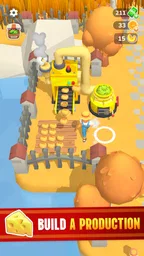
I would recommend Little Farm Story: Idle Tycoon to someone who wants a gentle farm game that can fit around everyday life. Its strongest quality is that the goal is immediately understandable: keep developing the farm and its business, one visit at a time. The most rewarding way to play is to set a small priority, handle it with intention, and let progress accumulate rather than expecting a major payoff from every session.
I would skip it if you need a rich story, fast action, or a farming simulation built around detailed hands-on control. I would also be cautious if in-app purchases are a concern, because the listed items span a broad price range even though the game itself is free. For players who enjoy light management and a calm routine, however, it offers a straightforward way to make a few spare minutes feel purposeful.
My final advice is to try it with a simple expectation: this is a casual, incremental farm-building game, not a demanding role-playing epic. If returning to a small project and watching it grow sounds satisfying, its steady rhythm may be exactly what you want. If you prefer a game that continually surprises you with new narrative or strategic layers, choose a more ambitious alternative instead.
What we like
- Simple controls make it easy to manage the farm.
- Idle income lets the farm progress between play sessions.
- Farm upgrades provide clear goals to work toward.
- The cheerful art style gives the game a cozy feel.
- Short play sessions suit casual play.
What could be better
- Progress can slow down without frequent upgrades.
- Waiting for resources may encourage repeat check-ins.
- The gameplay can feel repetitive over time.
- Some upgrades may require extended saving.
- Idle earnings may not fully replace active play.







