


Last Stronghold: Idle Survival review
 Analysis by Appsdrops
When I want a mobile role-playing game that gives me a small, repeatable survival routine rather than a sprawling campaign, Last Stronghold: Idle Survival is an easy one to understand. I gather supplies, improve a refuge, bring survivors in, and prepare for attacks. That loop is approachable, but it also asks me to make choices about what to build up first and how much attention I want to give it. The game is free to start, so it is simple to try; its appeal depends on whether managing a stronghold sounds more satisfying to you than direct, hands-on combat.
How the stronghold loop works
My basic routine is to check what resources are available, decide which improvement matters most, and make sure the settlement is ready for the next threat. The order matters: spending supplies on every available upgrade can leave the base feeling busy without making it meaningfully safer. I get more from a quick review of current needs than from tapping through options without a plan.
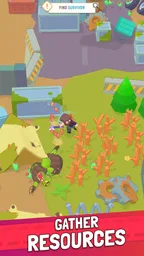
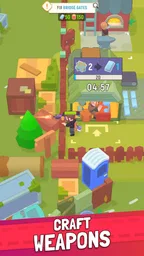
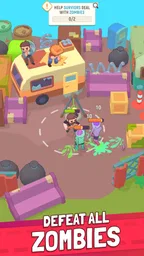
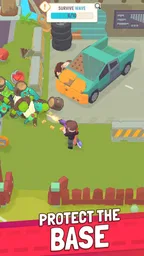
The game’s central idea is compact and clear. Resources support the stronghold, the stronghold gives survivors somewhere to gather, and defending it gives those improvements a purpose. That connection helps the different tasks feel like parts of one survival project rather than unrelated chores. It is a good fit for short sessions, especially when I want to make a little progress and then put my phone away.
One useful habit is to treat each visit as a check-in with a goal. I might focus on strengthening the refuge, or on gathering enough materials to keep development moving. Switching priorities constantly can make progress feel scattered; choosing one immediate need makes the session easier to judge. This is not a secret strategy or a special mechanic, just a practical way to keep the game’s resource loop from turning into aimless tapping.
The idle-survival framing also means it is worth thinking about how often you actually want to play. If you enjoy returning to a developing base and making incremental decisions, the format can be satisfying. If you want every minute to be filled with active exploration or precise combat, this may feel too routine. I would approach it as a base-management role-playing game with zombie pressure, not as a fast action game.
Make each visit count
For an everyday example, imagine opening the game during a short break. Rather than trying to complete every task, I would first see what the settlement needs most, make one or two useful improvements, and check that the survivors and defenses are in a sensible state. That gives the session a clear beginning and end. It also makes it easier to notice whether the game’s pace suits you before you invest much time in it.
When the game presents several ways to spend resources, I recommend pausing long enough to ask what will remove the current bottleneck. If the next step depends on supplies, gathering them is more useful than upgrading something that does not help that goal. If the stronghold feels vulnerable, prioritizing its readiness makes more sense than spreading effort evenly. The exact best choice will depend on what is in front of you, but the principle is consistent: spend toward a need you can name.
That approach is particularly helpful in games with a steady stream of small improvements. Each individual action can look worthwhile, yet resources are limited by design and attention is limited in real life. A simple priority list—survival first, then the upgrade that supports your next step—keeps progress legible. I find that more enjoyable than treating every button as an urgent instruction.
Check the practical details before settling in
Before making it a regular game, I would check whether it runs comfortably on your device and whether you are happy with its age guidance. It is rated Everyone 10+, and the current release is version 1.11.0, with Android support beginning at version 8.0. Those details make it easier to decide whether it is a fit for your household and phone without assuming that every device will feel identical in use.
I would also look at the game’s purchase prompts with a clear head. The game is free, with optional in-app purchases ranging from $0.99 to $99.99 per item. That range is broad enough that I would avoid treating a suggested purchase as part of the basic survival routine. Try the free experience first, decide whether the loop is genuinely holding your interest, and only then consider whether spending would improve your own enjoyment.
That is especially relevant for a game built around repeatable progress. A purchase can be tempting when you want to move past a pause, but the more useful question is whether the pause is part of a rhythm you enjoy or a point of frustration. If waiting or gradual development is the very thing you dislike, paying to speed through it may not turn the game into the more active experience you wanted.
Build a repeatable rhythm, not a checklist
Experienced play here is less about a complicated sequence of inputs and more about consistency. I would use the same broad order on each visit: identify the current shortage, choose a stronghold or survivor need to address, and leave the game in a state that makes the next check-in obvious. That repeatable workflow cuts down on indecision. It also helps reveal when an upgrade is genuinely helping rather than merely adding another task to remember.
A second useful pattern is to avoid changing goals midway through a session unless something important has shifted. If I begin by trying to prepare the refuge, I should finish that step before spending the remaining resources on a completely unrelated improvement. This keeps the economy easier to follow and makes each visit feel productive. It is a small discipline, but it is more valuable than searching for a shortcut the game has not promised.
There is also a practical distinction between playing for a minute and playing with focus. On a brief visit, I would handle the most obvious resource or defense need and stop. When I have longer, I can consider how attracting survivors fits the state of the base and which improvements support the next stretch of progress. That flexible approach suits a mobile game better than expecting every session to be a full sit-down play period.
SayGames Ltd develops the game, and its scale suggests that many players have at least tried this particular survival loop: it has over 10 million installs, with an average rating of 4.4 from around 179,000 ratings. I treat that as useful context, not a guarantee that the pace will work for everyone. A large audience can enjoy an accessible premise while still having different expectations about how much direct control or depth a role-playing game should offer.
Where the format can feel limiting
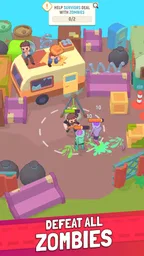
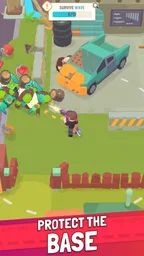
The same simplicity that makes the routine easy to pick up can also make it feel repetitive. Gathering, improving the settlement, attracting survivors, and defending against zombies give the game a coherent focus, but players who want a wide variety of combat encounters or a heavily story-led adventure may find that focus narrow. I would not choose it as a substitute for a role-playing game built around exploration, character dialogue, or complex tactical battles.
Another possible friction point is the tension between idle progress and active decision-making. If you prefer to control every action, an idle-oriented structure can feel like it is asking you to wait rather than play. If you prefer not to be interrupted by constant demands, the same structure can be a benefit. The key is to decide which side matters more to you before expecting the game to satisfy both equally.
Resource decisions may also feel less rewarding when you do not have a clear next target. That is why I recommend making a small plan each time you return, rather than trying to maximize everything at once. The game’s basic premise gives you a sensible framework, but it does not mean every choice will feel equally urgent. If you are prone to checking a mobile game repeatedly without knowing what you want from it, this loop could become a habit of tapping rather than a meaningful break.
Compared with more conventional mobile role-playing games, this one puts the settlement and its survival routine at the center. Compared with pure base-building games, its zombie threat and survivor angle give the upgrades a more immediate survival context. That middle ground is its strongest distinction, but it is also a reason to skip it if you want either side taken much further: deep character-led RPG systems on one end, or an expansive construction sandbox on the other.
Who I would recommend it to
I would recommend Last Stronghold: Idle Survival to someone who likes checking in on a growing base, making practical resource choices, and seeing a compact survival plan take shape over time. It is particularly suitable for short, casual sessions when you want a clear task without learning a long chain of controls. The Everyone 10+ rating is another useful point for anyone checking age guidance, though each household should make its own decision about what is appropriate.
I would steer away from it if your ideal game demands constant action, extensive story scenes, or a large range of character-building decisions. I would also be cautious if optional spending tends to undermine your enjoyment; the purchase range extends from under a dollar to nearly $100 for an item, so it is sensible to keep a firm personal limit. There is no need to spend simply because the game offers that option.
At the time of writing, the game was released on April 5, 2024, and its version is 1.11.0. Those details identify the edition, while the real deciding factor remains the loop itself: do you enjoy checking supplies, improving a shelter, and preparing for zombies? If yes, the game’s simple structure gives you a clear reason to return. If not, a more active or story-driven alternative will probably be a better use of your play time.
My verdict on mastering the routine
My best advice is to keep the experience deliberate: check the stronghold, pick the need that matters most, spend with that goal in mind, and stop when the short session has done its job. That routine makes the survival theme feel purposeful instead of turning every visit into a loose collection of taps. It also gives you a fair way to judge whether the idle pace is relaxing or simply too slow for your taste.
Overall, I see this as a straightforward, approachable mobile survival RPG rather than a deep simulation or action adventure. Its appeal comes from bringing resource use, survivor growth, and defense together in one manageable loop. With a 4.4 average and roughly 3,100 reviews, it has plenty of player feedback behind it, but my recommendation is still personal: try it if you enjoy methodical base progress, and move on if you want richer combat or a stronger narrative. As a free game, it is easy to sample; whether it earns a place in your daily routine depends on how satisfying you find the small decisions.
What we like
- Idle progress lets you gather resources while away.
- Base upgrades provide a clear sense of progression.
- Survival management adds purpose beyond combat.
- Short play sessions suit casual gaming.
- A post-apocalyptic setting gives the game a distinct theme.
What could be better
- Progress may slow without frequent upgrades.
- Waiting for resources can interrupt momentum.
- Combat may feel repetitive over time.
- Limited control can make battles feel hands-off.
- Some upgrades may encourage in-app purchases.







