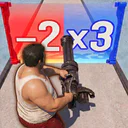
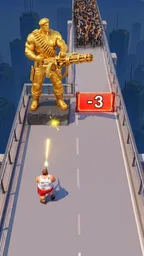
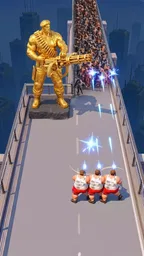
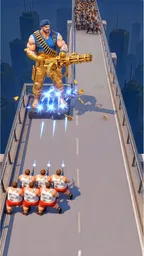
Last Human: Final Stand review
 Analysis by Appsdrops
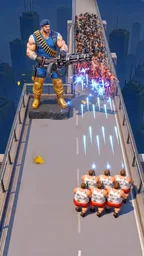
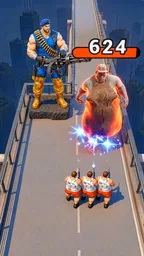
Choosing a zombie game is less about the theme than the kind of attention it asks from you. Some are best for quick, reflex-led shooting; others make you weigh survival choices and think several moves ahead. Last Human: Final Stand sits in the strategy corner, with a zombie-shooter premise aimed at players who want survival to involve more than aiming. I’d consider it when I’m in the mood to plan as well as react, rather than looking for a straightforward action game.
What to consider before you start
The first question is whether you enjoy making decisions under pressure. A strategy game can be satisfying when each choice feels consequential, but it may seem slow or demanding if all you want is a quick burst of shooting. The game’s focus on zombie survival points toward a tense setup, while its strategy classification is the better guide to the sort of player who may get the most from it.
I’d also think about how much friction I’m willing to accept around a free game. It costs nothing to install, but in-app purchases range from $0.99 to $99.99 per item. That wide spread makes it sensible to treat optional spending as a deliberate choice, not as part of the basic reason to try it. If I prefer games with no purchase prompts or spending decisions, a paid, one-time-purchase alternative may feel more comfortable.
The age rating is Teen, which helps families make an initial suitability check, but it is not a substitute for deciding whether zombie combat is right for a particular player. The game is developed by Iterflor Pte Ltd, and its current version is 2.50.16. Those details are useful context, though they don’t tell me whether I’ll enjoy the actual rhythm of play; that comes down to whether its survival-strategy approach suits me.
Why its strategy angle matters
In a crowded field of undead games, the useful distinction is often the player’s role. A pure shooter asks me to focus on aim, movement, and immediate threats. A broader survival-strategy game asks me to think about how to keep going, not just how to win the next exchange. Last Human: Final Stand is positioned for the latter appetite, so I’d approach it expecting decisions to matter alongside combat rather than judging it by shooter standards alone.
That makes it a better fit for a player who likes to pause mentally and consider the next move. If I’m playing after work, for example, I might want a game that gives me something to weigh instead of one that is only about fast reactions. On a short break, though, a more direct arcade shooter could be easier to pick up and put down without feeling that I’ve left a strategy problem unfinished.
Where this game can be the better choice
The strongest case for choosing this game is its blend of familiar zombie action with a survival-strategy identity. I don’t need to choose between an undead setting and a more thoughtful style of play: the pitch brings them together. That combination can be appealing when I’ve played plenty of reflex-focused zombie shooters and want the theme to support a more deliberate kind of challenge.
Its audience figures suggest it has found a substantial group of players: it has more than one million installs, a 4.7 average rating, and around 9,200 ratings. I treat those as a useful sign of interest, not a promise that every player will click with it. The 415 written reviews add another signal that people have taken time to share their views, but personal preference still matters more than popularity when choosing a strategy game.
One practical way to test the fit is to pay attention to what you enjoy during your first sessions. If you find yourself thinking about how to improve your next attempt, the strategy side may be doing its job. If you mainly wish the game would move faster or let you focus on shooting, that is a good sign to switch to a more action-led alternative rather than pushing through out of obligation.
I’d also make a simple spending rule before opening any purchase screen: decide that the free version is your trial, and only consider an optional item if you can explain what it would add to your enjoyment. With purchases spanning from $0.99 to $99.99, setting that boundary in advance is more useful than making a decision while caught up in a tense session. It keeps the question focused on whether the game itself is enjoyable, rather than on whether spending can rescue an experience that isn’t clicking.
When another kind of game may suit you more
If I want constant motion, fast aiming, and minimal planning, a conventional action shooter is likely a better match. That isn’t a knock on this game; it’s a difference in what each category asks from the player. Someone who enjoys short, uncomplicated sessions may find that a more arcade-like zombie game offers a cleaner fit for spare minutes.
At the other end, players who want a slow, systems-heavy survival experience may prefer a game that puts more emphasis on long-term planning than on shooting. The useful question is not whether one format is objectively better, but which kind of tension I want. This title’s premise appeals to people who want both survival strategy and zombie combat; if I want one of those elements to dominate, a more specialized alternative may feel more focused.
There’s also a difference between choosing a free-to-start game and choosing a game with predictable costs. Free access lowers the barrier to trying it, but the purchase range means I should be comfortable with optional spending being part of the environment. If I know I’m prone to impulsive purchases, I’d prefer to decide my limit before playing or choose a model that makes the total cost clear from the start.
How to make the first sessions useful
Rather than rushing to decide whether the game is for me, I’d use the opening sessions as a small test. I’d ask whether the strategic decisions are the part I look forward to, whether the zombie-shooter premise keeps me engaged, and whether I can enjoy the game without paying. Those questions are more revealing than simply asking whether the first few minutes feel exciting.
A good everyday scenario is a commute or a quiet stretch at home when I have enough time to concentrate but don’t want to commit to a long gaming session. I’d try a short play period, then stop at a natural break and see whether I’m eager to return. If I need a game I can abandon instantly at any moment, a simpler pick-up-and-play shooter may be more practical.
For a fair comparison, try to compare like with like. A strategy-focused zombie game should be judged on whether it makes planning engaging, while an action shooter should be judged on its immediate feel. Switching between those expectations can make either kind seem disappointing. I’d give this one a chance only if I’m genuinely curious about combining survival decisions with a shooter setting.
It is free to download, which makes trying it a lower-commitment decision than buying a game upfront. Still, free does not mean there is no decision to make: optional purchases can change how comfortable the experience feels for someone who wants to avoid spending. I’d keep my first run focused on the gameplay and avoid treating a purchase as a shortcut to deciding whether the core idea suits me.
Who should skip it
I’d skip it if I’m looking for a realistic, grounded survival simulator, a purely narrative zombie story, or a no-pressure shooter with no strategic demands. Those are different expectations from a strategy game built around zombie survival. I’d also pass if I dislike games with in-app purchases, even when I can start without paying; that preference is a valid reason to choose a more predictable alternative.
Likewise, someone who gets more enjoyment from direct competition or precise shooting than from planning may be happier elsewhere in the category. The game’s identity is not simply “zombies,” and choosing by theme alone can lead to a mismatch. Before installing, I’d ask myself whether I want to make survival decisions or just clear enemies quickly. If the answer is firmly the second, I’d pick an action-first game.
The switching question and my recommendation
Changing to another zombie game is easy in practical terms, but the harder part is recognizing what didn’t work. If I leave because I wanted faster action, I should look for a shooter rather than another strategy title with the same pace. If I leave because I wanted deeper survival planning, I should seek a more planning-led game. Naming the mismatch makes the next choice much more likely to be satisfying.
My recommendation is to try this if the combination of undead combat and strategy sounds appealing, and if you’re comfortable deciding for yourself whether optional purchases are worth considering. Its free entry point makes that first test straightforward, while its Teen rating gives families a useful starting point for judging suitability. The game has a 4.7 average from around 9,200 ratings, but I’d use that as context rather than as a substitute for trying it.
Overall, Last Human: Final Stand is most promising for players who want zombie survival to involve thought as well as action. I wouldn’t recommend it automatically to every fan of zombie games: a pure shooter may be better for quick reflex play, and a more specialized survival title may suit someone who wants planning above all else. If you enjoy the middle ground, start free, keep spending intentional, and let the first sessions show whether its strategic approach is the part you want to return for.
What we like
- Quick missions make it easy to play in short sessions.
- Combat rewards careful timing and tactical movement.
- The survival theme gives battles a clear sense of urgency.
- Character progression offers goals beyond individual fights.
- The post-apocalyptic setting creates a distinctive atmosphere.
What could be better
- Repeated encounters can make missions feel predictable.
- Progress may slow down without frequent play.
- Combat can become hectic when enemies crowd the screen.
- Limited resources may restrict experimentation with upgrades.
- The dark setting may not appeal to every player.







