
Last Beacon: Survival review
 Analysis by Appsdrops
I’d choose Last Beacon: Survival if the idea of making a fragile home on the ocean sounds more appealing than managing a familiar kingdom or marching across a fantasy map. This is a strategy game built around surviving and rebuilding amid open water, so its central appeal is the unusual setting and the choices that come with trying to make a settlement work. It is not automatically the right pick for every strategy fan: if you mainly want direct battles, a quick puzzle, or a well-established competitive routine, you may prefer a different kind of game.
My main decision test is simple: do you enjoy thinking about how a community can keep going when resources and safety cannot be taken for granted? The premise gives Last Beacon a more precarious mood than a typical expansion-focused strategy game. I find that promising because it gives building a purpose beyond making numbers rise. At the same time, the ocean setting alone does not guarantee a deep survival simulation, so I’d approach it as a strategy game with a distinctive premise rather than assume it models every practical detail of life at sea.
What the ocean setting changes
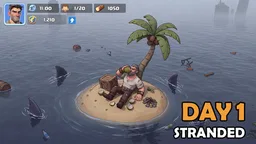
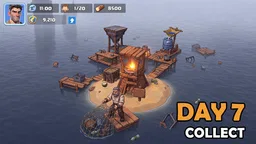
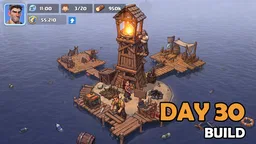
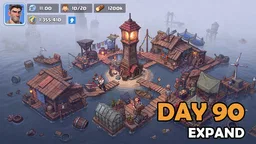
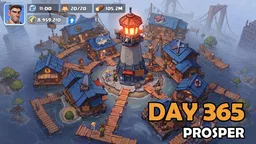
In many strategy games, the map is a space to claim: expand, defend a border, and push toward a rival. Here, the basic fantasy is different. The setting puts survival and rebuilding at the center, making the player’s attention feel closer to maintaining a home than conquering a continent. That shift can be a real draw if you like strategy with a sense of vulnerability, where the place you are trying to improve is also the thing you need to protect.
The game is listed in the strategy category, and that is the lens I’d use when deciding whether it suits you. It is not described as a straightforward action game, nor would I choose it expecting an arcade-style rush. The appeal is in working toward a lasting settlement and judging how to rebuild human civilization in an ocean environment. If planning and gradual progress are what keep you playing, that premise is more relevant than a promise of constant combat.
That distinction also helps set expectations. “Survival” can mean anything from tense resource management to a broad story theme, and the premise by itself does not tell me which balance the game strikes. I would not go in expecting a particular crafting loop, combat control scheme, or multiplayer mode. Instead, I’d judge the early play by whether its decisions make the ocean setting matter and whether building feels like a meaningful response to the danger implied by the world.
Who is likely to enjoy it
I think it is best suited to players who like strategy games with a strong setting and a rebuilding goal. It could be a good fit if you enjoy pausing to consider what to improve next, and if you find a vulnerable starting point more interesting than receiving a powerful army from the outset. The theme may also appeal to anyone who has grown tired of the usual land-based kingdoms and wants a different backdrop for settlement planning.
For an everyday scenario, imagine opening the game during a short break and wanting to make one deliberate bit of progress rather than commit to a long competitive session. A rebuilding-focused strategy game can suit that mood if its tasks are easy to understand and the next useful choice is clear. I’d test that early: if I can quickly tell what the settlement needs and why, the ocean premise has a chance to support a satisfying routine. If the game instead leaves me unsure what to prioritize, its unusual setting may not be enough to keep that routine appealing.
It may be less suitable if you want a very short, self-contained match each time you play, or if you dislike games whose central pleasure is developing a place over time. It is also not my first recommendation for someone looking primarily for reflex-based action. The game’s description points toward survival, building, and fighting as parts of a larger effort to rebuild, so I would choose it for that broader strategic fantasy rather than expect combat alone to carry the experience.
Where it stands beside other strategy games
Compared with the usual city-building or kingdom-management alternatives, Last Beacon has a clearer environmental hook: an ocean world makes the home itself feel like the focus. That can give its rebuilding theme more identity than a generic map of fields and borders. In contrast, a conventional city builder may be a better choice if you want a familiar urban layout, while a turn-based tactics game is more appropriate if you want compact encounters and carefully measured moves. Those genres answer different needs, and the ocean setting is the reason to consider this one.
It also occupies a different decision space from competitive strategy games. If the fun for you comes from testing your skill against other players, tracking a rank, and refining a matchup, you should compare it with games designed around that loop. Last Beacon’s stated focus is survival and rebuilding, not a promise of ranked competition. I would not treat it as a substitute for a multiplayer strategy title unless the actual play experience gives you that kind of challenge.
The more useful comparison is not “which game has more features?” but “which kind of planning do I want tonight?” Choose Last Beacon when you want the mood of establishing a foothold in an exposed ocean setting. Choose a familiar empire builder when you would rather focus on territory and conventional expansion. Choose a tactical game when you want brief, sharply bounded decisions. That simple distinction can save you from downloading it for the wrong reason.
Progress, friction, and spending
The game is free to download, which makes trying its opening a low-commitment way to see whether the premise and pacing work for you. It has in-app purchases ranging from $0.99 to $299.99 per item, so I would treat optional spending as something to evaluate carefully rather than assume it is necessary or harmless. A sensible approach is to play first, see whether progress feels satisfying at your own pace, and decide only then whether any purchase would solve a problem you genuinely have.
One practical trade-off is that a free strategy game with a wide spread of purchase prices can create a question before the player knows how much they enjoy it: is spending simply an optional convenience, or does it change the feel of progress? I would watch for that in the first sessions. If I feel pushed to pay before I understand the core decisions, that is a reason to stop and reconsider. If the game remains enjoyable without spending, the free entry point is much easier to recommend.
There is also a cost to switching away from a strategy game once you have begun investing attention in its world. Even without assuming any particular account or save system, the practical cost is the time spent learning its priorities and building a routine. I would give Last Beacon enough time to show whether its ocean settlement has depth, but I would not keep playing merely because I had already started. If the central loop does not make me curious about the next decision, another strategy style may be a better use of my free time.
What to check before settling in
Last Beacon is developed by YG Technology FZ-LLC and is rated Everyone 10+. That age guidance is useful for families considering whether its strategy-and-survival theme is appropriate, though I would still make the decision based on the child and the way they respond to conflict in games. It is a strategy title, so the main question for a younger player may be whether planning and managing a settlement are engaging rather than frustrating.
The game’s current version is 1.8.0, and it requires Android 7.0 or later. Those details matter if you are checking an older phone before installing. The game has a 4.3 average from around 22,000 ratings, and more than a million installs. That gives a prospective player a useful sense that it has reached a substantial audience, but popularity cannot tell you whether its pace or survival theme matches your taste.
When trying it, I would pay attention to three things rather than rush through the opening: whether the game explains why a particular building or action matters, whether its survival premise creates meaningful choices, and whether progress feels reasonable without paying. Those checks are more useful than judging the game by its setting alone. They also help answer the practical question of whether it is a good fit for short visits or better suited to longer sessions: the answer depends on how clearly it lets you pick up the settlement’s needs again.
My recommendation
Last Beacon: Survival is worth trying if you want a strategy game that swaps the familiar land frontier for an ocean-centered rebuilding premise. I like the decision it offers: rather than simply ask how far you can expand, it invites you to care about establishing a future in a setting that suggests insecurity. That can make the genre feel fresher, especially for players who enjoy settlement planning and gradual recovery.
I would skip it if your priority is fast action, tightly timed puzzle rounds, or a clearly competitive multiplayer ladder. I would also be cautious if you dislike in-app purchase menus or prefer a game whose core appeal is fully obvious before you have invested time. The free download gives you room to judge the opening, but the broad purchase range makes it sensible to set a spending boundary from the start.
Overall, I’d recommend giving it a try when the ocean survival theme genuinely appeals to you, then deciding based on the quality of the decisions rather than the promise of the premise. It has a distinct place among strategy games because rebuilding on open water is a different fantasy from managing a conventional city or empire. If that is the kind of challenge you want, it is a worthwhile candidate; if you want a more familiar or more sharply competitive alternative, another strategy game will likely fit better.
What we like
- Scavenging gives each outing a clear sense of risk and reward.
- Crafting helps turn gathered materials into useful survival gear.
- The post-apocalyptic setting creates a moody atmosphere.
- Base-building offers a reason to keep collecting resources.
- Survival decisions add tension to exploration.
What could be better
- Resource gathering can feel repetitive over time.
- Early progress may be slow for players who prefer quick rewards.
- Combat can be challenging when supplies are limited.
- Keeping track of several survival needs may feel demanding.
- The bleak setting may not appeal to every player.







