Kick the Buddy: Second Kick review
 Analysis by Appsdrops
I can see why Kick the Buddy catches people quickly: its whole appeal is immediate, physical comedy. You interact with a floppy puppet, send it tumbling, and watch the silly reactions unfold. I found it works best as a short, low-commitment distraction rather than a game I would plan my day around. The first few sessions are easy to enjoy; whether it deserves a regular spot on your phone depends on how much you like repeating playful, destruction-themed interactions.
Why the first sessions work
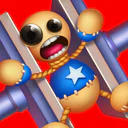
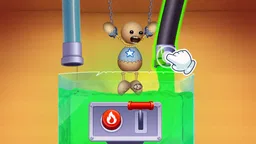
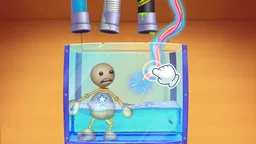
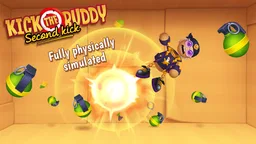
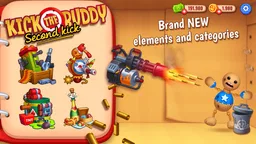
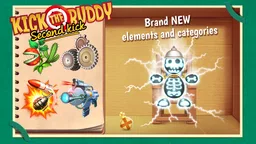
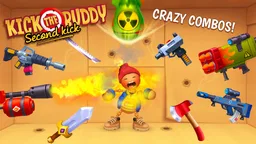
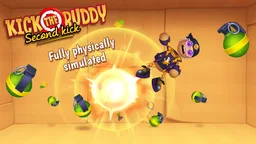
Kick the Buddy: Second Kick is an action game from Playgendary Limited, built around experimenting with a ragdoll character instead of following a conventional combat campaign. There is no elaborate premise to learn before starting. The basic pleasure is watching a puppet respond to what you do, and that makes the game approachable when you have only a few minutes to spare.
My first-week impression is that the humor carries more weight than mastery. The puppet’s loose, exaggerated movement gives ordinary actions a comic payoff, and the game’s central loop is easy to understand without a tutorial-heavy commitment. It suits a quick break between tasks, a commute when you have a little time, or a moment when you want something more interactive than scrolling but less demanding than a story-driven game.
That simplicity is also the main design trade-off. You are not building toward a deep plot or learning a complicated set of tactics. The fun comes from trying different ways to make the scene play out and enjoying the response. If you want a game with levels that steadily introduce new challenges, this may feel thin; if your goal is harmless, cartoonish mayhem on demand, the directness is a strength.
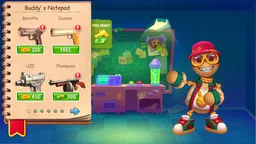
The game is free to download, with in-app purchases priced from $0.99 to $84.99 per item. I would treat the free version as the sensible place to decide whether the loop suits you before spending anything. A broad range of purchase prices makes it especially worth pausing before buying: ask whether an item changes how you actually enjoy playing, rather than assuming that more options will automatically make the game last longer.
It has a Teen content rating, which is relevant because the comedy centers on repeatedly rough treatment of a puppet. The character is a ragdoll, and the tone is presented as slapstick, but the theme still will not appeal to everyone. I would not choose it for a younger child simply because the visuals look cartoonish; parents should consider the age rating and the game’s focus before handing over a device.
What makes the loop feel playful
The strongest moments come from treating the puppet as a comic prop rather than as an opponent to defeat. That changes how I approach it: instead of looking for a “correct” move, I try a few actions, watch the result, and decide whether the animation or reaction is funny enough to repeat. This makes the game easy to pick up when I do not want to remember a complicated objective.
A useful way to keep the opening sessions fresh is to give yourself a tiny experiment each time. Try one approach, notice what makes the puppet’s reaction entertaining, then switch rather than repeating the same action indefinitely. This is not a hidden challenge system; it is simply a way to get more variety out of a deliberately simple premise. Without that small change of mindset, the basic interaction can become familiar very quickly.
It also helps to think of it as a mood game, not a productivity tool or a long-form adventure. A short visit can be satisfying precisely because it does not ask for a multi-step plan. In my experience, that makes it a better fit for a spare few minutes than for a full evening when I want progression, a clear destination, or a strong reason to return tomorrow.
Does it hold up after the novelty?
The longer-term question is not whether the core idea works—it does—but whether the same kind of interaction continues to amuse you. The game has a substantial audience, with an average rating of 4.3 from around 1.1 million ratings and over 100 million installs. Those figures show broad reach, but they cannot tell you whether you personally will still enjoy the loop after the first burst of curiosity.
For month-to-month value, I would judge it by how often I naturally want a brief, silly distraction. If I open it occasionally and enjoy a few minutes, it can earn its place without needing to become a daily habit. If I expect new narrative chapters, increasingly demanding objectives, or a sense of long-term skill development, I would probably move on to another action game. Its repeat value rests more on the player’s appetite for playful variation than on a traditional campaign arc.
That distinction matters when comparing it with common alternatives in the action category. A conventional action game usually gives you enemies, goals, timing challenges, or a campaign to push forward. Kick the Buddy instead makes the ragdoll interaction itself the attraction. I would pick it over a more demanding action title when I want instant access and comic reactions; I would pick the alternative when I want structured progression, tactical decisions, or a reason to improve at a particular challenge.
It is also a different choice from a physics puzzle game. Puzzle games reward finding a solution, while this one is better approached as open-ended play with a puppet. If you enjoy testing cause and effect without needing every attempt to lead to a clear win, that looseness can be relaxing. If you become frustrated when a game does not give you a defined objective, the same looseness may feel like a lack of direction.
Keeping the experience enjoyable
There is little maintenance in the everyday sense: the game is designed for quick sessions, so I would not treat it like a routine that demands daily attention. Its current version is 1.14.1529, and it requires Android 7.0 or later. For iPhone and iPad users, the sensible check is to look at the app store’s compatibility information for their particular device before deciding to install.
To avoid turning a light diversion into a purchase habit, I recommend setting a simple rule before opening the in-app purchase screens: enjoy the free play first, then buy only if a specific option genuinely improves your own routine. The listed purchase range runs from $0.99 to $84.99 per item, so the highest-priced option is not something I would approach casually. A purchase cannot fix a mismatch between the game’s repetitive core and your taste; it is better to decide whether that core is fun on its own.
Another practical tip is to use it in deliberate short bursts. If you open the game while waiting for a message or taking a quick break, the single-minded premise can be a plus. If you keep playing after the funny reactions have stopped feeling funny, the repetition becomes more noticeable. Closing it while you still want another quick session is a better way to preserve the novelty than forcing a long play period.
The game is best for people who like slapstick, ragdoll physics, and unstructured experimentation. It is less suitable for anyone who dislikes cartoon violence, wants a calmer kind of casual game, or expects a deep action system. I would also steer players who need a clear sense of progress toward a game with missions or stages; the appeal here is the immediate scene, not a promise of a large adventure.
Where the fatigue comes from
The chief limitation is repetition. Once you understand the basic pleasure, the same broad activity can start to feel like more of the same, particularly if you play for a long stretch or expect each visit to reveal a new kind of challenge. This is not a flaw that can be solved by treating every session as a serious run. The game’s lightness is the point, but it also sets a ceiling on how much depth some players will find.
Another source of friction is the gap between wanting a quick laugh and wanting meaningful progression. The game is good at the former; I would not rely on it for the latter. Likewise, the presence of paid items may tempt players who assume that collecting or buying more will remove the underlying repetition. I would only spend if I already enjoy returning to the basic interaction, not as a way to manufacture lasting interest.
Its popularity is useful context, not a promise that it suits every phone owner. The game has about 77,000 written reviews alongside its large rating count, but individual preferences still matter more than crowd size. If you are deciding for yourself, the clearest test is whether the puppet’s reactions make you smile after the first few minutes, and whether you can imagine opening it again later without needing a new objective each time.
Who should keep it installed?
I would keep it installed if I wanted a quick, low-pressure action diversion and found the ragdoll comedy amusing. It can work well for a short break at home or while waiting somewhere, provided I am comfortable with the game’s slapstick theme. Its free entry makes trying it straightforward, and the broad audience suggests the concept has clear appeal, though neither point means it will become a lasting favorite for everyone.
I would skip it if I wanted an action game that rewards practice with precise combat, offers a strong story, or gives me a clear sequence of objectives. I would also pass if the puppet-focused violence is unpleasant rather than funny. In those cases, a puzzle game, a platformer, or a more structured action title would likely be a better use of time because each offers a different kind of satisfaction.
For younger players, the Teen rating deserves attention rather than being treated as a formality. The cartoon presentation softens the tone, but the central joke remains about roughing up a puppet. Adults should make that call based on the child and the household’s standards, not only on the game’s colorful, exaggerated style.
A place for it, but not for everyone
My long-term verdict is that Kick the Buddy: Second Kick earns space as an occasional novelty, not necessarily as a permanent daily habit. Its biggest strength is how quickly it gets to the playful action; its biggest weakness is that this same narrow focus can wear thin. I would install it for short bursts, keep spending optional, and leave it behind without guilt if the joke stops landing.
Playgendary Limited’s action game is free, rated Teen, and runs on Android 7.0 or later; those practical details make it easy to assess whether it fits your device and comfort level. The most useful question is not whether it has a huge audience, but whether you personally enjoy its simple ragdoll comedy enough to return now and then. If you do, it is a handy little distraction. If you want progression, depth, or a gentler theme, another game will serve you better.
What we like
- Quick sessions make it easy to play in short bursts.
- A wide range of interactions keeps experiments varied.
- The humorous reactions give the sandbox a playful tone.
- Simple controls make the game easy to pick up.
- Offline play is useful when an internet connection is unavailable.
What could be better
- Frequent ads can interrupt play.
- Some items may require in-app purchases.
- The repetitive premise may lose appeal over time.
- Visual effects can feel cluttered during busy scenes.
- The humor may not suit younger players.







