
Invokers: Titan Legacy review
 Analysis by Appsdrops
I like role-playing games that make their central appeal clear quickly, and Invokers: Titan Legacy points toward a particular kind of fantasy adventure: assemble a team of heroes, take them into battle, and face dragons. That gives the game a more hands-on pitch than a story-first RPG, while the hero-collection angle makes choosing a team part of the attraction. My main question as a player is whether that loop stays satisfying after the novelty of the first battles fades. The answer depends on what you want from a mobile RPG: this is one to consider if building a roster and returning for more battles sound enjoyable, not if you want a quiet, purely narrative experience.
From assembling a team to taking the first action
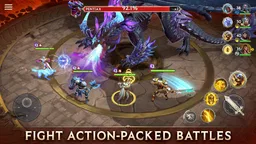
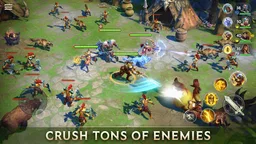
HitZone Games Inc. makes this a fantasy role-playing game with action at its center. The appeal is easy to picture: pick heroes, form a party, and put that group against enemies in a world where dragons provide a natural high-stakes target. I find that setup more inviting than a game whose first draw is an elaborate setting alone, because the team gives you an immediate decision to care about. Even before thinking about long-term progression, you can ask which heroes belong together and how you want your group to approach a fight.
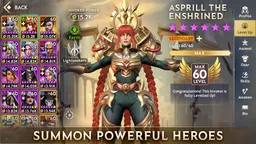
The collection element also changes how I would judge the battles. In a conventional action RPG, much of the pleasure may come from controlling one character directly. Here, the emphasis on building teams suggests a broader concern: the people you bring matter, not just the moment-to-moment attack. That makes the game a better fit for players who enjoy planning a party and seeing it put to work than for someone who wants every encounter to depend mainly on precise individual control. I would go in expecting team decisions to be central rather than treating the hero roster as decoration.
The first useful way to approach a new team-based RPG is to resist spreading attention across every option at once. I’d start with a small group of heroes I actually like using, then notice what each one seems to contribute in battle before changing the lineup. That is practical advice for any collection game, but it matters especially here because the team is the bridge between collecting and fighting. If every new addition immediately sends you into a full roster reshuffle, it becomes harder to tell which choices are helping and which are simply new.
That does not mean I would ignore experimentation. I’d treat a difficult battle as a reason to test one team change at a time, rather than rebuilding everything after a loss. Keeping most of the party steady makes the result easier to read: if the fight improves, you have a better idea why. This kind of deliberate trial-and-error is a useful way to get more from a hero-collection RPG, even when the game does not ask you to approach it like a competitive strategy title.
Who will enjoy the opening loop
The game is likely to appeal most to players who enjoy the familiar pleasure of gradually shaping a roster around battles. If you like fantasy settings, team-building, and the promise of taking heroes up against dragons, the premise gives you several reasons to keep exploring. If you mainly want a linear story with little interest in managing a collection, the same emphasis may feel like a distraction. I would make that distinction before installing: the team is part of the point, not merely a way to get through the plot.
It is free to play, which lowers the barrier to trying it, but that does not mean the experience has no spending considerations. In-app purchases range from $3.49 to $499.99 per item. That is a broad span, and the upper end is high enough that I would recommend setting a personal spending boundary before browsing any purchase options. A free starting point is useful, but it is not a reason to treat optional purchases casually. I would first decide whether the team-building loop is genuinely fun without paying, then make any spending choice with a clear limit.
How the battles keep attention moving
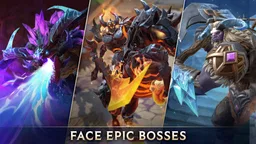
For me, a good action-RPG rhythm depends on the feedback after each decision. You take an action, see what the team’s effort accomplished, and decide whether you want to try again. In a hero-collection game, that feedback has two layers: the immediate result of a battle and the longer-term satisfaction of having a roster worth developing. The dragon-fighting premise gives encounters a clear fantasy purpose, while team assembly gives the player a reason to think beyond the next hit.
I would pay attention to whether each hero feels useful in a distinct way, even if I cannot judge that from a headline alone. A collection is more engaging when new choices invite a different approach, not just a larger pile of names to manage. My practical test would be simple: after a fight, can I explain what I liked about my lineup and what I might change? If so, the battle has given me something to work with. If I only want to tap through and collect the next reward, the team layer may not be doing enough for me.
That is also where a realistic short session can work well. Imagine having a little time during a break: I would rather enter with a specific aim, such as trying one different hero or taking another run at a troublesome encounter, than open the game without a plan and wander through menus. A clear goal makes a brief play session feel complete even if I do not make a dramatic leap forward. The approach is especially useful for mobile play, where a few focused decisions can be more satisfying than staying in the game simply because there is always another thing to inspect.
One non-obvious trade-off in hero collection is that choice can become its own workload. More heroes may sound like an automatic benefit, but every addition can create pressure to compare, sort, and second-guess the team. I would avoid treating the roster as a checklist that must be perfected before playing. If I had a functional party, I would take it into battle and let the results guide the next adjustment. That keeps team-building connected to play instead of turning it into a separate chore.
The game’s average rating is 4.7 from around 5.8 thousand ratings, and it has more than 500 thousand installs. Those figures suggest that plenty of players have been willing to give it a try, but they cannot tell me whether its particular rhythm suits my tastes. I would use them as a modest sign of interest, not as a substitute for asking whether I enjoy fantasy team battles. A player who wants a collection-focused RPG may read the same premise very differently from someone seeking direct, skill-led action.
Rewards, restraint, and the next attempt
Rewards matter most when they make the next choice interesting. In this kind of game, I would want a result to give me a reason to refine my team, pursue another challenge, or simply enjoy seeing the heroes I chose succeed. That is a more satisfying motivation than playing only to make a number go up. My advice is to connect rewards to a personal goal: decide which part of the team you want to improve or which opponent you want to approach differently, then let progress serve that aim.
I would also be careful not to confuse collection with progress. A new hero can be exciting, but it does not automatically make a team more enjoyable or more effective for the way I play. The useful question is whether that character changes my decisions. If the answer is no, I would keep using the heroes I already understand rather than rebuilding around every new possibility. That keeps the reward loop grounded in actual play and helps avoid the common trap of spending more time comparing options than battling.
For players deciding whether to spend, I would separate enjoyment from urgency. The purchase range runs from $3.49 to $499.99 per item, so the safest approach is to treat optional spending as a deliberate choice, not a shortcut assumed to be necessary. I would try the free game first and check whether its ordinary loop is enjoyable on its own. If it is, a purchase should be something I can comfortably justify; if it is not, paying is unlikely to fix a mismatch between the game’s team-collection focus and what I want to play.
There is a particular kind of reset that makes these games easy to revisit: a battle ends, I take stock of what happened, and I return with one adjustment in mind. That is the loop I would look for here. A loss can be useful if it gives me a concrete idea to test; a win can be satisfying if it makes the team feel like mine rather than a temporary arrangement. If every session ends with no memorable decision, the repeated structure may start to feel routine. If each return gives me a small experiment, the same structure can remain appealing.
When another RPG may be a better fit
Compared with a more traditional single-hero action RPG, Invokers: Titan Legacy places more weight on collecting and composing a group. I would choose a single-character adventure instead if I wanted the main pleasure to come from personally steering one hero through every encounter. I would also look elsewhere if my priority were a deeply story-led game and I had little interest in managing a roster. On the other hand, players who enjoy comparing characters and forming a party may find this setup more engaging than a game where the supporting cast has little effect on how they approach combat.
The age rating is Teen, so it is worth taking that audience guidance into account when deciding whether the game is suitable for a younger player. It is free, but the purchase range is another reason I would consider family expectations before handing over a device. For anyone installing it for themselves, I would check that their phone or tablet meets the minimum operating system requirement of 7.1. The current version is 0.62.1621, useful context when checking compatibility in the app store.
Because the game is built around collecting heroes, I would not recommend it to someone who dislikes the feeling of maintaining a roster. Even a generous collection system can become tiring if the player wants a compact experience with a fixed cast and a clear ending. Nor would I pick it for a very short, one-and-done diversion: the appeal is in returning to the team and seeing whether another battle or adjustment feels worthwhile. If you prefer quick action without ongoing decisions about characters, a simpler arcade game is probably the cleaner choice.
My verdict on the repeat-play loop
The strongest reason to try this game is the connection between choosing a team and seeing that choice tested against fantasy enemies. It has a clear audience: mobile RPG players who want hero collection to feed into action, and who enjoy thinking about how a party works together. The loop makes sense when a battle creates feedback, that feedback suggests a change, and the prospect of trying the revised team gives you a reason to begin again.
I would recommend approaching it patiently rather than chasing every collection option at once. Pick a team, notice what happens, and make one considered adjustment when a fight gives you a reason. That workflow is a small but useful way to keep the game focused and to find out whether its roster-building is genuinely fun for you. It also helps separate a rewarding challenge from the feeling that you are simply managing a growing list of characters.
Invokers: Titan Legacy is worth considering if dragon battles and hero-team decisions sound more appealing than a purely narrative or single-character RPG. Its free entry point and established player interest make it easy to investigate, while the optional purchases and collection emphasis deserve a little thought. I would keep playing when each session leaves me with a clear next experiment; I would move on if the roster starts to feel like homework. That is the honest measure of whether this particular loop has earned another session.
What we like
- Distinct hero abilities make team selection feel meaningful.
- Turn-based battles give players time to plan each move.
- The fantasy setting adds a clear identity to the adventure.
- Character upgrades provide goals beyond individual battles.
- A broad roster encourages trying different team combinations.
What could be better
- Progress can become repetitive between major story moments.
- Building a strong roster may require a substantial time investment.
- Some encounters can feel punishing without careful team planning.
- The full depth of combat may take time for newcomers to learn.
- Limited resources can slow character development.







