
Hide in The Backrooms: Horror review
 Analysis by Appsdrops
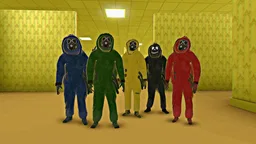
I can see the appeal of Hide in The Backrooms: Horror before I even settle into a match: it turns the familiar horror setup of being trapped in a threatening place into a quick choice between pursuing someone and trying to get away. That split gives the game a more social, mischievous feel than a purely solitary horror experience. I found it easiest to enjoy when I treated each round as a short burst of tension rather than expecting a deep story or a long campaign.
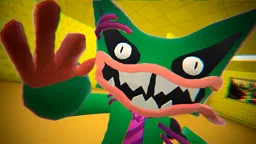
This is a free action game from CASUAL AZUR GAMES, with a Teen content rating. Its central idea is easy to grasp: take the hunter’s side and track down fugitives, or play as one of the people trying to escape. That immediate contrast is the strongest part of its first impression. You do not need to spend a long time learning a complicated premise before you can decide whether you prefer chasing or hiding.
Why the first sessions work
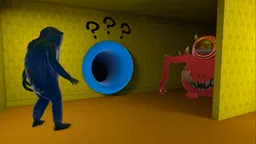
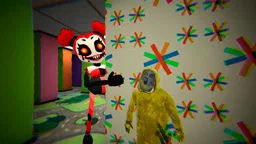
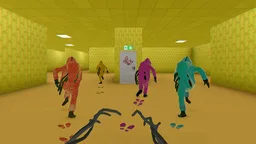
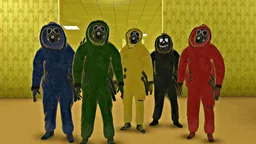
The two roles create different kinds of attention. As a fugitive, I’m thinking about exposure: when to move, when to stay out of sight, and whether a route is worth the risk. As a hunter, the question changes to where someone might have gone and how to close the gap. Even without a large set of systems to master, switching perspective helps keep the basic loop from feeling identical every time.
That makes the game a natural fit for spare moments. I can imagine opening it while waiting for a friend, playing a little, and stopping without needing to remember a complicated plot. The horror setting supplies atmosphere, while the chase gives each round a clear purpose. For someone who likes a little pressure but does not want a demanding survival game, that balance is more inviting than a long, slow build.
The first-week appeal is likely to come from learning how the two roles feel rather than from collecting a huge catalogue of mechanics. I would recommend trying both sides early, even if one seems more appealing at first. A player who only hides may miss what makes a pursuit satisfying, while someone who always hunts may not notice how much patience and route choice matter from the other side. Playing both roles is the quickest way to decide whether the core loop has enough variety for you.
There is also a useful distinction between suspense and fear. This is a game built around being hunted or doing the hunting, so the tension is active: you are making choices while danger is relevant. It is a better match for people who enjoy playful chase scenarios than for players looking for a carefully paced, story-led horror game. If you want elaborate narrative, puzzles, or a sustained sense of dread, the premise alone should not be mistaken for that kind of experience.
Small habits that make the chase more rewarding
My practical advice is to resist treating every moment as a sprint. When hiding, moving constantly can make it harder to judge whether a route is helping or simply making you more exposed. Pause briefly to read the situation, then move with a reason: changing position, leaving a risky spot, or creating distance. It is a simple habit, but it makes the fugitive role feel more deliberate instead of random.
When hunting, I would avoid committing to the first direction that seems plausible. A chase game can tempt you into tunnel vision, and that is where the other side’s ability to disappear becomes frustrating. Look for the broader pattern of movement rather than assuming the most direct route is always correct. This is not a secret mechanic; it is a way to make better decisions with the information the game gives you.
These little adjustments matter because the premise is intentionally easy to understand. The challenge is less about deciphering a complicated interface and more about making a sensible choice under pressure. That simplicity helps newcomers, but it also means the game’s replay value depends on whether you enjoy refining your judgement. Players who like improving through repeated attempts may find that satisfying; players who need a steady stream of new systems may run out of reasons to return sooner.
Does it keep earning a place after the novelty?
Once the first surprise wears off, the question is whether the hunter-versus-fugitive contrast continues to make short sessions enjoyable. I think it can, especially if you alternate roles and treat each match as a small test of observation and restraint. The game’s strength is that the objective is legible and the mood is immediate. You can drop in for a quick change of pace without needing to plan an evening around it.
Still, this is a focused loop, not an all-purpose action game. If the main appeal for you is simply seeing a spooky setting, that initial curiosity may fade once the environment feels familiar. Returning players need to enjoy the decisions inside the chase itself. The game is most likely to stick for people who find satisfaction in reading movement, taking a calculated risk, and seeing how the opposite role responds.
That makes it a reasonable casual option for a short break, but not necessarily the game I would choose as my only horror title. Compared with a conventional solo horror adventure, it prioritizes direct competition and quick role-based tension over exploration and story. Compared with a more involved action game, it is easier to approach but offers a narrower central activity. I would pick it when I want an uncomplicated chase, and choose something else when I want a campaign, a richer narrative, or deeper long-term progression.
Its audience is broad enough to have found a substantial following: it has more than 50 million installs, a 4.2 average rating, and around 44,000 ratings. Those figures suggest plenty of people have tried it, though they do not guarantee that its particular rhythm will suit you. The more useful question is whether you like alternating between pursuit and evasion. If that sounds fun, the game gives you a clear reason to try it; if you strongly prefer one-player horror, those popularity figures should not outweigh your taste.
Keeping it installed without turning it into a chore
One advantage of a compact, round-based concept is that it does not demand a daily routine to make sense. I would use it when I want a burst of interaction, not as something that needs a long session every day. That is a healthy way to judge its staying power: if a game only feels worthwhile when you keep checking in, it can become a task. Here, the simpler approach is to return when the chase sounds enjoyable and let it rest when it does not.
The current version is 1.30.0, and the game requires Android 7.0 or later. It is free to start, with in-app purchases ranging from $2.99 to $99.99 per item. That range is worth considering before installing, especially if you prefer games with no optional spending. I would set a personal spending limit in advance rather than letting a moment of excitement decide for me. The free entry point makes it easy to try the basic appeal, while the existence of purchases means families and younger players may want to review purchase settings together.
Maintenance, in the everyday sense, seems modest: the main decision is whether to keep the game available for occasional rounds, not whether to maintain a complicated collection or schedule. But a lightweight habit only works if the game remains fun when you return. If you notice that you are repeating matches without enjoying the role choices, uninstalling is a sensible response. There is no need to keep a game just because it was entertaining during its first few sessions.
For parents, the Teen rating is a useful starting point, not a substitute for considering a particular player’s comfort with horror themes and pursuit-based tension. I would also keep in mind that in-app purchases are part of the experience. The game may be a better fit for older children and teens who enjoy spooky competition and can manage optional spending, rather than for someone who is sensitive to being chased or easily tempted by purchases.
Where repetition can set in
The main risk is that the two-role structure may feel like two versions of one idea rather than a broad range of activities. If you have already learned what you enjoy about hiding and hunting, repeated sessions can begin to blur together. That is not a flaw for everyone: some players like mastering a small loop. But anyone who expects frequent shifts in genre, a large narrative, or a constant supply of new goals should be cautious about treating this as a long-term main game.
There is also a social trade-off built into the premise. The tension is clearest when you are reacting to another side, so the experience may feel less compelling to someone who prefers complete control over pacing. A solo adventure lets you stop and inspect its world at your own speed; a chase-focused game asks you to respond. I would skip this one if being pursued is more irritating than exciting, or if you want horror that is quiet and atmospheric rather than active and competitive.
Another source of fatigue is overplaying the same role. A hunter who never tries escaping may start to see every round as a simple search, while a fugitive who never hunts may feel permanently on the defensive. Switching sides is the most straightforward way I found to refresh the experience without expecting the game to become a different product. It also gives you a better sense of why a tactic that seems obvious from one perspective can be risky from the other.
As a mobile game, it is also best approached with realistic expectations about session length and depth. The store description presents a concise premise, and that is exactly where its appeal lies: there is little barrier to understanding what you are supposed to do. The trade-off is that a concise premise gives the game less room to surprise players who want complex systems. I would call that focused rather than automatically shallow, but whether focus feels refreshing or limiting depends on what you usually play.
My verdict for the long run
Hide in The Backrooms: Horror earns a place on my phone if I want quick, tense rounds and enjoy switching between being the pursuer and the one trying to disappear. Its strongest qualities are an immediately understandable setup, a useful contrast between roles, and the ability to fit into a short break. CASUAL AZUR GAMES has built the experience around a clear hook rather than asking players to learn a complicated framework before the fun begins.
I would recommend it to fans of casual action games who like chase-based tension, especially people willing to experiment with both sides and improve through observation. I would not recommend it as a replacement for a story-heavy horror game or a deep competitive title. If you want long-term value from constant new systems, this may not be the right fit; if you are happy returning for occasional rounds because the hunt still feels enjoyable, it has a better chance of staying installed.
The most useful test is simple: try a few sessions, deliberately alternate roles, and notice whether you are making more thoughtful choices or merely repeating the same motions. If the former is happening, the game has room to become a small, reliable diversion. If the latter sets in quickly, its novelty may be doing most of the work. I would start with that expectation, keep spending optional, and let your own enjoyment—not the game’s reach or rating—decide whether it deserves lasting space.
What we like
- The short sessions make it easy to play in quick bursts.
- Exploration adds variety beyond simply hiding from enemies.
- The eerie setting creates a strong horror atmosphere.
- Simple controls are approachable for new players.
- It offers a tense challenge for fans of survival horror.
What could be better
- The dark corridors can make navigation difficult.
- Repeated environments may feel familiar after several runs.
- Sudden scares may be too intense for younger players.
- Progress can feel punishing when a run ends abruptly.
- The horror theme may not suit players who prefer relaxed games.







