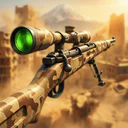
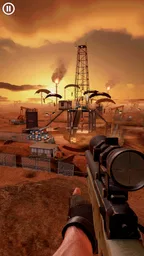
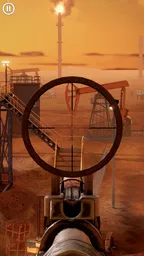
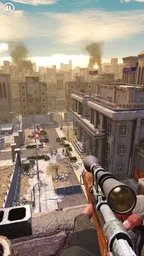
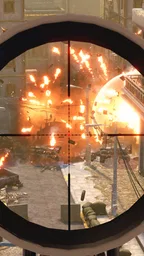
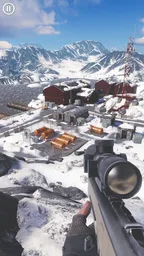

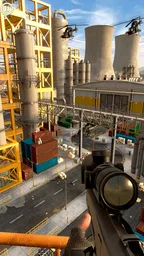
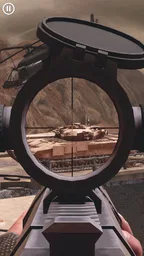
Ghost Sniper: War FPS Shooter review
 Analysis by Appsdrops
Ghost Sniper: War FPS Shooter makes a clear promise: step into the role of a military ghost sniper and take on offline 3D first-person missions across war zones. That focused setup gives the game an immediate identity. Rather than presenting itself as a broad military simulator, it puts stealthy long-range combat at the center of its appeal. I find that direct premise easy to understand and appealing if you want an action game you can play without an internet connection.
A focused sniper fantasy
The first impression is shaped by the contrast in the title: a sniper is expected to be patient and precise, while a first-person shooter usually suggests fast action. Bringing those ideas together gives Ghost Sniper: War FPS Shooter a useful tension. The fantasy is not simply to charge into a firefight; it is to feel like a quiet presence in a dangerous place, choosing moments carefully and taking a more measured approach to combat.
That identity also makes the game’s setting feel important. War zones provide a natural backdrop for missions built around alertness, distance, and risk. The military theme gives the action a recognizable frame, while the “ghost sniper” idea adds a more personal angle: you are meant to feel hidden, focused, and capable of striking from a position of control. It is a simple concept, but simple can be an advantage when a game wants players to know what kind of experience they are choosing.
As an offline 3D FPS, the game has an especially practical hook. It is designed around missions that do not require an active connection, which suits short sessions as well as stretches when you would rather not rely on network access. I like that the pitch is easy to carry around: a mobile action game, a military setting, and a sniper role that can be enjoyed offline. It has a clear audience, especially among players who enjoy first-person action but want a more deliberate theme than nonstop close-quarters chaos.
A war-zone world with a clear purpose
The environment and the role are closely linked. A sniper story needs a setting that makes distance and observation feel meaningful, and the war-zone premise provides that context. The mood works best when the player feels surrounded by danger, with each mission suggesting a problem to solve rather than a place to casually explore. That lends the action a more purposeful quality than a generic shooting gallery would have.
Art direction matters in a game like this because it does more than decorate the screen. It helps establish what kind of threat the player is facing and whether a moment should feel tense, urgent, or controlled. The military setting naturally points toward a serious tone, and the ghost-sniper framing encourages a quieter kind of confidence. I’m drawn to that combination: the world can feel hostile without the player’s role needing to be loud or reckless.
The game’s presentation is also easy to imagine from its core idea. A first-person view places the player close to the action, while the sniper role emphasizes looking outward and judging the scene. That perspective can make even a simple mission feel involving, because attention shifts from rushing forward to understanding what is happening in front of you. In a mobile shooter, that sense of focus is valuable. It gives the player a reason to pause and read the situation instead of treating every encounter as the same quick exchange.
There is a pleasing coherence in the way the premise, setting, and genre point in the same direction. The military backdrop supports the action, the action supports the sniper role, and the sniper role gives the war-zone missions a recognizable mood. I would rather see a game commit to that kind of clear identity than try to be every sort of shooter at once. The concept gives players a useful expectation before they start: this is about taking on combat missions as a hidden marksman, not about building an elaborate life outside the battlefield.
Sound, tension, and the pace of a mission
Sound is a natural part of the sniper fantasy, even when the broad premise is doing much of the work. A game centered on a hidden marksman benefits from audio that helps the player feel the difference between waiting and acting. Silence, a sudden burst of combat, and the general presence of a hostile environment can all contribute to tension. The important thing is not simply volume; it is whether the soundscape supports the feeling that every moment has a purpose.
The same principle applies to pacing. Sniper action can feel satisfying when a mission gives the player room to anticipate what comes next, then makes the decisive moments count. If everything moves at full speed, the distinctive patience of the role can disappear. If the action feels too still, the tension can fade. The appeal of this kind of game lies in the balance: enough urgency to keep a mission engaging, with enough breathing room for the player to feel like a deliberate operator rather than just another person firing into a crowd.
That slower, more watchful mood is also a useful contrast to the usual mobile-action rhythm. Many players reach for a phone game in short bursts, so a mission-based format can make the experience easy to approach. At the same time, the sniper premise gives those sessions a specific emotional flavor. You are not only looking for action; you are stepping into a role that invites concentration. I think that distinction is central to the game’s appeal, and it helps the experience feel more cohesive than a shooter that relies on generic combat alone.
Offline play further supports that kind of rhythm. It makes the game feel suited to moments when you want to focus on a mission without depending on a connection. That can be convenient during travel or whenever a network is unreliable, but it also fits the fantasy of operating independently. The game’s main idea is already centered on a solitary specialist, so being able to play offline feels like a natural match for the theme rather than a disconnected extra.
How the mechanics serve the fantasy
The most interesting mechanical question for any sniper game is whether its play encourages the same qualities as its fiction. A ghost sniper suggests careful attention and purposeful action. A 3D first-person shooter gives the player a direct view of the combat space. The strength of the concept comes from how well those pieces fit: the perspective should make the player feel present, while the role should make each encounter feel like more than a quick reflex test.
That does not mean every moment needs to be slow. An action game still needs momentum, and the war-zone setting promises danger. The best version of this balance lets the player feel composed without making the missions feel passive. I like the idea of a shooter that asks for concentration but still makes its action clear. For players who enjoy the rhythm of assessing a situation and then committing, the sniper theme gives a strong reason to stay engaged.
The offline mission structure is another part of that mechanical fit. It frames the game around individual play sessions rather than requiring the player to treat it as a constantly connected service. That is useful for anyone seeking a straightforward mobile shooter they can return to when convenient. The core attraction remains the same from session to session: take on a military mission, inhabit the sniper role, and experience the action from a first-person view.
There is also a practical point worth keeping in mind before downloading. The game is free to play and includes optional in-app purchases, with individual items priced from $0.99 to $199.99. That wide range makes it sensible to check purchase details in the app store and decide in advance what, if anything, you are comfortable spending. The free entry point is welcoming, while the availability of paid items means players should approach purchases deliberately rather than assuming every part of the experience has no cost.
The audience rating is Mature 17+, so the game is intended for older players. That rating fits the military action premise and is useful context for anyone choosing a game for themselves or someone else. On the platform side, the current version is 1.3.0 and the minimum operating system is 7.1. It has attracted more than five million installs, with a 4.5 average from around 371,000 ratings. Those figures suggest a substantial audience, though personal enjoyment will still depend on whether the focused sniper theme is what you want from an action game.
Who is likely to enjoy it?
I would point this game toward players who want a mobile first-person shooter with a distinct role and an offline angle. If you enjoy military settings, solitary marksman fantasies, and action that gains character from tension rather than sheer speed, the premise should make sense straight away. The game also looks like a reasonable fit for people who prefer a clearly defined activity over a sprawling collection of unrelated modes and systems.
It may be less compelling if your ideal shooter is built around constant frantic movement or a strong social component. The defining promise here is the opposite: a ghost sniper working through offline missions in war zones. That focus is a strength for the right player, but it also means the game’s appeal depends on whether you want to spend time in that particular mood. I see the narrowness as an honest creative choice, not a flaw by itself.
Alda Games is the developer behind the game, and its core identity is easy to summarize without dressing it up: military action, a sniper role, and 3D FPS missions that can be played offline. That clarity helps with expectations. You can look at the premise and quickly decide whether it matches your taste, which is valuable in a crowded action category where many games use similar visual language but promise very different kinds of play.
A convincing mood built around one strong idea
Ghost Sniper: War FPS Shooter is most appealing when viewed as a mood-led action game. Its strongest hook is not a complicated story pitch or a long list of systems; it is the feeling of becoming a military ghost sniper and taking on missions in hostile territory. The art direction, sound, setting, and pacing all have a clear job to do: support that identity and make the player feel like a focused presence in a dangerous world.
For me, that coherence is the most promising part of the experience. The military setting gives the missions a sense of place, the first-person view puts the player close to the action, and the sniper fantasy suggests patience and precision. Offline play makes the game easier to pick up when a connection is not available, while the free-to-play format lowers the barrier to trying it. Optional purchases are something to consider, but they do not change the appeal of the central idea.
If you are searching for an offline sniper game with a military theme and an action-focused first-person perspective, this is an easy title to put on your shortlist. It is aimed at mature players, and its strengths are tied to a specific kind of combat mood rather than universal appeal. I would recommend it to anyone who enjoys the tension of playing a marksman in a war-zone setting and wants missions that can be approached without an internet connection. Its pitch is straightforward, its atmosphere has a clear direction, and that focused identity gives the game a solid reason to stand out.
What we like
- Offers a focused sniper-shooter experience for fans of military action.
- Mission-based play makes it easy to tackle short sessions.
- Sniper mechanics reward careful aim and timing.
- The war setting gives missions a clear action theme.
- Simple controls are approachable for casual players.
What could be better
- Repeated mission patterns can make the gameplay feel predictable.
- Aiming may take practice on smaller phone screens.
- Some missions may rely on familiar shooter scenarios.
- The experience may not suit players seeking a deep story.
- Performance can vary depending on the device.







