

Flex City RP: Car Game Online review
 Analysis by Appsdrops
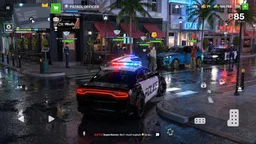
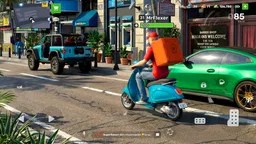
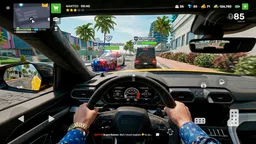
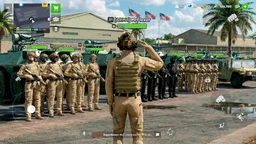
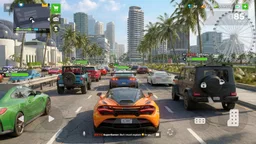
I approached Flex City RP: Car Game Online as a game to dip into when I wanted to drive around and see what other players were doing, rather than as a tightly guided racing campaign. That distinction matters. Its appeal is the mix of cars, an open environment, role-play action, and multiplayer; it is less suited to anyone looking for a carefully staged sequence of races or a quiet, strictly solo experience.
It is a free action game from Jarvi Games Ltd, with a Mature 17+ age rating. The game has a 4.6 average from around 358,000 ratings and has passed 50 million installs, so it has clearly found a large audience. Those figures suggest a well-established multiplayer community, though they do not guarantee that every session will suit your taste. My main advice is to approach it as a social driving sandbox: set a simple goal before you start, learn the controls at your own pace, and do not expect every minute to deliver a polished race.
Start with a simple routine, not a grand plan
The easiest way to settle into Flex City RP: Car Game Online is to treat your first sessions as orientation. Get comfortable with driving, look around the environment, and notice how the multiplayer side changes the feel of ordinary travel. When you are still learning, trying to race, explore, and follow role-play activity all at once can make the game feel busier than it needs to be.
I find a small repeatable routine more useful than wandering without direction. Pick one immediate aim—drive around, take part in a multiplayer encounter, or spend time with the role-play side—and let that guide the session. It gives you a way to judge whether the game is working for you without assuming that every activity must lead into the next. If the social scene is lively, you can stay with it; if not, driving and exploring can still provide a casual change of pace.
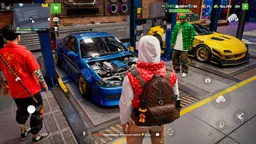
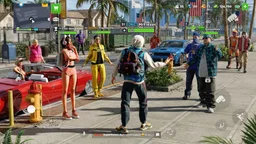
This approach also helps set expectations. The game brings together open-world driving and gangster role-play action, so its rhythm can shift between movement and interaction. It is not the same proposition as a conventional racing game, where a race start, fixed route, and finish line define the whole session. Here, the pleasure is more dependent on what you decide to do and how other players shape the moment.
A realistic use case is a short break when you want something more social than a time-trial game but do not want to commit to a long campaign. I would start with one clear activity and give myself permission to leave when the session begins to feel aimless. That keeps the open-world freedom enjoyable instead of turning it into a search for something the game has not promised.
Make the controls comfortable before chasing speed
In a driving game, awkward controls can spoil even a good stretch of road. I recommend spending the early part of a session noticing how steering and other on-screen inputs feel on your device, rather than immediately trying to drive aggressively. Small corrections are easier when your hands are relaxed; hurriedly changing direction while also trying to understand the interface can make the game feel less responsive than it may actually be.
There is no universal control arrangement that suits everyone. Screen size, grip, and whether you play with one hand or two all affect comfort. If the game offers control or camera adjustments in its settings, check them before deciding that driving itself is the problem. The useful habit is to alter one thing at a time, then drive for long enough to notice whether it genuinely helps. Changing several options together makes it difficult to tell what improved the experience.
Camera comfort matters for more than appearance. A view that makes it easier for you to judge direction can help when navigating an open environment, while a view you enjoy looking at may be less practical during quick turns. I would favour clarity over novelty when learning, then experiment once driving feels familiar. This is a small adjustment, but it can reduce the mental effort of staying oriented.
Also consider how you hold your phone. A comfortable grip can be more valuable than a short burst of fast driving, especially in a multiplayer session where you may want to keep playing beyond a few minutes. If your thumbs cover useful parts of the screen or you keep reaching awkwardly, pause and reassess your grip rather than blaming yourself for every missed input.
Build faster habits around what you can control
Once the basics feel manageable, the biggest practical improvement is to stop improvising every decision. Before moving into a busy situation, decide whether your priority is simply getting from one place to another, exploring, or engaging with the multiplayer role-play. That one choice helps you drive with more purpose and makes it easier to judge when an interaction is worth your time.
I also recommend separating learning from showing off. When you are trying to understand a route or the feel of a vehicle, avoid stacking that experiment with a high-pressure social moment. A calmer drive lets you notice how the controls respond and where you tend to overcorrect. Then, when you do join a more active encounter, you are less likely to confuse unfamiliar handling with the pressure of other players.
Another useful pattern is to use short, repeatable sessions. Choose a goal, play until you have made progress toward it, and take stock before starting something else. This works particularly well in a sandbox because there may not be a single obvious endpoint. It also gives you a fairer way to assess whether you are enjoying the game’s actual strengths—free-form driving and multiplayer presence—rather than merely spending time online.
When the environment feels crowded or unpredictable, leave yourself room to react. Driving more cautiously is not a failure in a game that combines traffic-like movement with other players and role-play action. The faster approach is often the one that avoids unnecessary corrections: keep your attention on where you are going, make deliberate turns, and do not let a tempting detour pull you away from the activity you chose.
Settings and spending deserve a deliberate check
Before settling into a longer session, I would check the options that affect comfort and visibility. Look for the settings that matter to your own play—particularly those related to controls, camera feel, and presentation—and adjust them in small steps. I would not change everything at once or assume that a more dramatic camera or more sensitive steering is automatically better. The point is to reduce friction, not to create a setup that feels impressive for a minute and tiring afterward.
It is also sensible to check the device’s general sound and display settings before blaming the game for an uncomfortable session. A loud environment or a screen that is hard to see can make multiplayer driving more tiring. If you are playing around other people, keeping the audio at a considerate level is a simple practical choice. These are ordinary habits, but they matter more in a game where you may spend time moving through an open world rather than completing short, clearly separated races.
The game is free to download, but it includes optional in-app purchases ranging from $0.29 to $104.99 per item. I would decide in advance whether you are comfortable spending anything and treat purchases as optional rather than as a requirement for enjoying the basic idea. If you are sharing a device or account, it is worth checking purchase controls before handing it to someone else. That is especially relevant for a game rated Mature 17+, which is not intended for younger players.
For families, the age rating is a practical boundary, not just a label to glance past. The gangster role-play framing and action-oriented setting make it a poor choice for a child who is not within the intended age group. For adults who enjoy open-ended multiplayer, the rating is also a reminder that the tone differs from a light, family-friendly driving game.
Where the open-world format helps—and where it can drag
Compared with a standard arcade racer, this game’s strongest difference is that the driving is part of a broader multiplayer setting. If you want a clean sequence of races with minimal distraction, a dedicated racing title is likely a better fit. If you enjoy the feeling that other players are present and that a drive can lead into role-play action, the open-world format has more room for spontaneous moments.
That flexibility brings a trade-off: a sandbox can feel less focused than a game built around a single activity. Some sessions may be more memorable than others, and the amount of fun you get can depend on whether the multiplayer experience matches your mood. I would not choose it when I want a predictable, tightly paced challenge. I would choose it when I have time to explore, tolerate a little uncertainty, and enjoy the possibility that a session will unfold differently from the last one.
It is also worth distinguishing “multiplayer” from guaranteed cooperation. Other players make the world feel active, but their presence does not automatically make every interaction helpful or enjoyable. If you prefer a controlled solo experience, a single-player driving game will give you more predictability. If you are comfortable sharing space with strangers and setting your own limits, the social element can be the reason to return.
For someone deciding whether to install it, the key question is not simply whether they like cars. It is whether they like driving as part of a flexible online world. A person who wants structured lap times, precise competitive racing, or a story-led campaign may find the game too loose. Someone who enjoys casual driving, multiplayer activity, and role-play action may find that looseness refreshing.
Know the practical limits before settling in
The current version is 1.11.33, and the minimum operating system requirement is Android 7.1. Before downloading, check that your device meets that requirement and has enough free space for the installation and future updates. The game is available at no charge, but a free download does not mean there are no optional purchases, so keep that distinction in mind if you prefer games with no spending prompts.
Because this is an online multiplayer game, the quality of a session naturally depends on being able to connect and on having a stable enough connection for play. If you are on a limited mobile plan, consider whether you want to use mobile data or wait until Wi-Fi is available. I would also avoid judging the game from a single poor connection: first check whether the issue is specific to your network or persists across sessions. That simple troubleshooting step can prevent an unfair verdict on the driving itself.
For longer play, take breaks if your hands or eyes start to feel strained. Open-world games can encourage “one more drive” because they do not always provide a natural finish line. Setting a stopping point before you start is a useful way to keep the experience casual, especially if you are playing during a short break or before bed.
Jarvi Games Ltd has built a game with a clear, particular audience: people who want cars and driving, but also want the unpredictability of online role-play action. Its popularity is substantial, yet I would use that as context rather than proof that it is right for everyone. A large community can make the world feel more worthwhile, while the same open format may frustrate players who prefer consistent, guided progression.
My verdict: best for self-directed social driving
I recommend Flex City RP to adults who enjoy setting their own pace, exploring an open environment, and sharing the experience with other players. The most satisfying way to approach it is to keep a modest goal, tune the controls for comfort, and treat multiplayer activity as an opportunity rather than a promise of a perfectly smooth session. Those habits make the game easier to appreciate on its own terms.
I would skip it if your main priority is a polished, race-after-race structure, a purely solo campaign, or a child-friendly driving experience. I would also think twice if you dislike open-ended play or would rather avoid optional purchases entirely without having to manage spending choices. For those players, a focused racing game is the clearer fit.
For me, the game’s strongest quality is its blend of driving and social unpredictability; its main limitation is that the same freedom can leave a session without much direction. If you enjoy deciding what a play session should be instead of following a fixed route, it is worth trying as a free game, while keeping purchases optional and expectations realistic. That balance is the difference between finding an inviting multiplayer driving space and wondering why it is not a conventional racer.
What we like
- Offers an open city to explore at your own pace.
- Lets players personalize cars to suit their style.
- Online roleplay gives sessions a social dimension.
- Driving and roleplay create variety beyond racing.
- A large map encourages exploration.
What could be better
- Online play requires a stable internet connection.
- Other players can disrupt roleplay sessions.
- Progress may take time without in-app purchases.
- Controls can feel challenging for new players.
- Performance may vary on older devices.







