
Draft Showdown review
 Analysis by Appsdrops
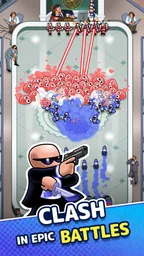
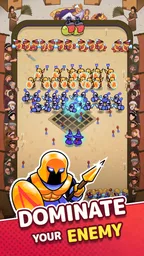
Draft Showdown makes a clear promise: shape an army through drafting, then see how it fares in a clash. That gives this strategy game a more immediate appeal than titles built around long campaigns or elaborate menus. I like the idea of making army selection the central decision, because it gives a quick match a point of tension before the fighting even begins. My main reservation is that the concept’s simplicity can cut both ways: it is easy to understand, but players looking for deep control over every battle may want more than this format offers.
Why the draft matters more than the spectacle
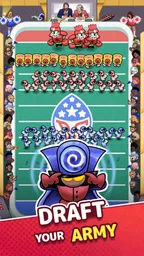
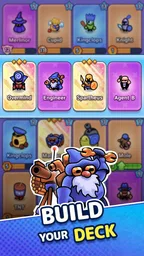
As a strategy game from VOODOO, Draft Showdown puts the emphasis on choosing a force rather than managing a sprawling base or planning a long sequence of missions. That focus is its strongest quality. A draft gives you a compact decision to think through: not just what looks powerful, but what kind of army you are assembling and whether its parts make sense together. The resulting clash gives those choices a clear payoff.
That structure is well suited to short play sessions. I can see it working during a break or while waiting for something, when I want a game with a recognizable objective but don’t want to commit to a lengthy campaign. The appeal is not that every match must become a grand strategic puzzle; it is that the army-building decision can make even a brief encounter feel like it has a setup and consequence.
The key skill is resisting the urge to draft only the most impressive-looking option. In games centered on assembling a force, a balanced group can be more useful than a collection of individually strong picks. My practical advice is to pause long enough to consider how each choice supports the overall army, rather than treating the draft as a race to grab whatever seems strongest. That small change in approach makes the strategic premise more rewarding.
The store rating sits at 3.9 out of 5, based on around 48,000 ratings. I would treat that as a broad signal rather than a verdict on whether it will suit you: a compact, accessible strategy game can satisfy someone seeking quick tactical decisions and disappoint someone expecting extensive control. The important question is whether drafting and watching the clash are enough to keep you engaged.
A clean fit for quick, decision-led play
Draft Showdown’s simple premise also makes it easier to recommend to someone who wants strategy without first learning a large rulebook. You can understand the basic rhythm from the idea of choosing an army and putting it into battle. That does not mean every choice is automatically obvious; it means the game’s central activity is easy to grasp, leaving room for players to focus on their selections instead of navigating a complicated management layer.
There is a useful trade-off here. A draft-led game puts much of its strategic weight into the choices available at the moment. If you enjoy adapting to a limited set of options and making the best of them, that constraint can be fun. If you prefer to build a precise long-term plan and execute it exactly, a more detailed strategy title may serve you better. The format is most compelling when you enjoy improvisation as much as optimization.
For a practical everyday scenario, imagine opening the game during a short commute or while taking a lunch break. You can approach a session as a small experiment: try a more balanced army, notice where your choices feel weak, and adjust your thinking the next time. I would avoid starting a session when you need to stop at a precise moment, though. Even a quick battle can be less satisfying if you are constantly checking the clock instead of following how your draft plays out.
Where the format can feel limiting
The same focus that keeps Draft Showdown approachable also narrows its appeal. Players who want direct, detailed control over every move may find that the draft-and-clash structure leaves less room for hands-on tactical decisions than they would like. Likewise, anyone hoping for a large campaign, a substantial management layer, or a long progression journey should not assume those elements are the main attraction here. The game’s identity is its compact army-building premise, not the promise of a sprawling strategy experience.
There is also a natural risk in making drafting so central: a match can feel less satisfying when the available choices do not support the kind of army you hoped to build. That is not necessarily a flaw in the design; it is part of the tension of working with options rather than assembling an ideal force from scratch. Still, it means players who dislike adapting to imperfect choices may find the core loop frustrating rather than clever.
My best tip is to judge a draft by the army it creates, not by whether each individual pick seems exciting. Ask whether the choices work together and whether you are covering more than one need. This is a more useful way to learn from a match than simply blaming a single selection after a loss. It also gives the game a better chance to reveal its strategic side, even when a battle does not go your way.
Another practical consideration is spending. The game is free to play, with in-app purchases ranging from $0.99 to $99.99 per item. That range makes it sensible to decide in advance whether you want to keep your experience free or consider optional purchases. I would begin without spending and first see whether the drafting and battles hold your attention on their own. A purchase is easier to evaluate once you know what you personally want from the game, rather than treating it as a shortcut to enjoyment.
Who should give it a chance
I would recommend it to players who like making a handful of consequential choices, seeing how those choices play out, and moving on without a long setup. It is especially suited to someone curious about strategy games but hesitant to start with one that demands extensive planning or management. Its audience is not limited to experts: the appeal comes from connecting an army selection to a battle, and that basic cause-and-effect is easy to appreciate.
By contrast, I would steer away from it if your ideal strategy game gives you granular control throughout combat, a carefully authored campaign, or a persistent world to manage. Those are different pleasures. A more traditional tactics game is likely a better fit for players who want to position units and issue specific commands; a grand strategy game is better for someone who enjoys long-range planning and layered systems. Draft Showdown makes more sense when you want a shorter, more focused alternative.
It has attracted over 1 million installs and carries a Teen content rating. It was released on March 27, 2025, and its current version is 1.21.0. The minimum operating-system requirement is version 8.0. Those details make it straightforward to assess basic compatibility, while the Teen rating is worth keeping in mind for anyone choosing games for a younger player.
The volume of feedback is substantial, with around 2,800 written reviews, but I would not use popularity alone to predict whether the game will suit your tastes. Drafting is a specific kind of strategy: some people enjoy adapting to a limited set of options, while others prefer complete freedom to assemble a plan. If you already know which side you fall on, that preference is a better guide than the install count.
A measured verdict
After weighing its central idea against its limits, I see Draft Showdown as a focused option rather than an all-purpose strategy game. The draft gives each clash a reason to care about what came before it, and the format is easier to approach than a title that asks you to learn many connected systems at once. Its strongest moments are likely to come when you can look at your choices, form a sensible plan, and then see whether that plan holds up.
Its weaker side is equally clear: the compact structure may not provide enough depth for players who want to command every detail or build toward a lengthy campaign. I also would not spend money before deciding that the basic experience is enjoyable. Those are not reasons to dismiss it; they are reasons to choose it for the right purpose.
My recommendation is simple: try it if you want a free, approachable strategy game built around selecting an army and watching your decisions meet the battle. Give each draft a little thought, especially when the tempting pick does not seem to fit the force you are building. If you want a deeper tactical sandbox, look elsewhere; if you want a brisk strategy break with a clear decision at its center, Draft Showdown is worth a look.
What we like
- Quick matches make it easy to play in short sessions.
- Simple controls are approachable for new players.
- Competitive rounds add tension and replay value.
- The draft format rewards careful choices.
- Its focused gameplay is easy to understand.
What could be better
- Match outcomes may depend heavily on draft luck.
- Players seeking a deep solo campaign may be disappointed.
- Repeated rounds can feel similar over time.
- New players may need time to learn effective strategies.
- Online play may be less enjoyable with an unstable connection.







