
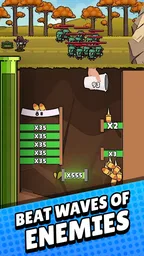

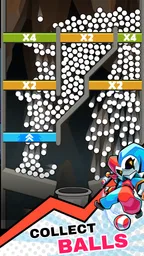




Cup Heroes review
 Analysis by Appsdrops
I judge a role-playing game less by how quickly it gets me moving than by whether its goals stay meaningful after the first few sessions. Cup Heroes has an appealingly direct premise: step into a hero’s role and keep making progress through play. That gives it an easy starting point, especially if I want a game I can pick up without committing to a long setup. The harder question is whether its sense of advancement keeps rewarding attention rather than simply asking for more time.
Small goals make it easy to get started
My first impression is that this is a game built to make the next step feel approachable. The role-playing framing gives each bout a broader purpose than a disconnected action challenge: I’m not only trying to get through what’s in front of me, but also looking for signs that my hero is moving forward. That kind of short-range motivation suits brief play sessions well.
The distinction matters on an ordinary day. If I have a few minutes while waiting for a ride or taking a break, I want to know what I’m working toward without needing to study a complicated plan. Cup Heroes is easier to approach in that mood than a sprawling role-playing game that expects me to remember a quest chain, manage a large party, and follow a detailed story between sessions.
It is also a reasonable fit for someone curious about role-playing games but not ready to spend hours learning a dense ruleset. The game’s “hero” framing is simple to grasp, and that makes the first step feel inviting. I would recommend it to a friend who wants a lightweight game to explore in spare moments, not to someone shopping for a deep, story-led campaign.
VOODOO developed the game, and its compact, accessible pitch sits comfortably alongside the developer’s broader reputation for games that are easy to try. Here, though, the role-playing label shapes what I look for: goals and progress should give repeated play a reason to continue. A quick start is useful, but it cannot carry the experience forever on its own.
What progress feels like between sessions
Progress in a game like this is easiest to appreciate when I can return after a pause and understand what has changed. I look for clear signals: a stronger sense of readiness, a new goal that gives the next session direction, or a meaningful feeling that previous effort counted. Those signals matter more than a long list of unlocks. A reward is satisfying when it changes what I can do or how I approach the next challenge, not merely when it adds another item to collect.
That is also where I would take a practical approach to playing. Rather than treating every session as a push to maximize progress, I would set a small personal stopping point: play until I have made one useful step, then leave. This helps keep a casual game from turning into a chore. If I return later and still understand the immediate goal, the loop is doing its job; if I feel I must play for a long stretch just to recover my place, the game is less suited to my routine.
I would not assume that every unlock is equally valuable. In progression-focused games, early rewards often feel exciting because almost anything is new; later, the useful question becomes whether each improvement changes the challenge or simply raises a number. Cup Heroes is most appealing when I can feel a connection between the effort I put in and the next thing I’m able to tackle. Players who enjoy steady, visible advancement will likely find that more satisfying than those who need a strong narrative payoff.
There is a useful trade-off here. A clean, approachable progression path can make a game easy to revisit, but it may feel less substantial than role-playing alternatives built around branching choices, character relationships, or elaborate world-building. I would choose this for quick forward motion, not for a richly authored adventure. If the story and freedom to shape a character are the main reasons I play RPGs, a larger campaign-based game will probably be a better fit.
Challenge and the point where pacing matters
Challenge is closely tied to how well a progression game holds my attention. When a goal is too easy, finishing it feels automatic; when it is too demanding, I want to understand what I can change before trying again. The most enjoyable rhythm is a small obstacle that makes me pay attention, followed by a clear sense that I learned or improved something. That is the standard I would use to judge whether Cup Heroes remains engaging beyond its opening stretch.
For a player who likes gradual tests, a rising challenge can create a satisfying reason to return. It gives improvements a purpose: I am not collecting progress for its own sake, but preparing for what comes next. On the other hand, if a section feels like a wall and the route forward is unclear, repeated attempts can make a short-session game feel like an obligation. I would recommend taking a break rather than forcing a long grind when a run stops being enjoyable.
A small but helpful habit is to pay attention to what the game is asking of me before repeating the same approach. If an attempt fails, I would consider whether the issue is timing, preparation, or simply needing a little more progress, rather than immediately treating every failure as a signal to spend. That mindset makes challenge feel more like a puzzle to read and less like a demand to keep pushing. It is especially useful for casual players who want to keep sessions relaxed.
The pacing also determines who should skip it. Someone looking for a calm game with no pressure to overcome increasingly demanding encounters may prefer a cozy builder or a puzzle game with self-contained levels. Someone who wants a demanding, highly tactical RPG may find a lighter progression loop too limited. Cup Heroes sits more naturally between those extremes: approachable enough for occasional play, but still organized around becoming more capable.
Monetization, ratings, and expectations
The game is free to download, with optional in-app purchases priced from $0.99 to $99.99 per item. That wide range is worth keeping in mind before playing. I would start without buying anything and first see whether the normal pace feels comfortable. A purchase only makes sense to me if I already enjoy the core loop and know exactly what it improves; spending to bypass frustration can make it harder to tell whether the game itself is a good match.
That advice is particularly relevant for younger players and families. Cup Heroes is rated Everyone 10+, and the presence of optional purchases means I would check the device’s purchase controls before handing it to a child. The rating is a useful starting point for judging age suitability, but it does not replace a parent’s own check of how a child responds to repeated play or spending prompts.
Its reception offers context, not a guarantee of personal fit: the average is 3.9 from around 172,000 ratings, with roughly 9,300 written reviews. More than 10 million installs suggest that many players have tried it, but popularity alone does not tell me whether its pacing will suit you. I would read the overall picture as a reason to approach it with ordinary expectations: it has a broad audience, while individual tolerance for repetition and progression pressure will vary.
One practical way to test that fit is to play a few short sessions without setting a target for how far I should get. If I find myself curious about the next goal, that is a good sign. If I’m checking in only because I feel behind, the loop may not be working for me. This is a more useful test than judging a progression game by its first reward alone, when novelty can make almost any unlock feel exciting.
Who will enjoy the loop, and who may want something else
I can see Cup Heroes working well for people who like a clear hero-focused premise, short bursts of play, and the satisfaction of watching progress accumulate. It can be a sensible choice for a commute, a quiet break, or a few minutes before bed, especially if I want to make a little headway without settling in for a long session. The key is to treat it as a lightweight RPG rather than expecting the breadth of a console-style adventure.
Compared with the usual alternatives in the role-playing category, it is better suited to players who value accessibility over extensive customization or long-form storytelling. Traditional party RPGs often reward planning across many characters and systems; narrative RPGs ask for sustained attention to dialogue and choices. Those can be more fulfilling when I have time to invest. Cup Heroes is the more convenient pick when I want a direct goal and a shorter commitment, provided its progression cadence clicks for me.
I would skip it if I dislike games that rely on repeated attempts and gradual advancement, or if I need every session to deliver a complete story beat. I would also look elsewhere if I want a purely relaxing experience with no challenge curve, or if I prefer to make detailed tactical decisions in every encounter. A game can be easy to start and still ask for persistence; that is not a flaw for everyone, but it is a meaningful preference to consider.
On Android, the listed minimum operating system is version 8.0, which gives older devices a clear compatibility point to check before installing. The current release is version 4.3.2. I would still make sure my particular device can run it comfortably through the app store, especially if I use an older handset. The game is free to try, so the best first step is a short session rather than a commitment to long-term play or spending.
My verdict on its staying power
What keeps a progression game alive for me is not simply the number of goals, but the quality of the handoff from one goal to the next. Cup Heroes has the right kind of accessible framing for casual role-playing: it is easy to understand why I am playing and appealing to anyone who enjoys seeing a hero move forward. Its strongest use case is spare-time play, where a compact sense of purpose is more valuable than a huge world to explore.
Its potential weakness is the same one that affects many progression-led games: if the climb starts to feel like repetition rather than preparation, the motivation can fade. I would keep sessions short, resist buying anything until I know the pace suits me, and judge rewards by whether they make the next challenge more interesting. Those habits help preserve the fun and make it easier to notice when a different genre would be a better choice.
Overall, I’d suggest giving it a try if you want an approachable, hero-centered RPG that can fit around daily life. Its average rating is 3.9, and the game is free, so there is little reason not to test the opening for yourself—just keep optional purchases in perspective. I would not choose it for a deep narrative or elaborate tactical play, but for a quick check-in and a modest sense of advancement, Cup Heroes has a clear, easy-to-understand appeal.
What we like
- Simple controls make battles easy to pick up.
- Distinct heroes offer different combat styles.
- Runs provide varied encounters and rewards.
- Short battles suit quick play sessions.
- Hero upgrades give progression a clear goal.
What could be better
- Combat can feel repetitive over longer sessions.
- Progress may rely on repeated runs.
- Random rewards can slow specific upgrades.
- Later stages may create sharp difficulty spikes.
- Some progression options may encourage in-app spending.







