






Conquer Countries review
 Analysis by Appsdrops
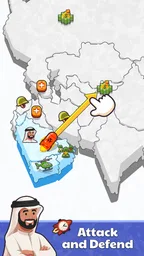
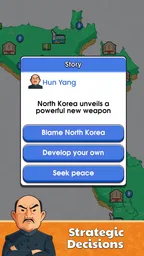
I can see Conquer Countries working best as a quick, shared-device game: one person makes a move, hands the phone over, and lets someone else decide what to do next. Its central appeal is the pressure of choosing well while trying to take control of a map. That makes it easy to explain across a kitchen table, even to someone who has not played many role-playing games. My main caution is that the fun depends on enjoying decisions and their consequences; it is not the right pick for a household looking for a rich story, a deep social mode, or a quiet game that asks for no attention.
How it fits into a shared-device routine
As a role-playing game from Supersonic Studios LTD, Conquer Countries turns the idea of expanding across countries into a compact decision-making challenge. The store’s brief description is “Conquer Countries,” but what matters in practice is the broader promise: your choices shape whether you can keep making progress. I like that premise for short turns with a friend or relative, because it gives each person something concrete to judge rather than requiring a long explanation of controls or story history.
A realistic use is a brief break at home: one player starts a run, another watches the choices, and they trade the phone when it is time to decide. The spectator can offer a second opinion without needing a separate account or device. That is a natural fit for people who enjoy talking through risks—whether to push forward, preserve a lead, or avoid a move that could make the next step harder. The exact appeal will depend on how much you enjoy being responsible for the outcome.
That same shared-device setup has a limit. A game built around decisions can lose its rhythm if several people keep interrupting, debating every move, or passing the phone before the current player has a clear stopping point. I would agree on a simple turn-taking rule first: let the person holding the device finish the immediate choice, then discuss the next one. It keeps the game from becoming a tug-of-war over the screen and makes the conversation part of the fun rather than a distraction.
Keep the play session easy to hand over
If you share a phone or tablet, treat the device itself as the boundary between players. Handing it to someone else does not automatically make the game a shared account or a separate personal space. Before a child or another household member plays, check what is currently open on the device and make sure the person holding it understands that purchases and other app-store actions belong to the device owner. That is practical housekeeping, not a claim about special family features in the game.
For a casual group, it helps to separate “watching and advising” from “making the move.” One person can be the decision-maker for a short stretch while everyone else suggests options; then switch roles at a natural pause. This avoids the common shared-screen problem where the most confident player takes over. It also makes the game more revealing: a cautious player and an impulsive one may read the same situation differently, which is precisely the sort of difference a decision-led game can put to use.
There is also a useful reason to avoid passing the device constantly. If you are trying to understand why a choice worked or failed, changing hands after every action makes it harder to connect a decision with its result. I would let one player handle a small sequence, then compare impressions. That gives the household a clearer sense of the game’s logic without assuming that every outcome is predictable or that a particular strategy always succeeds.
Make room for coordination, not guesswork
Conquering a map sounds like a competition, but shared play can be cooperative in the ordinary sense: players can plan together even when one person is tapping. Ask what the group is trying to do before making a choice. Are you prioritizing steady progress, testing a risky idea, or simply seeing what happens? Agreeing on that aim prevents one player from treating the session as careful planning while another expects a fast, experimental run.
A helpful household habit is to say the reason for a decision out loud before committing. “I think this is safer because…” gives the next player a useful clue about how the current run was being approached. It is a small discipline, but it turns handoffs into continuity instead of a fresh start in everyone’s head. If the group disagrees, let the person holding the device make the call; otherwise the game can become more about negotiation than play.
For people who prefer solo play, this coordination is optional. The game can still suit a quiet break if you want to make your own choices without discussion. The trade-off is that a shared session can make small decisions more entertaining, while solo play gives you a cleaner sense of personal responsibility. Neither is inherently better; choose based on whether you want a conversation starter or a focused individual game.
Age context, purchases, and trust
The game is rated Everyone, which makes its age label broad rather than a substitute for a parent’s judgement. I would still consider whether a child is comfortable with a game framed around taking territory and making consequential choices, and whether they can handle losing progress or seeing a plan go wrong. For younger players, playing nearby for the first session is a sensible way to judge the tone and complexity firsthand. A rating is useful context, but it cannot tell you whether a particular child will enjoy the pressure or understand the decisions.
It is free to install, while optional in-app purchases range from $0.99 to $49.99 per item. That is a substantial span, so I would set a clear rule before handing a shared device to a child: ask before buying anything, and do not treat a purchase prompt as part of the game’s required setup. If the device has purchase safeguards managed by its owner, check those separately. I would not assume the game itself provides household profiles, spending limits, or parental controls.
For a shared device, account boundaries matter as much as age. Keep in mind that the game is being played in the context of whoever owns or is signed into the device and its app store. If several household members use one screen, decide who is responsible for purchases and who can make changes before the first session. That simple conversation prevents confusion later, especially when a child sees an offer or another player picks up the phone without knowing whose settings are active.
What to expect from the game and its alternatives
This is a better match for someone who likes compact, choice-driven role-playing than for someone seeking the usual long-form RPG routine of extensive character management, a sprawling narrative, or a large cast to follow. The world-conquest framing gives decisions a clear purpose, but it may feel thin to players who want character development or a strong story to carry them between choices. If that is your priority, a narrative RPG or a more traditional strategy game is likely a better use of your time.
Compared with familiar map-based strategy games, the appeal here is the emphasis on choosing rather than managing a complicated collection of systems. That makes it approachable for a short session, but players who want detailed control over diplomacy, economies, armies, or long-term planning should look elsewhere. I would not judge it by how closely it imitates a full grand-strategy game; its value is in making the act of deciding accessible. The trade-off is less room for players who want every variable under their control.
It also differs from a standard role-playing game that asks you to follow a continuous plot. Here, the premise is more about the consequences of choices and the aim of expanding your reach. That can be satisfying when you want an easy-to-grasp objective, but less compelling if you need characters, dialogue, and narrative surprises to keep you invested. Before installing, ask yourself whether “make a decision and see where it leads” sounds enjoyable. That is a more reliable test than expecting a conventional RPG adventure.
The game is free, and its average rating is 4.2 from around 365,000 ratings, with about 3,400 written reviews. It has over 10 million installs, so it is not an obscure experiment, but popularity does not guarantee that its particular style will suit you. I would use those figures as broad context, then focus on the actual fit: do you enjoy map expansion, short strategic choices, and discussing what to do next? If not, a more story-led or systems-heavy alternative will probably feel more rewarding.
Practical expectations before installing
It was released on March 13, 2024, and the current version is 9.66. The minimum operating system is 7.1, so check the device’s software compatibility before planning a shared session. This is especially useful in a household with an older spare phone or tablet: a device that stays at home may be convenient, but it still needs to meet the requirement and have enough battery for the people waiting to play.
For the smoothest first session, I would install it on the device most likely to be available, open it before inviting others to take turns, and agree on a stopping point. That avoids making everyone wait while the device owner handles setup. Since purchases are optional, decide in advance whether the household will allow them at all. These steps do not require special game features; they are simple ways to keep a casual game from turning into a dispute over access, spending, or who gets the next turn.
One more useful expectation is that a shared session works best when nobody treats advice as an obligation. A player may want to follow their own instinct, even if the group sees a safer option. Let them. The game’s decision-making premise is most interesting when the person playing has ownership of the choice, and the rest of the household can learn from the result rather than blame one another for it. If your group dislikes uncertain outcomes, this may be a frustrating format rather than a bonding activity.
My household verdict
I would recommend this game to households that want a free, easy-to-explain role-playing experience built around decisions and a clear conquest goal. It can turn a few spare minutes into a small shared challenge, and the handoff approach gives family members or housemates a simple way to participate without everyone needing their own device. For solo players, it is worth considering if you like making choices and seeing how they shape progress.
I would skip it if you want a substantial story, deep control over a strategy simulation, or a game designed specifically for multiple people to play together on one screen. I would also avoid handing a shared device to a child without first setting expectations around purchases and account ownership. The broad Everyone rating is reassuring context, not a replacement for checking whether the game’s theme and decision pressure suit the player.
Overall, Conquer Countries makes the most sense as a compact decision game that can be played alone or turned into a low-key household conversation. Its strongest use case is not a formal family competition; it is a few people leaning over one screen, taking turns making choices, and seeing whether their approach can keep a campaign moving. If that sounds like your kind of break, it is an easy game to try. If you want a richer RPG world or a more intricate strategy sandbox, choose something built around those priorities instead.
What we like
- Quick matches make it easy to play in short sessions.
- Simple controls are approachable for new strategy players.
- Capturing territory gives each turn a clear objective.
- Different maps can add variety to repeat matches.
- The conquest theme is easy to understand at a glance.
What could be better
- Strategy options may feel limited for experienced players.
- Matches can become repetitive after many rounds.
- Progress may depend on repeated play over time.
- Small maps can leave little room for varied tactics.
- A stable internet connection may be needed for some features.







