



Cell Survivor review
 Analysis by Appsdrops
I can see why Cell Survivor catches the eye: it puts a familiar survival premise inside a tiny battlefield, where a growing threat has to be contained before it overwhelms the screen. My first impression is that it is built for short bursts of attention rather than a sprawling role-playing adventure. The appeal comes from watching a tense situation develop, making choices under pressure, and seeing whether a run can turn a shaky opening into a satisfying finish.
It is a free role-playing game from Snap Brain Games, rated Everyone 10+ and running on Android 6.0 or later. Its current version is 2.25. The game has a 4.1 average from around 169,000 ratings, and more than 5 million installs; that gives a sense of its reach, though popularity alone does not tell you whether its rhythm will suit you. I would describe it as a compact, action-led RPG for people who like the tactical tension of tower defense with the changing decisions associated with roguelikes.
Why the first few sessions can work
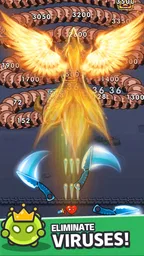
The opening attraction is easy to understand: you are dealing with a threat that keeps coming, and your attention is split between immediate survival and the choices that might make the next stretch easier. That push and pull is more engaging than simply waiting for a defensive setup to do all the work. You have a reason to stay alert, but the basic premise is clear enough that you do not need a long introduction to grasp the stakes.
That makes Cell Survivor a natural fit for a short break. I can imagine opening it while waiting for a friend, during a commute with a reliable connection to a charger, or between other tasks when I want a game that gives me something to respond to right away. The cell-scale conflict also gives the game its own identity: instead of a conventional fantasy map or a broad battlefield, the premise points your attention toward a small, vulnerable space and the danger pressing in on it.
The tower-defense element offers a useful anchor. It encourages you to think about keeping a position intact, while the role-playing and roguelike framing suggests that a run is not just a fixed sequence of identical actions. That combination can make an early session feel lively: survival is the immediate test, while the possibility of adapting your approach gives each decision a little more weight. The most satisfying moments are likely to come when a run feels close to slipping away and your choices buy enough breathing room to continue.
Still, this is not the same sort of experience as a story-heavy RPG. If what you want is a developed cast, long conversations, a large world to explore, or a carefully paced campaign, this compact survival setup is unlikely to replace those games. Its appeal is concentrated in the play loop, not in the promise of a broad narrative journey. I would choose it for tactical pressure and repeatable sessions, not as my main role-playing game when I want to settle in for an evening of story.
What keeps a repeatable run interesting
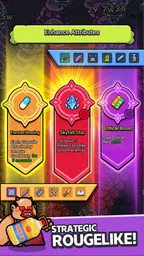
The roguelike side is important to the game’s staying power because repeated attempts need to feel like more than a replay of the same test. The value of that structure is not simply that outcomes can vary; it is that a player can use an earlier failure to make a more deliberate choice next time. Rather than treating every loss as wasted time, I would approach a run as a quick experiment: notice where pressure becomes hard to manage, then try a different priority when the next opportunity comes.
That is a practical way to get more from a game like this without turning it into homework. After a difficult run, I would not try to remember every moment. I would pick one point where things started to go wrong and ask whether I reacted too late, spread my attention poorly, or committed to an approach that did not suit the situation. Keeping the lesson narrow makes a retry feel purposeful. It also gives the game a small strategic layer beyond the immediate rush of dealing with incoming danger.
There is a trade-off here. A changing run can invite experimentation, but it can also make a player feel that success depends on receiving a favorable opportunity rather than making a sound decision. When that happens, it helps to judge progress by the quality of your choices, not only by whether the run reaches its ideal ending. If the game’s available options do not give you enough control to recover from a poor start, the same uncertainty that initially makes each attempt exciting can become frustrating.
For a month-to-month habit, the key question is whether I still enjoy making those small adjustments after the novelty of the premise wears off. This is a better fit for someone who likes returning to a compact challenge and refining their approach than for someone who needs a steady stream of new places, characters, and story revelations. I would keep it in rotation as a palate cleanser alongside a larger RPG, rather than expecting it to carry every gaming session on its own.
How much upkeep it asks of you
One advantage of a focused game is that it can fit into an ordinary routine without demanding a large uninterrupted block of time. If I have a few minutes to spare, the survival premise gives that time a clear purpose: pay attention, handle the current threat, and see how the run develops. But that convenience depends on being able to give the game active attention. It is not the sort of background activity I would open while reading or watching something else, because the central appeal is responding to pressure rather than passively collecting progress.
That distinction matters for people deciding whether it belongs on a phone they use in brief, interrupted bursts. A pause between errands may work well if you can focus for the duration of a session. A stop-start situation—getting interrupted every few seconds, or playing while you need to watch your surroundings—can make a demanding survival loop feel more irritating than relaxing. I would save it for a moment when I can look at the screen and make choices, even if that moment is short.
The game is free to download, with optional in-app purchases priced from $0.49 to $149.99 per item. That wide range is worth keeping in mind before spending. I would first work out whether the basic play loop is something I actually want to revisit, and only then consider whether an optional purchase adds enough personal value to justify its cost. A large top-end price is not a reason to assume spending is necessary, but it is a reason to make purchases deliberately rather than tapping through a prompt in the middle of an intense run.
For maintenance, I would keep the routine simple: update when convenient, pay attention to the version installed, and avoid treating a streak or daily obligation as the main reason to open the game. Version 2.25 is the current release, but the number alone does not tell me how much content or change a particular update brings. The useful question for a returning player is whether the game still gives them an enjoyable challenge today, not whether they have maintained a perfect attendance record.
Its age rating is Everyone 10+, so it is positioned for a broad audience that includes younger players, though parents should still make their own decision about device use and spending. The optional purchase range is especially relevant in a family setting: I would review purchase controls on the device before handing a phone to a child. That is a sensible precaution for any free game with paid items, and it prevents an otherwise casual session from turning into an unexpected expense.
Where fatigue may set in
The same tight focus that makes the game easy to pick up can limit its long-term variety. If you need a new narrative goal or a noticeably different environment to make each return feel fresh, repeated survival runs may start to blur together. The premise is memorable, but a strong premise cannot by itself guarantee that every session will feel meaningfully different. I would watch for whether I am still making interesting decisions, rather than simply reopening the game out of habit.
Another likely source of friction is the pressure itself. A tower-defense survival game asks you to care about what is happening now, and that can be satisfying when you are in the mood for urgency. It can feel tiring after a long day, when a low-stakes puzzle or a slower RPG would be more welcome. I would not recommend it as a calming wind-down game for someone who prefers to play without reacting quickly or worrying about a run going badly.
There is also a real difference between liking the idea of roguelike replay and enjoying repetition in practice. Some players love returning to a familiar challenge with a new plan. Others find that restarting after a setback feels like losing time, especially if they do not feel that the next attempt gives them a fair chance to improve. If you tend to abandon games when progress is interrupted, it is worth approaching this one as a series of self-contained attempts rather than expecting every session to build smoothly on the last.
Compared with a conventional tower-defense game, the role-playing and roguelike framing gives this one a more run-focused feel; compared with a large action RPG, it appears designed around a much narrower survival challenge. That middle ground is its strength and its limitation. I would pick it over a slower, fixed defense game when I want to stay involved in the action, but I would choose a story-led RPG or a more expansive adventure if exploration and a sense of continuing world progress matter most.
Who should keep it installed
I would recommend giving it a try if you enjoy compact runs, active defense, and the satisfaction of learning from a rough attempt. Its best audience is someone who can make room for a focused burst of play and who finds repeat challenges motivating rather than repetitive. It may also suit players who want a change from map-heavy fantasy RPGs without giving up the feeling of making strategic choices under pressure.
I would skip it if you dislike restarting, want a substantial story, or need a game that can be played almost entirely in the background. It is also not an ideal choice when you are looking for a gentle, hands-off way to pass time: its core premise asks for attention. And while the free entry point makes it easy to test the fit, I would be cautious about purchases until I had established that the repeat loop holds my interest beyond the first few sessions.
For me, the lasting-space test is simple: does a return session still feel like a chance to make a better decision, or does it feel like repeating the same pressure without a fresh reason? Its recurring value rests on whether you enjoy adapting from run to run. If that small cycle of challenge, reflection, and retry is appealing, Cell Survivor can earn a place as a regular short-session game. If you need a bigger world or a calmer pace to stay engaged, it is better treated as a brief experiment than a permanent fixture.
What we like
- Quick runs make the game easy to enjoy in short sessions.
- Automatic attacks let players focus on movement and positioning.
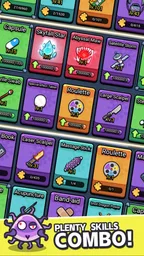
- Random upgrades give each run a different build.
- Enemy waves keep the action consistently engaging.
- The survival format is simple to learn for newcomers.
What could be better
- Luck can heavily affect the upgrades offered during a run.
- Later waves may feel repetitive after several playthroughs.
- Crowded battles can make it hard to track incoming threats.
- Progress may slow as enemy difficulty increases.
- Frequent action may be challenging for players who prefer relaxed games.







