





Castle Busters review
 Analysis by Appsdrops
I enjoy action games most when they make a short match feel like a decision rather than a reflex test. Castle Busters aims for that balance: it is a head-to-head strategy brawler where the point is to assemble a crew, break through an opponent’s castle, and compete for control of the arena. After spending time with it, I’d describe it as a focused pick-up-and-play option for people who like direct competition but still want their choices to matter.
How a match finds its rhythm
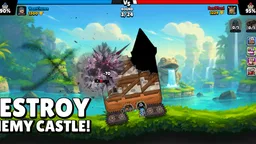
The basic appeal is easy to grasp. You enter a one-on-one contest, build a crew, and try to turn that crew into pressure against the other player’s castle. The castle gives the action a clear objective, while the arena setting keeps the encounter from feeling like a conventional run through a sequence of stages. You are not simply trying to last as long as possible; you are trying to make your side’s approach work better than your rival’s.
That distinction is useful when deciding whether this game suits you. If you want a strategy title built around long planning sessions, detailed menus, and slow campaigns, this is probably not the right fit. Castle Busters is an action game with a competitive strategy edge, and its central attraction is the push and pull of a direct duel. I found it more appealing in short sessions than as something to settle in with for an hour.
A practical routine is to enter a match with one question in mind: what is my crew trying to do, and what would make that plan vulnerable? That small habit makes the choices feel more deliberate. Instead of treating every available action as equally valuable, I look for a way to create pressure and pay attention to whether the opponent is answering it. In a game centered on a castle assault, the difference between acting with a plan and simply reacting can be the difference between an engaging match and a scramble.
The game is from VOODOO, a developer associated here with a free-to-play mobile release. It launched on July 18, 2025, and version 1.20.2 is the current version. It is rated Teen, so it is aimed at an older audience than a child-focused casual game. Those details help set expectations, but the important question is still whether you enjoy the core loop: assembling a crew, contesting space, and trying to outplay one opponent at a time.
Build a repeatable opening, not a rigid script
One useful way to learn the game is to make your first few matches diagnostic. Pick a simple approach, notice where it succeeds, and then change one part of the plan in the next match. If you change everything at once, it is hard to tell whether your crew choice, timing, or response to the other player actually made a difference. That is a modest habit, but it gives each loss a practical takeaway instead of leaving you with only the feeling that the other player was faster.
I would avoid turning that routine into a fixed script. A one-on-one match is interactive by nature, so the opponent’s choices should affect yours. A plan that works when the other player leaves an opening may be a poor choice when they contest your approach. The useful skill is not repeating a sequence blindly; it is recognizing what your preferred approach needs in order to work, then noticing when those conditions are missing.
Settings and preparation that can save frustration
Before settling into competitive play, I recommend checking the game’s available settings and controls on your own device. I’m not assuming a particular toggle or control layout; the worthwhile point is to make sure the options that are actually present feel comfortable before you build habits around them. If a control is awkward, it is better to notice during a low-pressure match than halfway through a close contest.
It is also sensible to check how the game behaves on your device and connection before treating it as a regular commute or lunch-break game. In a head-to-head action match, interruptions are especially unwelcome because another person is responding to your moves. A stable moment and a few minutes of uninterrupted attention are a better fit than opening a match when you already know you may need to put the phone away at any second.
Free to download does not mean every part of the experience is free of spending prompts. Castle Busters includes in-app purchases priced from $0.99 to $99.99 per item. I’d decide in advance whether I’m comfortable spending anything, and treat purchases as optional rather than as a shortcut to enjoyment. If you are trying the game casually, begin without buying anything and judge whether the match-to-match play itself is holding your interest.
Faster play comes from better decisions
Once the basics feel familiar, the best time-saving improvement is to reduce hesitation. That does not mean tapping faster for its own sake. It means deciding before a match what you want to learn, then using the first moments to test that idea. When the match ends, reflect on one turning point: did your approach create useful pressure, did the opponent’s response force a change, or did you keep following a plan after it stopped making sense?
This is more effective than trying to memorize a supposedly universal winning sequence. Against another person, a repeatable habit should be a way of thinking, not a promise that the same moves will work every time. I’d keep the habit simple: make one clear opening choice, watch the response, and adapt rather than doubling down automatically. That gives you a useful structure without pretending that every opponent will behave alike.
Another practical pattern is to separate learning matches from matches where you simply want to compete. When you are experimenting, change one decision at a time and accept that the result may be messy. When you are playing for the satisfaction of a close duel, return to the approach you understand best. That distinction helps prevent frustration: a loss while testing an idea can still teach you something, while repeated losses from changing everything at once are much harder to interpret.
The same thinking makes Castle Busters an easy game to fit around ordinary breaks. A quick session before dinner or while waiting for a friend can work if you have enough uninterrupted time to finish and think about the result. It is less suited to the tiny gaps when you might be pulled away immediately. The one-on-one format gives a match a personal, contest-like feel, which is part of the fun but also makes it less disposable than a game where you can pause at any point without affecting anyone else.
What experienced players can and cannot optimize
There is room to become more disciplined, but I would keep expectations grounded. Learning to read the opponent and refine a crew plan can make your decisions sharper; it does not remove the unpredictability of competing against a person. A familiar approach may be effective in one matchup and become easy to answer in another. The point of experience is to notice that change sooner, not to expect every contest to unfold on your preferred terms.
It is also worth remembering that fast play and good play are not the same thing. If you rush because you want to end a match quickly, you may miss the information your opponent is giving you. I prefer a calm rhythm: act with purpose, watch what the other side does, then adjust. That is a more useful form of efficiency than treating every decision as a race.
Players who enjoy deep roster management should consider this limitation before downloading. The game’s pitch is compact and competitive, not a promise of a sprawling tactical simulator. If you usually want lengthy progression, a large amount of customization, or a solo story to follow, a different action game may be a better use of your time. Castle Busters is strongest when you want to contest a clear objective against another player, not when you want a broad single-player journey.
There is a similar trade-off in its social feel. A direct duel can be more compelling than competing against a timer or a predictable sequence of enemies, because the other player can make your preferred plan uncomfortable. But it can also be less relaxing. I would choose it when I am in the mood to pay attention and respond, and pick a quieter casual game when I want something that asks little of me.
Who should try it, and who may prefer something else
I’d recommend giving it a try if you enjoy compact PvP contests, like learning from an opponent’s decisions, and want an action game with a clear objective rather than an open-ended map. It can also suit players who like improving through small adjustments: testing a crew approach, noticing what the rival counters, and refining the next attempt. Because it is free to download, it is straightforward to sample without committing to a purchase, though the optional spending range is worth keeping in mind.
On the other hand, I would skip it if competitive pressure is the last thing you want from a mobile game. It may also disappoint anyone expecting a fully offline solo experience, elaborate narrative, or a slow, highly customizable strategy campaign. Those preferences are not flaws in the game; they simply point toward a different kind of title. Here, the appeal depends on whether the quick back-and-forth of a castle-focused duel sounds enjoyable to you.
Castle Busters has reached over 10 million installs, with an average rating of 3.8 from around 219,000 ratings and 7,900 reviews. I take that as a sign that it has found a substantial audience, while the rating also suggests it will not click equally well for everyone. Its premise is distinct enough to try if you like competitive action, but I would not treat popularity as proof that its pace or spending model will suit your habits.
For device compatibility, the game requires Android 8.0 or later. That is a useful check before installing, especially if you keep an older phone in rotation. The Teen age rating is another quick way to judge whether it fits the person who will be playing. These are simple points, but they can prevent the annoyance of downloading first and only then discovering that the device or household expectations do not line up.
My verdict after settling into its loop
Castle Busters works best for me as a short competitive game that rewards attention more than blind speed. I like that the castle gives each match a recognizable purpose and that the one-on-one structure makes adapting feel important. The most satisfying way to approach it is to bring a loose plan, observe the response, and change course when the match calls for it—not to expect one routine to solve every duel.
Its limits are just as clear: this is not the right choice for players seeking a deep solo campaign, a reliably peaceful distraction, or a strategy game with extensive planning outside the arena. The presence of in-app purchases means I would also set a personal spending boundary before playing regularly. If those trade-offs sound acceptable, it is an appealing free starting point for a quick action contest with a little tactical thinking behind it.
Overall, I’d recommend trying it when you have a few uninterrupted minutes and are curious whether direct castle-versus-castle competition suits you. The game rewards a steady, repeatable learning habit: test one idea, read the opponent, and take one lesson into the next match. If that process sounds fun, Castle Busters is worth a look; if you mainly want a game that lets you switch off, another kind of mobile action title will likely feel more comfortable.
What we like
- Quick battles make it easy to enjoy a short session.
- Distinct heroes add variety to combat strategies.
- Bright visuals give the game a playful style.
- Unlockable characters provide goals for continued play.
- Simple controls are easy for new players to learn.
What could be better
- Progress can become repetitive after many battles.
- Some upgrades may require extended play to earn.
- Combat offers limited depth for strategy-focused players.
- Frequent effects can make busy fights harder to follow.
- The game may not appeal to players who dislike grinding.







