




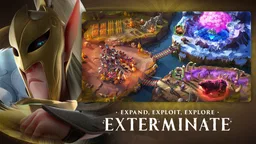



Call of Dragons review
 Analysis by Appsdrops
Getting into a strategy game is easier when you can try it without paying upfront, and that’s the starting point for Call of Dragons. Developed by FARLIGHT and described as an MMO wargame from the team behind Rise of Kingdoms, it aims at players who enjoy long-term planning and competition with others. I like that the basic download is free: you can explore the game before deciding whether spending money fits your play style. The key question is not simply whether it costs anything to start, but whether the experience feels worthwhile if you choose to keep your wallet closed.
What you can expect from the game
Call of Dragons sits in the strategy genre, with an online wargame identity that signals a focus on more than isolated, one-off matches. The MMO framing makes it a natural fit for people who want a game they can return to, rather than a short campaign they finish in a weekend. That kind of commitment can be appealing, but it also means the value depends on whether you enjoy the broader rhythm of a persistent strategy game.
The game was released on March 25, 2023, and is rated Teen. Its audience has given it a 4.5 average from around 195,000 ratings, with approximately 6,300 written reviews. Those figures suggest that many players have taken the time to rate and discuss it, though a high average can’t tell you whether its particular pace or style will suit you. I’d treat the rating as a useful first impression, then focus on whether an MMO wargame is the sort of strategy experience you actually want.
A free starting point, with optional purchases
The game is free to download, so there is no upfront purchase price to weigh against its appeal. That makes trying it a relatively low-commitment decision: you can find out whether the strategic format holds your attention without first paying for access. For anyone browsing for a free strategy game on mobile, that’s a meaningful advantage.
There are in-app purchases, with listed prices ranging from $0.99 to $394.93 per item. That is a broad range, and it’s worth keeping in mind before you start. Free access and paid options are not the same thing as a promise that every player will have the same experience at no cost. I would decide in advance whether I’m comfortable with optional spending, and use the game’s free entry point to judge its appeal before considering any purchase.
It’s also important to separate the cost of trying a game from the value of spending inside it. The free download establishes that you can begin without buying the app. The purchase range tells you that optional items can involve very different amounts of money. It doesn’t, by itself, establish what a purchase changes or whether any particular item is worthwhile. I wouldn’t treat the most expensive option as a recommended purchase; I’d consider only an item whose purpose and cost I understand in the moment.
Where the value comes from
For me, the main value proposition is the chance to explore an MMO wargame without paying an entry fee. If you enjoy strategy games and want an experience that invites you to return over time, that free starting point can be enough to make a trial worthwhile. The game has also attracted more than 10 million installs, which indicates a sizeable audience has chosen to give it a go. Popularity is not a guarantee of quality, but it does show that this is not an obscure title with no player interest.
The value you get depends heavily on what you want from a strategy game. Someone who enjoys persistent online play may find the MMO framing appealing, while a player looking for a brief, self-contained experience may prefer something with a clearer endpoint. I’d think of Call of Dragons less as a game whose value can be measured by its download price alone and more as a free opportunity to see whether its style earns a place in your regular gaming routine.
There is a practical upside to that approach: you can make your own judgment before spending. If the experience doesn’t click, the free entry point limits the financial commitment. If it does, you can decide whether optional purchases add enough value for your own preferences. That’s a more sensible way to assess a game with a wide spread of purchase prices than assuming that paying more automatically means getting a better experience.
The tradeoffs to keep in mind
The biggest tradeoff is straightforward: free to start does not mean that every available option is free. In-app purchases range from a small amount to a substantially higher one, so players who are sensitive to spending should approach the shop deliberately. I recommend setting a personal limit before browsing paid items, especially if you prefer to keep mobile gaming completely free.
A second tradeoff is the MMO wargame format itself. That description will be a plus for players drawn to online strategy, but it may not appeal to everyone. If you prefer a compact puzzle, a solo story, or a game that requires little ongoing attention, a persistent strategy title may not be the best match. That’s a matter of taste rather than a flaw, but it matters when deciding whether the free download is worth your time.
The Teen rating is another useful point of context for choosing a game, particularly for families deciding what to install. It helps describe the intended audience, but it shouldn’t replace a parent’s own judgment about whether a particular game is appropriate for a young player. As with any title that offers purchases, it’s sensible to be aware of spending options before handing a device to someone else.
Finally, a strong average rating and a large install count can set expectations, but neither should make the decision for you. Reviews come from players with different tastes, budgets, and expectations. I’d use the overall response as a reason to investigate, not as proof that the game will be a perfect fit. The best test is still whether you enjoy this kind of online strategy and are comfortable with its optional purchase model.
Who is most likely to get value?
Call of Dragons makes the most sense for someone who already enjoys strategy games and is curious about an MMO wargame. The free download gives that player a straightforward way to try the experience, while optional purchases leave room for those who later decide they want to spend. You don’t need to assume that spending is required to make the game worth sampling; the sensible first step is simply to see whether its format holds your interest.
It may also suit players who like to compare popular mobile strategy games before settling on one. The game’s substantial audience and high average rating make it easy to see why it attracts attention, while its free access allows you to form your own opinion. I’d still go in with realistic expectations: a game’s audience size doesn’t tell you how much time you’ll want to invest, and a rating can’t guarantee that its style matches yours.
On the other hand, people who want to avoid all in-app purchasing may prefer to be cautious. You can start without paying, but paid items are part of the offering, and the listed range stretches from $0.99 to $394.93. If seeing purchase options makes a game less enjoyable for you, that should factor into your decision. A clear spending boundary can help, but only you can decide whether the free experience is enough.
My verdict: try it before you spend
As a free strategy game, Call of Dragons has a clear initial advantage: there’s no purchase price required to give its MMO wargame approach a chance. FARLIGHT’s title has reached a large audience and earned a strong average rating, which makes it worth considering if online strategy is already your thing. I’d call it an easy game to try, not an automatic recommendation for every mobile player.
My buy-or-skip verdict is really a try-or-skip one. Try it if you want an MMO wargame and are comfortable assessing optional purchases on your own terms. Skip it if you’re looking for a different kind of game or don’t want to encounter in-app spending at all. Since downloading is free, there’s little reason to pay before you know whether the experience suits you.
In short, the best value is available to players who enjoy the game without feeling pressured to spend. Treat paid items as optional decisions rather than a requirement, pay attention to the price before making any purchase, and let your own experience decide whether Call of Dragons deserves your time. If its strategy-focused MMO style is what you’re after, the free starting point makes it a reasonable title to explore.
What we like
- Large-scale battles make alliance coordination rewarding.
- Hero skills add variety to combat strategies.
- The fantasy setting gives the world a distinctive look.
- Exploration reveals useful rewards across the map.
- Regular events offer goals beyond routine resource gathering.
What could be better
- Progress can slow considerably without spending.
- Competitive play often favors established alliances.
- Long construction timers can interrupt momentum.
- Large battles may strain older devices.
- Frequent activity is needed to keep pace with rivals.







