


Butcher Hero: Monster Idle RPG review
 Analysis by Appsdrops
I like the central idea behind Butcher Hero: Monster Idle RPG: rather than treating monsters only as obstacles, the game makes their power part of how you build your hero. That gives its role-playing loop a clear hook, and it suits short sessions where I want to make a few decisions, see progress, and come back later. The important question is whether that loop feels satisfying beyond its first burst of novelty. My view is that it can, especially if you enjoy incremental growth, but it is less suited to players who want constant hands-on combat or a tightly authored adventure.
Choosing what progress should feel like
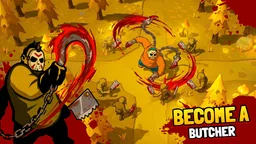
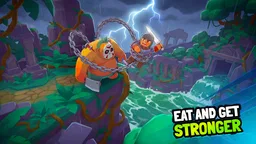
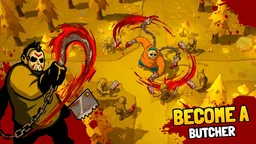
In this free role-playing game from MULTICAST GAMES, the basic fantasy is direct: hook monsters, take their power, and strengthen your hero enough to face larger bosses. That creates a useful decision space even if the overall pitch is simple. You are not just watching a hero get stronger; you are asked to think about how monster encounters feed into that growth and whether your current strength is enough for the next challenge.
I find this structure appealing for players who enjoy seeing a small investment turn into a noticeable change in power. The monster-focused premise also gives the progression a more distinctive identity than a conventional fantasy game built around generic equipment upgrades alone. Still, the central loop is deliberately easy to understand. If you want a role-playing game where every encounter demands careful timing, movement, or tactical control, this is not the first one I would recommend.
The game’s “idle” framing matters when deciding whether it fits your routine. Idle-style play is usually most enjoyable when you can make a decision, leave the game, and return without needing to reconstruct a complicated plan. I would approach Butcher Hero with that expectation: a progression game for brief check-ins, not a substitute for a long, focused session of action RPG combat. If the pleasure for you is watching numbers and capabilities build over time, that can be a strength. If you need every minute to involve active input, the pace may feel too passive.
A practical way to judge the loop is to pay attention to what a monster encounter changes, rather than treating every increase in strength as equally meaningful. When you return after a break, ask whether the hero’s new power helps you reach a boss or makes a previously difficult step easier. That simple habit gives each session a purpose and helps distinguish satisfying progress from merely tapping through repeated actions.
Where the risk sits in the reward
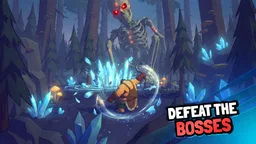
The hook-and-devour premise promises a pleasing trade: confront monsters, convert their strength into growth, then use that growth against bosses. The reward is easy to understand, but the tradeoff is that a progression loop can become repetitive if the encounters feel like chores between meaningful milestones. For me, the boss framing is important because it gives the accumulation a destination. A stronger hero matters most when that strength changes what you can take on.
I would not assume that every boss is a puzzle with a bespoke counter-strategy. The confirmed premise supports a focus on powering up and overcoming major enemies, not a claim that each one has a particular weakness or a complex set of phases. A sensible approach is to treat a failed or slow boss attempt as feedback: build up further, then try again, instead of expecting a single clever move to erase a large gap in strength. That is a useful expectation for an idle RPG, though it may disappoint players who prefer to overcome underpowered situations through execution alone.
There is also a spending tradeoff to keep in mind. The game is free to install, while optional in-app purchases range from $0.99 to $99.99 per item. That spread makes it worth deciding your own boundary before you get invested. I would first see whether ordinary play gives me enough progress to enjoy the loop, and treat purchases as optional convenience rather than a requirement. If you are prone to buying when progression slows, setting a budget in advance is more helpful than deciding during a frustrating stretch.
For an everyday example, this is the kind of game I would open during a short break, check how my hero is progressing, and choose whether to spend the session working toward a boss or simply letting the broader growth loop do its job. That works best when I do not expect a dramatic payoff every time I open it. The risk is that a quick check-in turns into repetitive maintenance; the reward is that progress can fit around a busy day without demanding a continuous block of attention.
Adapting without overcomplicating the loop
One useful way to approach the game is to separate two questions: “Am I making progress?” and “Am I ready for the next boss?” They are related, but not identical. A hero can be growing while still needing more preparation for a major encounter. Keeping those goals distinct stops me from reading every delay as a sign that the whole build is wrong. It also gives a returning player a clear next action: keep developing, then test the new strength when it seems worthwhile.
Another practical tip is to avoid spending every resource or purchase option simply because it is available. In a game whose appeal rests on gradually upgrading a hero, saving some flexibility can make later decisions feel more deliberate. I cannot claim a particular resource system or upgrade tree beyond the game’s stated progression, but the general principle applies to the choices the game does present: compare the immediate improvement with the longer-term value of waiting. If an upgrade helps you cross a boss hurdle now, it may be worth it; if it only adds a small gain without changing what you can do, patience may be more satisfying.
For players who switch between games during the day, the idle approach can be convenient because it does not ask for the same uninterrupted attention as a real-time action RPG. But convenience has a limit: if you want to react actively to enemy attacks, master combos, or make moment-to-moment tactical calls, the central appeal here is pointed elsewhere. A more hands-on role-playing game would be a better fit. Likewise, players who want a story-first experience should not choose this solely because it has heroes, monsters, and bosses; its defining emphasis is the growth loop.
The game is rated Everyone 10+, which makes it a more approachable choice for players looking for a fantasy-themed progression game than something aimed at mature audiences. I would still consider the individual player’s tolerance for repeated combat and the spending prompts common to free games. The age label does not tell you whether someone will enjoy idle mechanics, so interest in gradual upgrades is a better guide than the rating alone.
What keeps the progression interesting over time
Long-term enjoyment depends on whether each new stretch of growth changes the player’s choices, not just the hero’s strength. The monster-powered premise gives the game a recognizable theme to return to, while bosses provide a natural reason to check whether accumulated progress has reached a new threshold. My advice is to measure a session by a concrete outcome: did you improve your readiness, move closer to a boss, or decide that more growth is needed? If the answer is always just “the numbers went up,” the loop may eventually feel thin.
There is a planning horizon here, even in a lightweight game. A player who wants a quick burst of entertainment can focus on immediate growth; someone who enjoys a longer progression arc can treat boss preparation as a sequence of checkpoints. That second approach gives idle play more shape without pretending it is a deep tactical campaign. It also makes breaks feel less disruptive: you can return with a broad goal in mind instead of trying to remember a lengthy story or a detailed combat plan.
As a comparison with other role-playing games, this is closer to an incremental character-builder than to a party-based RPG or a skill-driven action game. Its appeal is concentrated in the cycle of gaining power and testing that power against bosses. That makes it a better match for people who enjoy visible, steady advancement than for those seeking exploration, dialogue, intricate equipment theory, or precise combat. I would choose a more conventional RPG if I wanted a world to wander through, and a more active action game if I wanted reflexes to matter more than accumulated strength.
Its current version is 2.1.3, and the game requires Android 7.0 or later. The title has reached over one million installs, with an average rating of 3.8 from around 106,000 ratings and about 1,900 written reviews. Those figures suggest a sizeable audience and a mixed reception rather than universal agreement. I would take that as a reason to match expectations carefully: the core loop will appeal to some players much more than others, particularly depending on how much repetition they tolerate.
Who I would recommend it to
I would recommend this game to someone who likes checking in on a hero’s growth, enjoys monster-themed progression, and is comfortable with the idea that preparation can matter more than precise combat input. It also makes sense for a player who wants a role-playing game that can be approached in short sessions. The best fit is not necessarily someone looking for a huge feature list, but someone who finds it satisfying to build strength and then see whether that effort is enough for a boss.
I would suggest skipping it if your main reason for playing RPGs is intricate party tactics, a substantial narrative, or direct control over every fight. It may also be a poor choice if repeated progression loops frustrate you, or if you prefer games with no optional purchases at all. Free entry lowers the commitment to trying it, but it does not make the style universal, and the wide in-app purchase range is a reason to stay deliberate about spending.
My strategy verdict
What stands out to me is the clear relationship between monster encounters, hero growth, and boss challenges. That gives the game a specific identity and an easy-to-grasp reason to keep returning. The tradeoff is that the same focused loop can feel repetitive if you expect every session to bring a new kind of play. I would treat it as a casual progression game, set a personal spending limit, and use boss readiness as the measure of whether upgrades are doing something useful.
Overall, Butcher Hero: Monster Idle RPG is worth considering if steady character development sounds more appealing than constant action. Its strongest use case is a few low-pressure check-ins across the day, with monster-powered growth giving those visits a shared goal. I would not call it a fit for every RPG fan, but for someone who likes incremental progress and boss milestones, its focused premise is a reasonable reason to give it a try.
What we like
- Idle rewards make progress possible between play sessions.
- Short runs suit quick mobile gaming sessions.
- Hero upgrades give players clear goals to pursue.
- Monster fights add variety to routine resource collection.
- The RPG format offers more depth than a basic clicker.
What could be better
- Progress may slow without frequent upgrades.
- Idle rewards can encourage repetitive check-ins.
- Later encounters may require substantial grinding.
- Limited strategic input may not suit action fans.
- Long-term appeal may depend on collecting stronger heroes.







