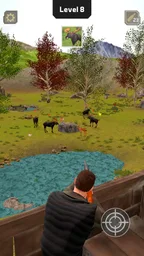
Animal Hunter: Wild Shooting review
 Analysis by Appsdrops
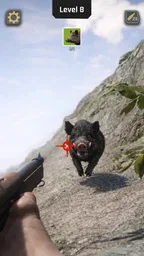
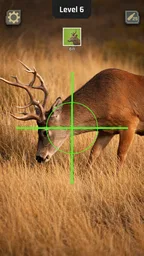
I tend to judge hunting games by a simple question: do they make aiming and choosing a shot feel satisfying, or do they rely on scenery and a weapon theme to carry the experience? Animal Hunter: Wild Shooting is an action game built around deer-hunting shooter encounters, so it is best approached as a focused, casual shooting game rather than a deep outdoor simulation. If you want short sessions centered on lining up attacks, it has a clear appeal; if you want a realistic hunting sandbox with detailed equipment and fieldcraft, you may be happier elsewhere.
What to expect from its hunting focus
Fun Fun Studio developed the game, and its central idea is easy to grasp: take on animal-hunting encounters and improve your aim through repeated play. That direct premise makes it approachable when you have a few spare minutes and do not want to learn a complicated set of systems before getting started. The action framing also sets expectations: this is about shooting challenges, not a quiet nature experience.
The game sits in the action category, and that matters when comparing it with the broader range of hunting games. Some alternatives emphasize exploration, tracking, or simulation; this one puts the shooter element first. I would choose it when I want an uncomplicated target-focused session, not when I am in the mood to plan a long expedition or manage an elaborate loadout.
Its scale suggests that plenty of players have found the concept appealing: it has over 50 million installs, alongside an average rating of 4.8 from around 460,000 ratings. Those figures are useful context, but they do not tell you whether the play style suits you. The more relevant question is whether you enjoy repeating shooting encounters and refining your decisions from attempt to attempt.
How I would decide whether it fits
Think about what you want from a mobile hunting game before installing. If the main attraction is aiming at animal targets and taking on shooter challenges, this is a natural candidate. If you want realistic animal behavior, extensive wilderness navigation, or a slower simulation, look for a game that clearly puts those elements at its center instead.
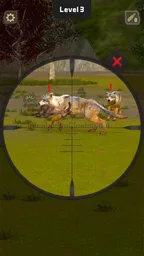
One practical way to approach your first session is to focus on control and patience rather than rushing through each encounter. Notice how the aiming feels, take a moment to line up a shot, and judge whether the action stays enjoyable when you repeat it. In games built around shooting, a small difference in how comfortable you feel with aiming can matter more than elaborate presentation.
I would also treat each attempt as a chance to learn what makes a shot work for you. Rather than firing quickly whenever a target appears, pause long enough to settle your aim. This simple habit can make the game feel more deliberate, and it helps you decide whether you enjoy the core loop itself rather than merely the novelty of a hunting theme.
Where this game earns its place
The strongest point is its easy-to-understand focus. You do not need to arrive with a background in hunting games to understand the basic appeal: aim, take on an animal-shooting challenge, and try to do better. That clarity is useful on a phone, where I often want a game that can hold my attention without demanding a long uninterrupted block of time.
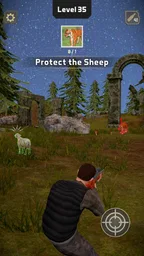
It also works as a change of pace from action games built around constant movement or close-range combat. Here, the satisfaction is more closely tied to lining up a shot and choosing when to act. For a player who enjoys target-based challenges, that shift can make a short break feel distinct from another round of a conventional shooter.
A realistic everyday use case would be playing during a brief wait, such as before an appointment or while taking a break between tasks. I would start with one encounter, pay attention to how the aiming feels, and stop when I have had enough rather than expecting the game to supply a long narrative session. That approach suits a focused mobile action game and keeps the decision to return based on whether the shooting remains fun.
There is also a useful trade-off in the straightforward premise. A game that keeps its attention on shooting can be easier to pick up than one loaded with simulation systems, but the same focus may feel repetitive if you need exploration, story, or varied activities to stay interested. I see that as a preference issue rather than a flaw everyone will experience in the same way.
The audience figures reinforce that this is a familiar choice for mobile players, but I would not treat popularity as a guarantee of depth. A strong rating and large community can make it easier to feel confident trying it, yet your own response to the aiming and repeatable encounters is what should decide whether it earns space on your device.
When another kind of game is a better choice
If you picture hunting as a patient outdoor simulation, a more realistic hunting title may be a closer match. Those games are generally the better direction for players who value tracking, landscape exploration, and a slower rhythm over immediate shooter challenges. I would not pick this game expecting it to replace that kind of experience.
On the other hand, if what you want is pure shooting with no hunting theme, a conventional mobile action shooter may offer a more suitable setting. Animal targets are central to the identity here, so players who find that premise uncomfortable should choose a different genre rather than hoping the game will feel like an unrelated combat game.
It may also be the wrong choice for someone who dislikes repeating similar actions. A focused shooter can be satisfying precisely because its central activity is clear, but that clarity can become a limitation if you want each session to introduce a very different kind of challenge. Before committing to regular play, test whether you enjoy the basic aiming loop across more than one attempt.
Age suitability is another point to consider. The game carries a Teen content rating, so it is not presented as a title for the youngest children. I would check the rating in the app store against the age guidance you use at home, especially if you are choosing a game for someone else.
Cost, version, and the practical commitment
The game is free to download, with optional in-app purchases priced from $0.99 to $22.99 per item. That makes it possible to try the central experience without paying upfront, while the purchase range is worth keeping in mind if you prefer to avoid spending inside games. I would begin with the free version and decide whether I enjoy the play before considering any optional purchase.
There is no need to treat an in-game purchase as part of the entry decision. Set a spending boundary before playing if you share a device or want to keep mobile costs predictable. The useful question is not whether a purchase exists, but whether you can enjoy the game at your own pace without feeling pushed to spend. If that matters to you, check the purchase controls available through your device before handing it to a younger player.
The current version is 5.1.2, and the listed minimum operating system is 8.1. Before downloading, check that your phone or tablet meets that requirement and has enough room for another game. Those small checks can prevent the frustration of choosing a title and only then discovering that the device is not ready for it.
Switching from a different hunting game is a low-commitment decision because this title is free to try, but the real cost is your time and attention. If you already enjoy a slower simulation, you may not want to replace it; consider this one as a separate option for shorter, more direct sessions. If your current game feels too involved, its simpler shooter focus could be the change you are looking for.
My recommendation for the right player
Animal Hunter: Wild Shooting is worth trying if you want a free action game organized around animal-shooting encounters and you are comfortable with a Teen-rated hunting theme. I would recommend it most to players who like careful aiming, compact sessions, and a clear activity they can return to without preparing for a long simulation.
I would skip it if you are specifically looking for realistic hunting mechanics, expansive exploration, or a narrative-driven campaign. Those expectations point toward other kinds of games, and no amount of popularity can make a focused shooter satisfy someone who wants a different pace. Likewise, anyone uneasy about shooting animals should choose a non-hunting action game.
For a first try, download it, play long enough to judge the aiming and repetition, and keep optional purchases out of the decision until you know the core activity works for you. Fun Fun Studio’s game has a clear audience and a straightforward reason to exist: it offers a direct mobile take on animal-hunting action. If that is the kind of brief shooter session you want, it is an easy recommendation to test; if you need more than shooting challenges, choose a deeper simulation or a different action style.
What we like
- Large open areas give you room to track and approach wildlife.
- A range of weapons lets you adapt to different hunting situations.
- Mission objectives provide clear goals beyond free exploration.
- Animal models and environments add variety to each hunt.
- Offline play makes it suitable for gaming without an internet connection.
What could be better
- Frequent ads may interrupt hunts and menus.
- Touch controls can make precise aiming difficult.
- Some missions require repeated play to earn enough upgrades.
- Animal behavior can feel predictable after several hunts.
- Progress may feel slow without optional purchases.







