



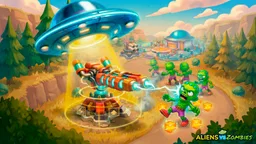
Aliens vs Zombies: Invasion review
 Analysis by Appsdrops
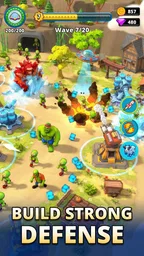
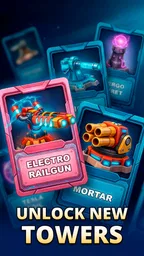
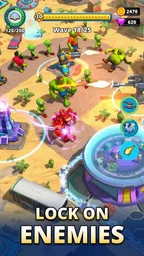
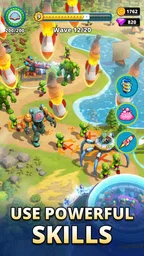
The first thing I noticed about Aliens vs Zombies: Invasion is how quickly its central problem makes sense: enemies are coming, and my job is to keep them from reaching the base by placing towers. That clear setup makes it easy to try in a short break, even if I have no appetite for a long strategy session. It is a free strategy game from GAMEGEARS LTD, rated Everyone 10+, and its alien-and-zombie matchup gives the familiar tower-defense idea a pulpy, playful frame.
Why the opening is easy to pick up
The appeal in the first few sessions comes from a useful balance: the premise is immediately readable, but defending a base still asks me to pay attention. I need to consider where threats are coming from and how my defenses cover the approach, rather than treating each wave as something to watch passively. That makes the game approachable without making the strategy feel decorative.
Its contrast between aliens and zombies also gives the invasion a distinct identity. It is not trying to present a solemn military simulation; the fun is in handling an unusual pair of enemy forces with defensive planning. If you enjoy strategy games that let you understand the goal before you understand every tactical wrinkle, this is a comfortable entry point.
I would not mistake that accessible premise for a promise that every stage will be effortless. Tower defense works best when a player notices how a plan is holding up and adjusts before the base is in trouble. A practical habit is to watch the route and the first signs of a weak defense instead of spending the whole wave thinking only about the next upgrade. That small change in attention is often more useful than placing things hurriedly.
For someone deciding whether to try it, the basic question is whether defending a fixed position sounds satisfying. If you prefer strategy built around building a base over time, managing a broad roster, or direct control of units, this may feel narrow. If you like the puzzle of arranging defenses against incoming pressure, the compact premise is a strength rather than a limitation.
Making a short session count
In an everyday setting, I can imagine opening it during a commute break or while waiting for an appointment, playing a little, then putting the phone away. The tower-defense format lends itself to that stop-and-start routine better than a game that depends on uninterrupted story scenes. I would still choose a moment when I can give the screen my attention: strategy becomes less enjoyable if I am repeatedly distracted while a defense is being tested.
One useful way to approach a new stage is to treat the first attempt as reconnaissance. Notice which stretches of the route appear hardest to cover, then use that observation to make a more deliberate plan next time. That is not a hidden mechanic; it is a sensible way to get more from a strategy game without assuming that a quick placement will solve every problem.
The other helpful habit is to resist reacting to every threat with an immediate build or upgrade. A defense has to work as a layout, not just as a collection of individual towers. Looking for gaps in coverage can help distinguish a genuine weak point from a momentary rush of enemies. I find that kind of decision-making more rewarding than tapping through waves without learning from them.
What keeps it worthwhile after the novelty
A striking alien-versus-zombie premise can bring me in, but it cannot carry a strategy game forever by itself. Long-term value depends on whether I continue to enjoy making choices: where to focus, how to cover the threat, and when to change course. The core setup offers a clear reason to return when I want a small tactical puzzle, rather than a game that demands I remember a complicated narrative before I can play.
That makes its recurring value quite personal. Players who enjoy improving their approach from one defense to another may find satisfaction in noticing what worked and correcting what did not. Players who need a constant stream of new systems, social competition, or a strong story to stay interested may find the basic premise wears thin sooner. I would choose it for tactical repetition, not as a substitute for a sprawling strategy campaign.
The game has a sizable audience, with over a million installs and an average rating of 4.8 from around 62,000 ratings. Those figures suggest it has found many players, but they are not a guarantee that its particular style will suit you. I would use them as context, then judge it by whether the tower-defense decisions remain enjoyable after the first burst of curiosity.
Compared with the usual alternatives in tower defense, the main distinction here is the themed matchup rather than a radically different promise: protect a base from advancing enemies. That makes it an easy option to understand beside other lane-and-defense games, while also giving it a specific flavor. If your favorite part of the genre is planning defensive coverage, it is worth a look; if you are searching for a strategy game with broad economic management or free movement across a map, a different subgenre will be a better fit.
Keeping the game in a healthy routine
Maintenance is not just about updates; it is also about how much attention a game asks from me. Aliens vs Zombies: Invasion is best treated as a focused, occasional strategy break, not an obligation to check in constantly. I would avoid turning every spare minute into a session simply because the game is installed. If I return when I actually want to plan a defense, the play has a better chance of feeling like leisure rather than another task.
The current version is 2611.10.1170, and the game requires Android 7.0 or later. That gives Android users a straightforward compatibility point to check before installing. It is free to start, with in-app purchases ranging from $0.99 to $99.99 per item, so I would be mindful of purchase prompts and decide in advance whether I want to spend anything. A free download does not mean every optional purchase is small, and setting a personal limit is a sensible way to keep the game casual.
Its Everyone 10+ rating is another practical consideration for households. Parents can use that age guidance as a starting point, while still deciding whether the cartoon conflict and the game’s purchase options suit a particular child. The game is not automatically a good fit for every young player just because it is accessible to a broad audience.
Where repetition and friction can set in
The biggest risk to lasting enjoyment is the natural repetition of defending against waves. Once the core task is familiar, the alien-and-zombie theme may not be enough to make every return feel fresh. I would pay attention to whether I am still thinking through placement and responding to pressure, or simply repeating actions out of habit. If it is the latter, taking a break is likely better than trying to force the game to stay interesting.
There is also a trade-off in the focused design. A clear tower-defense goal can make a session easy to enter, but it may not satisfy someone who wants several very different kinds of activity in one app. A person looking for exploration, character-driven storytelling, or a deeper simulation should probably choose a different game rather than expecting this one to grow into those things.
Purchases are another possible source of friction. The listed range runs from under a dollar to nearly a hundred dollars per item, so the top end is substantial even though the game itself is free. I recommend treating any purchase as optional and pausing before spending, especially if you are installing it for a child or hoping to keep gaming costs predictable. You do not need to spend just to decide whether the core defense loop appeals to you.
There is a useful distinction between a game that is easy to revisit and one that earns permanent space on a phone. This one can serve the first purpose for players who like brief tactical challenges. It earns the second only if the act of refining a defense remains enjoyable for you. I would not keep it installed from a sense of obligation; I would keep it if I naturally find myself wanting another round of planning.
Who should install it, and who should move on
I would recommend giving it a try if you like tower defense, enjoy setting up protection against incoming enemies, and want a strategy game whose basic idea is easy to grasp. It is also a reasonable pick for someone who wants to explore the genre without paying upfront. GAMEGEARS LTD has built the game around a recognizable defensive challenge, and the unusual alien-and-zombie pairing gives that challenge a little personality.
I would skip it if repetitive wave defense is already a genre fatigue point for you, if you dislike in-app purchase options, or if you want a game centered on a broader campaign or different modes of play. The game’s premise is specific, and that is part of its appeal; it is not a universal strategy recommendation. The right comparison is not whether it can replace every strategy game, but whether this particular defensive puzzle is the sort you return to willingly.
My long-term verdict
Aliens vs Zombies: Invasion makes a strong first impression through clarity and a memorable enemy pairing, then has to rely on the decisions behind its tower-defense loop to keep me interested. I like it best as a casual strategy option for short, attentive sessions, with a simple routine of observing the route, spotting weak coverage, and adjusting rather than spending blindly. That approach gives each return a small purpose instead of turning play into repetition for its own sake.
Its 4.8 average and 2,800 reviews point to a well-received game, but my recommendation is still conditional: try it if you enjoy planning defenses, and leave it aside if you need continual novelty or richer strategic layers. Free entry makes it approachable, while the purchase range is a reason to keep spending deliberate. For the right player, it can earn a place as an occasional tactical break; for everyone else, the novelty may fade before the habit becomes rewarding.
What we like
- Fast-paced battles are easy to pick up in short sessions.
- Distinct alien and zombie designs give enemies clear visual identities.
- A sci-fi setting offers a change from typical fantasy action games.
- Combat provides a straightforward challenge for casual players.
- The invasion theme gives encounters a clear sense of urgency.
What could be better
- Repeated enemy encounters can make progression feel predictable.
- Busy combat effects may obscure hazards on smaller screens.
- The action may offer limited appeal to players seeking a deep story.
- Frequent battles can feel intense for players who prefer relaxed games.
- Performance may vary across older mobile devices.







